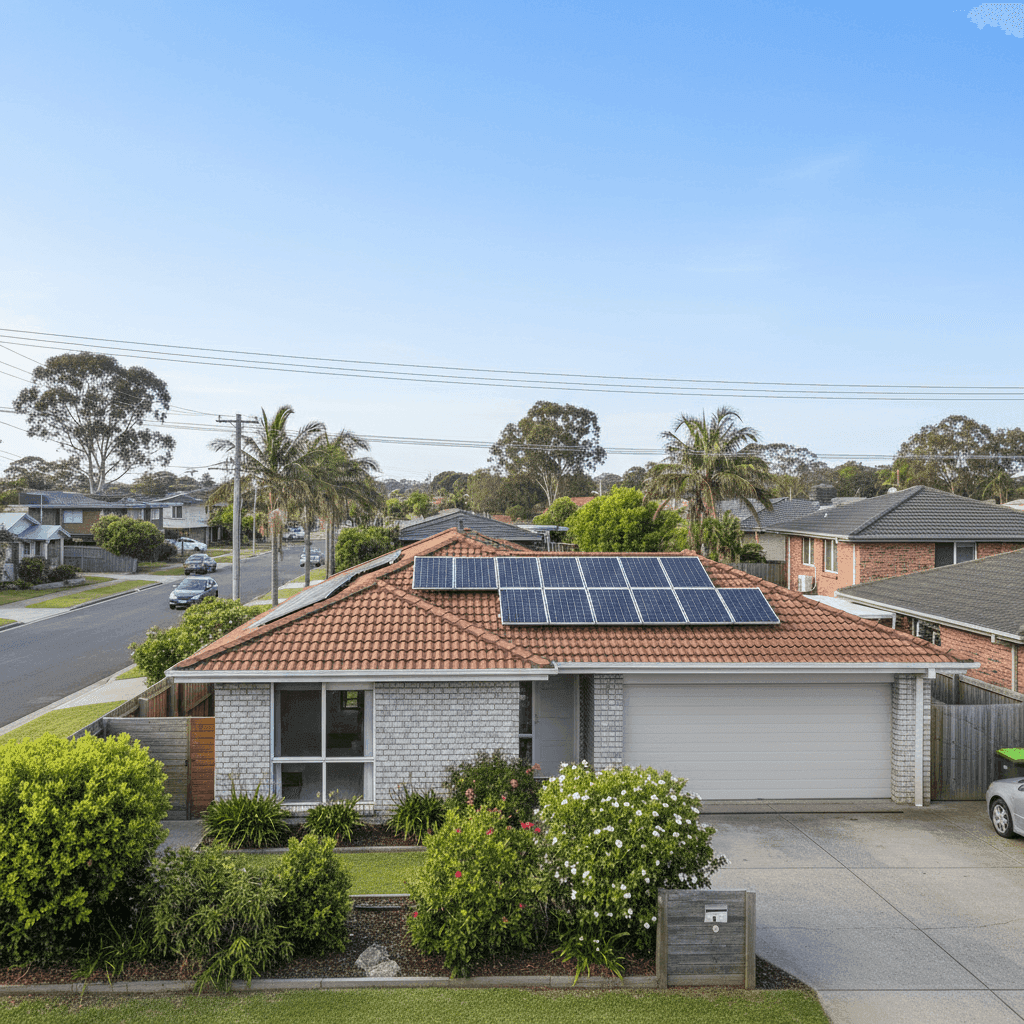
If you own a free standing home in Safety Beach, NSW 2456, you're probably wondering whether the premium sitting in your inbox is reasonable — or whether you're leaving money on the table. This analysis breaks down a recent home and contents insurance quote for a four-bedroom, two-bathroom brick veneer property in the area, and puts it in context against suburb, state, and national benchmarks.
---
Is This Quote Fair?
The quote in question comes in at $3,098 per year (or $297 per month) for combined home and contents cover, with a building sum insured of $725,000 and contents valued at $86,000. Both the building and contents excess are set at $1,000.
Our price rating for this quote is Expensive (Above Average) — and the data backs that up. The suburb average for Safety Beach sits at $2,846 per year, while the median is a notably lower $2,708. That means this quote is running roughly 8–14% above what most locals are paying for comparable cover.
That said, context matters. The quote still falls within the suburb's 75th percentile of $3,091 — just barely above it, at $3,098. So while it's on the pricier end of the local range, it's not wildly out of step with what the top quarter of Safety Beach homeowners are being quoted. If your property has features that increase risk — more on those below — a modest premium uplift isn't necessarily a red flag. But it does signal that shopping around is worthwhile.
---
How Safety Beach Compares
One of the more striking findings in this data is how favourably Safety Beach stacks up against broader benchmarks. Check out the full suburb stats for Safety Beach (NSW 2456) to explore the complete picture.
| Benchmark | Average Premium | Median Premium |
|---|---|---|
| Safety Beach (2456) | $2,846/yr | $2,708/yr |
| NSW State | $9,528/yr | $3,770/yr |
| National | $5,347/yr | $2,764/yr |
| Clarence Valley LGA | $31,244/yr | — |
The NSW state average of $9,528 per year looks alarming at first glance, but it's heavily skewed by high-risk coastal and flood-prone areas across the state — the median of $3,770 is a far more representative figure for typical NSW homeowners. Even so, Safety Beach's median of $2,708 sits comfortably below the state median, suggesting the suburb is considered relatively low-risk by insurers.
Compared to national figures, the story is similar. Australia's national average of $5,347 is dragged upward by catastrophe-prone regions in Queensland and Western Australia, while the national median of $2,764 is much closer to what Safety Beach residents typically pay.
Perhaps the most striking data point is the Clarence Valley LGA average of $31,244 per year — an extraordinary figure that reflects the severe flood and storm risk affecting parts of this local government area. Safety Beach itself appears to be in a more sheltered pocket of the LGA, with premiums well below that regional average. This is an important reminder that LGA-level data can be misleading; suburb-level comparisons are far more meaningful for individual homeowners.
---
Property Features That Affect Your Premium
Several characteristics of this particular property will influence how insurers assess and price the risk.
Brick veneer construction with a tiled roof is generally viewed favourably by insurers. Brick veneer offers solid fire resistance and structural durability, while concrete or terracotta tiles are considered more resilient than corrugated iron in many weather events. Together, these materials typically attract lower premiums compared to lightweight or older construction types.
Slab foundation is standard for homes of this era and presents no particular concern for insurers. Combined with the 1994 construction year, the property sits in a sweet spot — modern enough to meet reasonable building standards, but old enough that some age-related wear may be factored in.
Solar panels are worth noting. While they don't dramatically increase premiums, they do add to the replacement cost of the building and can introduce a small amount of additional risk (particularly around electrical systems). It's important to ensure your building sum insured of $725,000 adequately accounts for the cost of replacing the solar system, as not all policies cover panels automatically or to their full value.
Timber and laminate flooring can be more susceptible to water damage than tiled floors, which may be a minor factor in how insurers assess contents and building claims. Ensuring you have appropriate flood or escape-of-liquid cover in your policy is wise.
The absence of a pool and ducted climate control simplifies the risk profile slightly, and the property not being in a cyclone risk area is a meaningful premium advantage for a coastal NSW location.
---
Tips for Homeowners in Safety Beach
1. Review your building sum insured carefully. At $725,000, the building cover needs to reflect the full cost of rebuilding — not the market value of the property. With 214 sqm of floor space, timber flooring, and solar panels to replace, it's worth running the numbers through a building cost calculator to confirm you're not underinsured. Rebuilding costs have risen sharply in recent years due to labour and materials inflation.
2. Shop around — even if your current insurer is familiar. This quote sits above the suburb average, which is a clear prompt to compare. Use a comparison tool like CoverClub to see multiple quotes side by side. A difference of $200–$400 per year is common between insurers for the same property, and switching can be straightforward.
3. Check what's included for solar panels. Ask your insurer directly: are the solar panels covered under the building policy? Are they insured for their full replacement value, including installation? Some policies treat them as a fixed attachment to the building; others exclude them or cap the payout. Given the investment involved, this is a detail worth confirming in writing.
4. Consider your excess level strategically. Both excesses are set at $1,000, which is a fairly standard starting point. If you're comfortable absorbing a higher out-of-pocket cost in the event of a claim, increasing your excess to $1,500 or $2,000 can meaningfully reduce your annual premium. Just make sure the saving justifies the additional risk you're taking on.
---
Compare Your Options with CoverClub
Whether you're renewing your policy or shopping for the first time, it pays to know where your quote stands. CoverClub makes it easy to compare home and contents insurance quotes across multiple providers in one place — so you can see whether you're getting a fair deal or paying more than you need to. Get a personalised quote today and find out what Safety Beach homeowners are really paying.