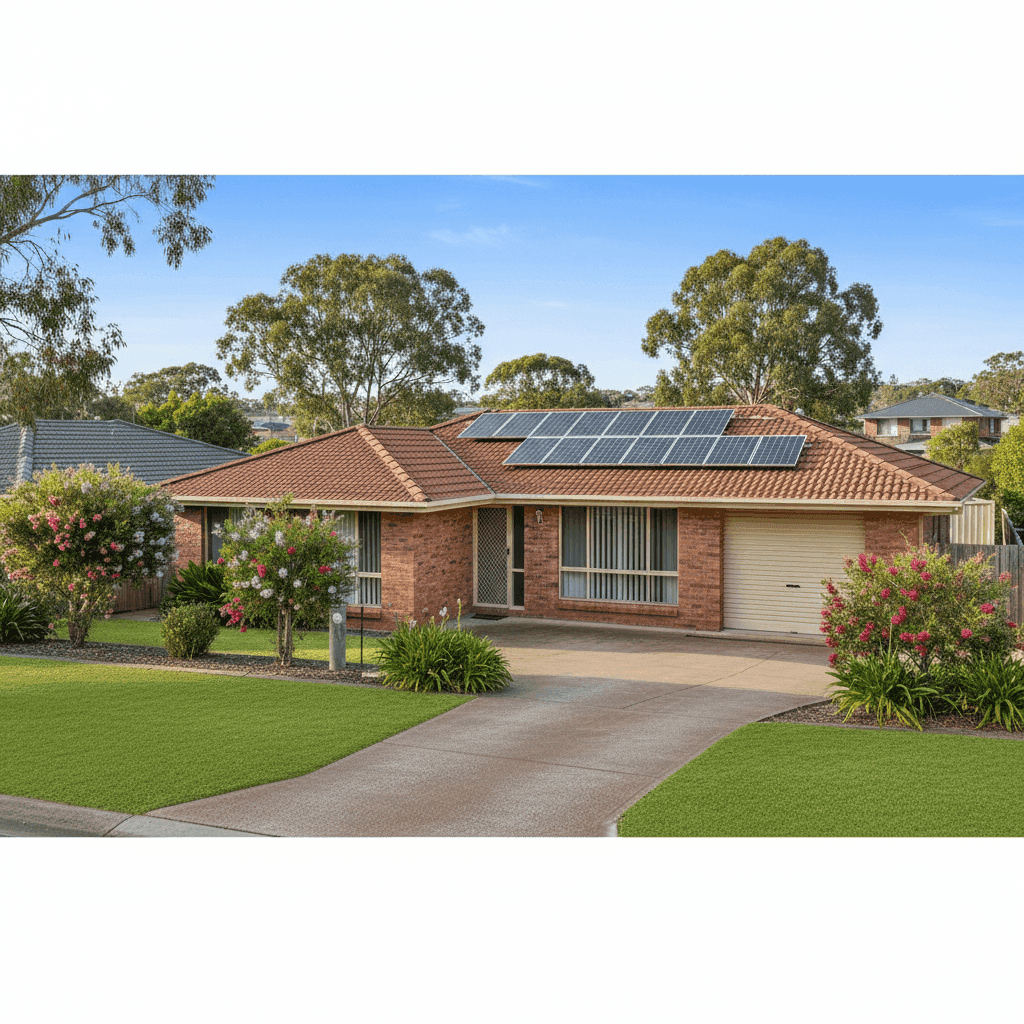
If you own a four-bedroom free standing home in Safety Beach, NSW 2456, you're probably curious about whether your home insurance premium is competitive — or whether you're quietly overpaying year after year. This article breaks down a real building insurance quote for a property in this suburb, compares it against local, state, and national benchmarks, and highlights the key factors that shape what you pay.
---
Is This Quote Fair?
The quote in question sits at $1,874 per year (or $189/month) for building-only cover on a four-bedroom, two-bathroom free standing home, with a building sum insured of $595,000 and an excess of $3,000.
Our price rating for this quote is CHEAP — below the suburb average — and the numbers back that up convincingly. The suburb average premium in Safety Beach is $2,846/yr, meaning this quote comes in roughly 34% below what most homeowners in the area are paying. Even compared to the suburb's 25th percentile — the point at which only one in four quotes are cheaper — this premium of $1,874 undercuts the $2,054/yr mark, placing it firmly in the most competitive tier of pricing available locally.
For a homeowner in Safety Beach, this is genuinely good news. A saving of nearly $1,000 per year compared to the suburb average is meaningful, and over a five-year period that compounds into a significant sum that could be redirected toward home improvements, an emergency fund, or simply your mortgage.
That said, price alone shouldn't drive your decision. It's worth ensuring the policy's terms, inclusions, and exclusions align with your needs — particularly around flood, storm, and escape of liquid cover, which are common pain points for NSW homeowners.
---
How Safety Beach Compares
To understand just how well-positioned this quote is, it helps to zoom out and look at the broader picture. You can explore full pricing data on the Safety Beach suburb stats page, the NSW state stats page, and the national stats page.
| Benchmark | Premium |
|---|---|
| This Quote | $1,874/yr |
| Safety Beach Suburb Average | $2,846/yr |
| Safety Beach Suburb Median | $2,708/yr |
| Safety Beach 25th Percentile | $2,054/yr |
| NSW State Average | $9,528/yr |
| NSW State Median | $3,770/yr |
| National Average | $5,347/yr |
| National Median | $2,764/yr |
| Clarence Valley LGA Average | $31,244/yr |
A few things stand out here. First, the NSW state average of $9,528/yr is dramatically elevated — largely driven by high-risk postcodes across the state, including flood-prone and bushfire-affected regions, which pull the mean upward significantly. The state median of $3,770/yr is a more representative figure for a typical NSW homeowner, and this quote still sits well below it.
The Clarence Valley LGA average of $31,244/yr is particularly striking. This figure reflects the severe insurance pressures faced across the broader LGA, where many properties carry significant flood and storm risk. The fact that this Safety Beach property is attracting a premium far below the LGA average suggests that its specific risk profile is being assessed more favourably by insurers — a meaningful distinction worth understanding.
At the national level, this quote also compares well. The national median of $2,764/yr is still nearly $900 more expensive than this quote, reinforcing the "cheap" rating across every relevant benchmark.
---
Property Features That Affect Your Premium
Several characteristics of this property directly influence the premium calculation, and understanding them can help you anticipate how your rate might change over time.
Brick Veneer Walls & Tiled Roof This combination is generally well-regarded by insurers. Brick veneer offers solid fire resistance and structural durability, while a tiled roof is considered lower risk than metal or fibreglass alternatives in many scenarios. Together, they contribute to a more favourable risk profile compared to, say, a timber-clad home with a Colorbond roof in a high-wind zone.
Construction Year: 1985 A home built in 1985 is now approaching 40 years old. While it's likely to have benefited from decades of maintenance, insurers may factor in the age of key systems — plumbing, electrical wiring, and roofing — when pricing the risk. If these haven't been updated in recent years, it's worth noting that some policies may apply age-related conditions or exclusions.
Slab Foundation A concrete slab foundation is generally considered stable and low-risk from an insurer's perspective, particularly in areas without significant subsidence or expansive clay soil concerns.
Solar Panels The property features solar panels, which are worth paying attention to from an insurance standpoint. Solar panels are typically covered under building insurance, but it's important to confirm this with your insurer and ensure the sum insured reflects their replacement value. With a 214 sqm home and a $595,000 sum insured, there's a reasonable buffer, but it's always worth double-checking that panels are explicitly listed.
No Pool, No Ducted Climate Control The absence of a pool removes a common liability and maintenance risk factor. Similarly, no ducted air conditioning system means one fewer complex mechanical system that could give rise to an escape-of-liquid or electrical fault claim.
Cyclone Risk: None Safety Beach is not classified as a cyclone risk area, which removes one of the more significant premium loading factors that affect properties in northern NSW and Queensland. This is a meaningful advantage in terms of keeping premiums competitive.
---
Tips for Homeowners in Safety Beach
1. Review Your Sum Insured Annually Building costs in NSW have risen sharply over the past few years due to labour shortages and material price inflation. A sum insured of $595,000 may be appropriate today, but it's worth using a building cost calculator each year at renewal to confirm you're not underinsured. Underinsurance is one of the most common — and costly — mistakes homeowners make.
2. Check Your Solar Panel Coverage If your solar system has been upgraded or expanded since your policy was last reviewed, make sure the sum insured reflects the current replacement cost. Some insurers require solar panels to be explicitly listed, while others include them automatically under building cover. Either way, get confirmation in writing.
3. Understand What "Building Only" Excludes A building-only policy covers the structure of your home but not your personal belongings. If a storm damages your roof and water ruins your furniture, appliances, or clothing, you'd need a separate contents policy to recover those losses. Consider whether a combined building and contents policy might offer better overall value and protection.
4. Compare at Every Renewal The insurance market shifts regularly, and the cheapest insurer this year may not be the most competitive next year. Even if you're happy with your current premium, it costs nothing to run a comparison at renewal time. A few minutes of research could save you hundreds of dollars annually.
---
Ready to Compare Home Insurance Quotes?
Whether you're a first-time buyer or a long-term homeowner in Safety Beach, comparing quotes is the simplest way to make sure you're not overpaying. At CoverClub, we make it easy to see what's available for your specific property in minutes. Get a quote today and find out where your premium really sits.