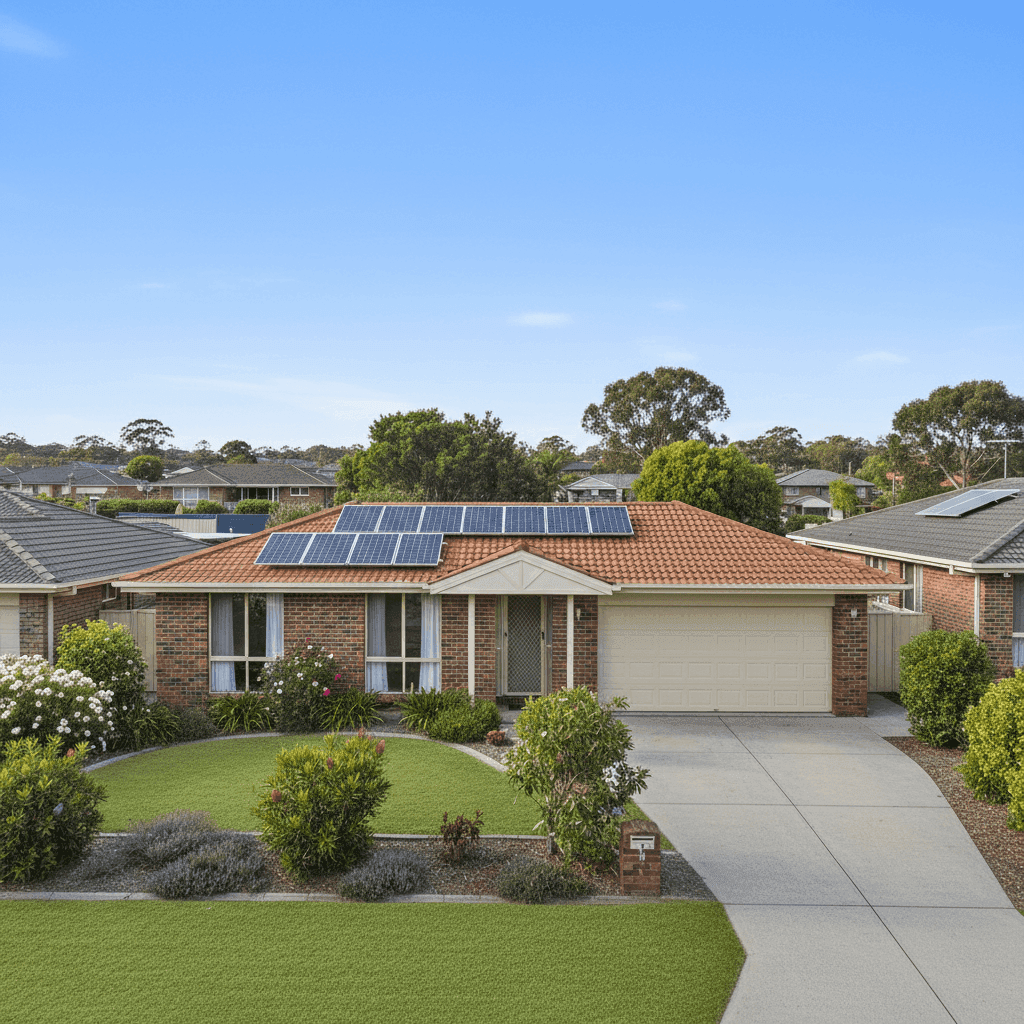
If you own a free standing home in Safety Beach, NSW 2456, you're probably curious about whether you're paying a fair price for your home and contents insurance. This article breaks down a real quote for a four-bedroom, two-bathroom brick veneer home in the area — and puts it in context against suburb, state, and national benchmarks — so you can make a more informed decision about your cover.
---
Is This Quote Fair?
The annual premium for this property came in at $2,037 per year (or roughly $209 per month), covering both building and contents. The building is insured for $619,000, with contents valued at $50,000.
Our price rating for this quote is CHEAP — below average for the Safety Beach area. That's genuinely good news for the homeowner. Based on a sample of 22 quotes collected for this suburb, the average premium sits at $2,846 per year and the median at $2,708. This quote comes in well below both figures — and even slightly below the 25th percentile of $2,054, meaning it's among the most competitively priced policies we've seen in this postcode.
In short, if you're paying around $2,037 a year for comparable cover in Safety Beach, you're getting a solid deal.
---
How Safety Beach Compares
To really appreciate how this quote stacks up, it helps to zoom out and look at the broader picture. Here's how the Safety Beach suburb average compares to the rest of NSW and the country:
| Benchmark | Average Premium | Median Premium |
|---|---|---|
| Safety Beach (2456) | $2,846/yr | $2,708/yr |
| NSW (State) | $9,528/yr | $3,770/yr |
| National | $5,347/yr | $2,764/yr |
| Clarence Valley LGA | $31,244/yr | — |
A few things stand out here. The NSW state average of $9,528 is dramatically higher than the median of $3,770 — a sign that some very high-risk or high-value properties are pulling the average up significantly. The same pattern appears nationally, where the average of $5,347 is nearly double the median of $2,764.
What's particularly striking is the Clarence Valley LGA average of $31,244 per year. This figure is heavily skewed by properties with extreme flood, bushfire, or storm risk elsewhere in the LGA — a reminder that postcode-level data (like the Safety Beach suburb stats) is far more meaningful when assessing your own property's risk profile.
For Safety Beach specifically, the suburb's median premium of $2,708 is actually below the national median of $2,764 — suggesting the area carries a relatively manageable risk profile compared to many parts of Australia. You can explore the full data for this postcode at our Safety Beach insurance stats page, or browse NSW-wide benchmarks and national comparisons.
---
Property Features That Affect Your Premium
Every property is different, and insurers weigh up a range of physical characteristics when calculating your premium. Here's how the features of this particular home likely influence the price:
Brick Veneer Walls Brick veneer is one of the most common and well-regarded construction types in Australia. It offers good fire resistance and structural durability, which insurers generally view favourably. It's not as robust as full brick, but it's a significant step up from timber or fibre cement cladding in terms of risk.
Tiled Roof Terracotta or concrete tiles are considered a relatively low-risk roofing material. They're durable, fire-resistant, and hold up well in most weather conditions — all factors that can contribute to a more competitive premium.
Slab Foundation A concrete slab foundation is standard for homes built in this era and is generally considered stable and low-maintenance. It reduces the risk of subsidence-related claims, which can otherwise push premiums up.
Construction Year: 1987 At nearly 40 years old, the home is established but not ancient. Properties from this era are generally well-understood by insurers. The main consideration is that ageing plumbing, electrical systems, and roofing may require closer attention, particularly as the home approaches the 40-year mark.
Solar Panels This property has solar panels, which are worth noting. Many standard home insurance policies cover solar panels as part of the building sum insured, but it's worth confirming this with your insurer. Some policies treat them as a separate item, and damage from storms or hail can be costly to repair or replace.
Building Sum Insured: $619,000 At 214 sqm, the insured value works out to approximately $2,893 per square metre — a reasonable figure for a standard-quality build in regional NSW. It's always worth reviewing your sum insured periodically to ensure it reflects current construction costs, which have risen significantly in recent years.
Standard Fittings Standard-quality fittings mean there are no high-end fixtures or finishes that would inflate the replacement cost. This keeps the sum insured — and therefore the premium — at a sensible level.
---
Tips for Homeowners in Safety Beach
Whether you're reviewing your current policy or shopping around for the first time, here are some practical steps to make sure you're getting the best value:
- Review your sum insured annually. Construction costs in Australia have surged over the past few years. If your building sum insured hasn't been updated recently, you could be underinsured — meaning a major claim might not cover the full cost of rebuilding. Use a building cost calculator or speak to a local builder to get a current estimate.
- Confirm solar panel coverage. With solar panels on the roof, double-check your policy wording to ensure they're covered under your building insurance. Ask your insurer specifically about storm, hail, and accidental damage cover for the panels and inverter.
- Consider your excess settings carefully. This quote carries a $3,000 building excess and a $500 contents excess. A higher excess typically reduces your premium, but make sure you could comfortably cover that amount out of pocket in the event of a claim. If the $3,000 building excess feels steep, it may be worth getting a comparison quote with a lower excess to weigh up the trade-off.
- Shop around at renewal time. Even if your current premium is competitive — as this one appears to be — insurers regularly adjust their pricing models. What's cheap today may not be the best value next year. Use a comparison tool like CoverClub to benchmark your renewal quote before you commit.
---
Get a Quote for Your Safety Beach Home
Whether this is your first home insurance policy or you're due for a renewal, it pays to compare. CoverClub makes it easy to see how your premium stacks up against real data from your suburb, your state, and across Australia. Enter your address to get started and find out if you're getting the deal you deserve.