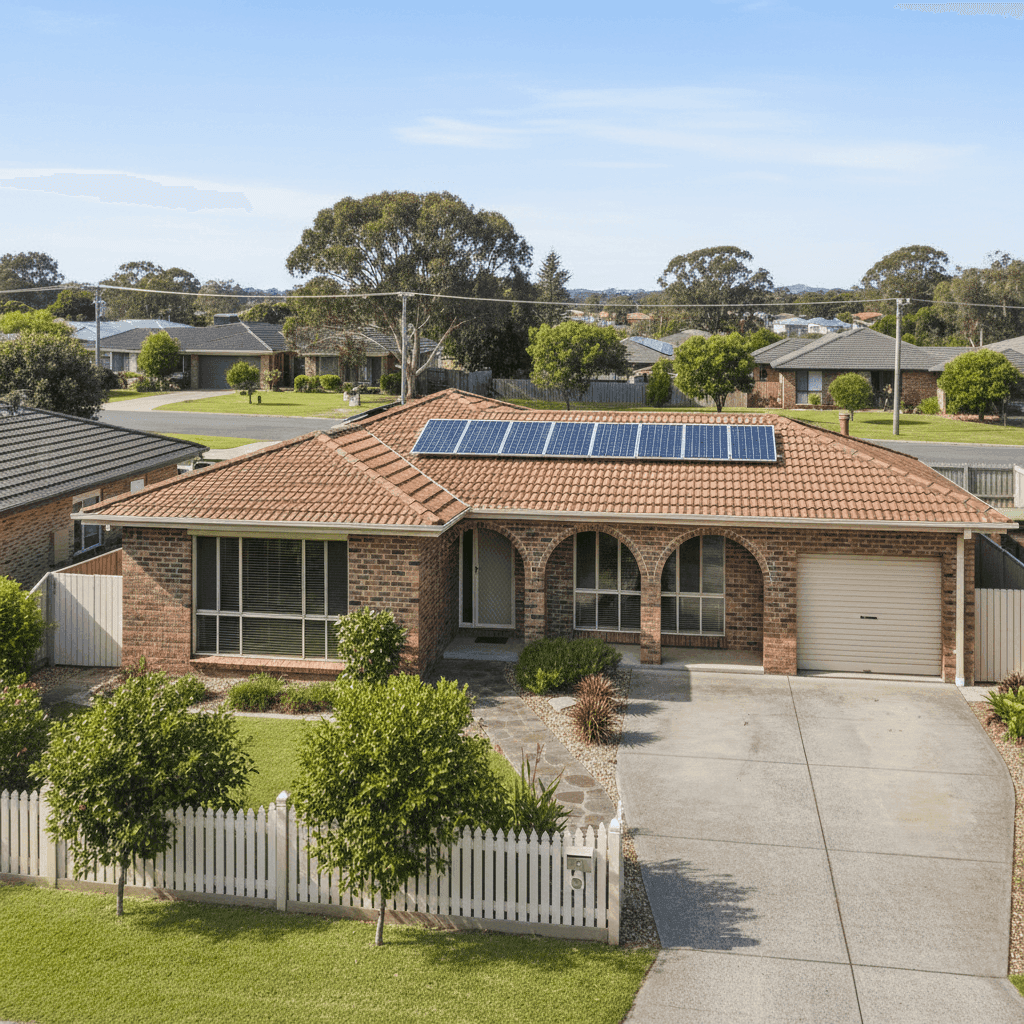
If you own a free standing home in Safety Beach, NSW 2456, you've probably wondered whether your home insurance premium is competitive — or whether you're quietly paying more than you should. This article breaks down a real home and contents insurance quote for a four-bedroom, two-bathroom brick veneer home in Safety Beach, benchmarking it against suburb, state, and national data so you can make a genuinely informed decision.
---
Is This Quote Fair?
The annual premium for this property came in at $2,693 per year (or $258 per month), covering both building (insured at $619,000) and contents ($50,000), each with a $1,000 excess.
Our pricing engine rates this quote as FAIR — around average. That's a meaningful distinction: it's not a bargain, but it's not a rip-off either. For a home of this size and age in a coastal NSW suburb, landing close to the median is a reasonable outcome — especially when you factor in the property's specific features (more on those below).
For homeowners who like context: the suburb median sits at $2,708 per year, meaning this quote is just $15 above the midpoint of what Safety Beach residents are actually paying. That's about as close to "spot on" as quotes get.
---
How Safety Beach Compares
Understanding where your suburb sits relative to broader benchmarks is one of the most useful things you can do as a homeowner. Here's how Safety Beach stacks up:
| Benchmark | Premium |
|---|---|
| This Quote | $2,693/yr |
| Safety Beach Suburb Average | $2,846/yr |
| Safety Beach Suburb Median | $2,708/yr |
| Safety Beach 25th Percentile | $2,054/yr |
| Safety Beach 75th Percentile | $3,091/yr |
| NSW State Average | $9,528/yr |
| NSW State Median | $3,770/yr |
| National Average | $5,347/yr |
| National Median | $2,764/yr |
| Clarence Valley LGA Average | $31,244/yr |
(Based on [Safety Beach suburb quote data](https://coverclub.com.au/stats/NSW/2456/safety-beach) from 22 quotes collected by CoverClub.)
A few things stand out here. First, this quote sits below the suburb average ($2,846) and almost exactly at the suburb median — a solid position. Second, when you compare Safety Beach to NSW as a whole, the suburb looks remarkably affordable. The NSW state average of $9,528 is heavily skewed by high-risk and high-value properties across the state — the median of $3,770 is a more useful comparison, and Safety Beach's median still comes in well below it.
Against national figures, the picture is similarly encouraging. The national average of $5,347 and median of $2,764 suggest Safety Beach homeowners are generally paying around the national midpoint — not the inflated premiums seen in flood-prone or cyclone-affected regions.
The Clarence Valley LGA average of $31,244 deserves a special mention. That extraordinarily high figure reflects the presence of some very high-risk properties within the broader LGA — likely flood-affected or high-value rural holdings — and is not representative of what most Safety Beach homeowners will pay. It's worth being aware of, but don't let it alarm you.
---
Property Features That Affect Your Premium
Insurers don't price every home the same way. The specific characteristics of this property play a meaningful role in where the premium lands.
Brick veneer construction with a tiled roof is generally viewed favourably by insurers. Brick veneer offers solid fire resistance and structural durability, while tiled roofs have a long lifespan and perform well in most weather conditions. This combination typically attracts lower premiums compared to timber-framed or metal-roofed homes.
Slab foundation is standard for homes of this era and region, and doesn't introduce any particular risk loading. Similarly, tile flooring is durable and less susceptible to water damage than carpet or timber, which can be a minor positive factor.
Built in 1987, this home is approaching 40 years old. Older homes can attract slightly higher premiums due to the potential for ageing electrical systems, plumbing, and roofing — though a well-maintained 1987 brick veneer home is generally still considered a sound risk.
Solar panels are worth noting. While they add value to the property, they also represent an additional asset that needs to be covered — and some insurers factor them into building replacement cost calculations. It's important to confirm your sum insured of $619,000 adequately accounts for the cost of replacing the solar system as part of the building.
Ducted climate control is another feature that adds to the replacement value of the home. Again, verifying that your sum insured reflects the full cost of reinstatement — including systems like this — is essential to avoiding underinsurance.
The property has standard fittings quality, no pool, and is not in a cyclone risk area, all of which keep the premium from climbing higher.
---
Tips for Homeowners in Safety Beach
1. Review your sum insured annually At $619,000 for a 214 sqm home, the building sum insured works out to roughly $2,893 per sqm — broadly in line with current construction costs in regional NSW, but worth revisiting each year as building costs continue to rise. Underinsurance is one of the most common and costly mistakes Australian homeowners make.
2. Confirm your solar panels and ducted systems are covered Check your policy wording carefully. Some insurers treat solar panels as part of the building, others as a separate item. Ducted air conditioning systems should also be explicitly covered under your building policy. If in doubt, call your insurer and ask directly.
3. Consider your excess carefully Both the building and contents excess on this policy are set at $1,000. A higher excess can reduce your annual premium, while a lower excess means less out-of-pocket cost at claim time. Think about what you could comfortably afford in the event of a claim, and adjust accordingly.
4. Shop around at renewal time A "fair" rating means there's room to do better. The 25th percentile for Safety Beach sits at $2,054 per year — meaning roughly a quarter of comparable properties are insured for significantly less. Running a fresh comparison before your renewal date takes minutes and could save you hundreds.
---
Compare Home Insurance Quotes in Safety Beach
Whether you're happy with your current policy or think it's time for a change, it pays to know your options. CoverClub makes it easy to compare home and contents insurance quotes for properties across NSW and Australia. Get a quote today and see how your premium stacks up — you might be surprised at what's available.
For more localised data on home insurance costs in your area, visit our Safety Beach suburb stats page or explore NSW-wide insurance data.