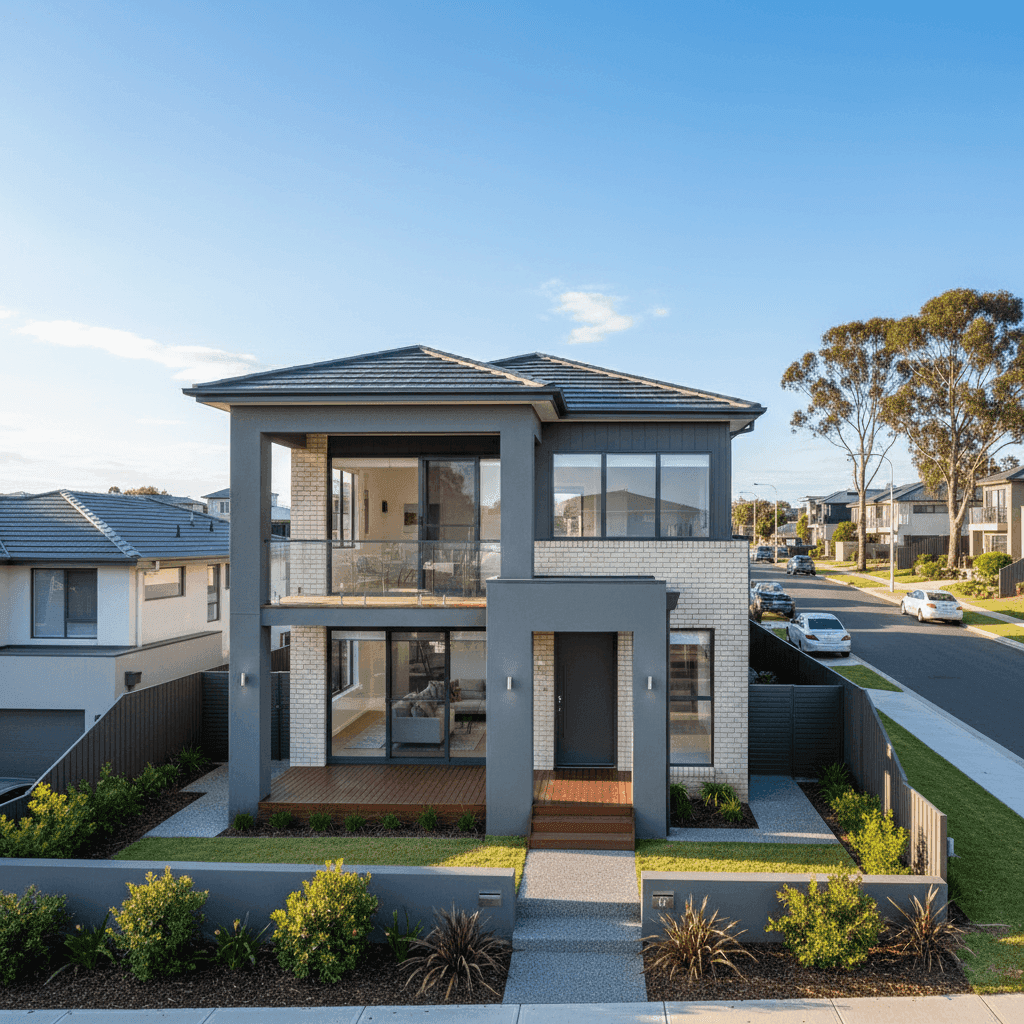
Safety Beach is one of the Mornington Peninsula's most appealing coastal addresses — a relaxed seaside suburb with easy access to Port Phillip Bay, popular with families and downsizers alike. If you own a townhouse here, understanding what you should be paying for home and contents insurance is an important part of protecting what is likely your most valuable asset. This article breaks down a recent quote for a three-bedroom, three-bathroom brick veneer townhouse in Safety Beach (postcode 3936), compares it against local and national benchmarks, and offers practical tips to help you get the best value cover.
---
Is This Quote Fair?
The annual premium for this property came in at $1,919 per year (or around $184 per month), covering both building (insured for $1,200,000) and contents ($50,000), each with a $1,000 excess. CoverClub's pricing engine has rated this quote as Fair — Around Average.
That rating holds up under scrutiny. The premium sits just below the Safety Beach suburb median of $1,965/yr, meaning roughly half of comparable quotes in the area are priced higher. It also comes in well under the suburb average of $3,034/yr — a figure that tends to be pulled upward by high-value coastal properties and more comprehensive cover levels. For a newly constructed townhouse with above-average fittings and a solid $1.2 million building sum insured, landing near the median is a reasonable outcome.
That said, "fair" doesn't necessarily mean "the best available." The suburb's 25th percentile sits at $1,473/yr, which tells us that around a quarter of quotes in Safety Beach come in noticeably cheaper. Whether those lower quotes reflect comparable cover or involve trade-offs in excess, inclusions, or insured value is worth investigating before making a decision.
---
How Safety Beach Compares
Putting this quote in a broader geographic context helps clarify just how competitive — or otherwise — the local insurance market is. You can explore the full data on the Safety Beach suburb stats page.
| Benchmark | Premium |
|---|---|
| This Quote | $1,919/yr |
| Safety Beach Suburb Median | $1,965/yr |
| Safety Beach Suburb Average | $3,034/yr |
| Mornington Peninsula LGA Average | $2,652/yr |
| VIC State Median | $2,718/yr |
| VIC State Average | $3,000/yr |
| National Median | $2,764/yr |
| National Average | $5,347/yr |
The numbers paint an interesting picture. This quote is below the Victorian state median of $2,718/yr and comfortably under the VIC state average of $3,000/yr. Zooming out further, it sits well beneath both the national median ($2,764/yr) and the national average ($5,347/yr) — the latter heavily influenced by high-risk regions in Queensland and Western Australia prone to cyclones and flooding.
For a Mornington Peninsula property, this is a relatively favourable result. The LGA average of $2,652/yr suggests that Safety Beach, as a suburb, trends slightly higher than the broader peninsula — likely reflecting its coastal proximity and the higher rebuild costs associated with quality new construction in the area.
---
Property Features That Affect Your Premium
Several characteristics of this particular townhouse will be influencing its premium, both positively and negatively.
New construction (2026 build): Newly built properties typically attract more competitive premiums. Modern building codes mean better structural integrity, improved fire resistance, and lower likelihood of claims related to ageing infrastructure. Insurers generally view new builds favourably.
Brick veneer external walls: Brick veneer is one of the more insurer-friendly wall types. It offers solid fire resistance and durability, which can help moderate premiums compared to properties with timber or lightweight cladding.
Tiled roof: Like brick veneer walls, a tiled roof is considered a lower-risk roofing material. Tiles are durable, fire-resistant, and less susceptible to storm damage than corrugated iron in most conditions — all factors that work in the homeowner's favour.
Slab foundation: A concrete slab is a standard, stable foundation type that doesn't introduce the underfloor risks associated with raised stumped homes. Combined with the property being elevated by at least one metre, this suggests the home has been designed with drainage and flood resilience in mind — a smart consideration for any coastal suburb.
Elevated by at least 1 metre: Elevation is a meaningful risk mitigant, particularly in coastal and low-lying areas. Homes that sit higher above ground level are less vulnerable to inundation during heavy rainfall or storm surge events, which can translate to lower flood-related risk in the eyes of insurers.
Above-average fittings quality: This is one factor that will push the premium upward. Higher-quality fittings — think stone benchtops, premium appliances, custom joinery — increase the cost to repair or rebuild, which is reflected in the higher building sum insured of $1.2 million and, in turn, the premium.
Ducted climate control: A ducted system is a significant fixed installation and adds to the replacement value of the home. It's generally captured within the building sum insured and is a worthwhile inclusion to confirm with your insurer.
No pool, no solar panels: Both pools and solar panel systems can add complexity and cost to a home insurance policy. The absence of these features simplifies the risk profile slightly.
---
Tips for Homeowners in Safety Beach
1. Review your building sum insured regularly. With a new 2026 build and above-average fittings, your rebuild cost could shift meaningfully over time as construction costs fluctuate. Underinsurance is a serious and common problem — make sure your $1.2 million sum insured reflects current building rates, not what you paid at settlement.
2. Check what your policy says about storm and coastal water damage. Safety Beach is a bayside suburb, and while it's not classified as a cyclone risk area, storm events and coastal weather can still cause significant damage. Read the Product Disclosure Statement (PDS) carefully to understand how your policy defines and covers storm surge, rainwater ingress, and wind damage.
3. Consider whether your contents cover is sufficient. $50,000 in contents cover is on the modest side for a three-bedroom, three-bathroom home with above-average fittings. Take stock of your furniture, appliances, clothing, and valuables — it's easy to underestimate how quickly contents add up, particularly in a well-appointed home.
4. Compare quotes before renewing. Insurance loyalty rarely pays. Premiums can vary significantly between providers for the same property, as our suburb data (based on 40 quotes in Safety Beach) clearly shows — with a spread from $1,473/yr at the 25th percentile to $3,851/yr at the 75th percentile. Shopping around at renewal time is one of the simplest ways to avoid overpaying.
---
Ready to Compare?
Whether you're reviewing your current policy or insuring a new purchase, CoverClub makes it easy to see how your quote stacks up. Get a home insurance quote today and compare your options side by side — so you can make a confident, informed decision about protecting your Safety Beach home.