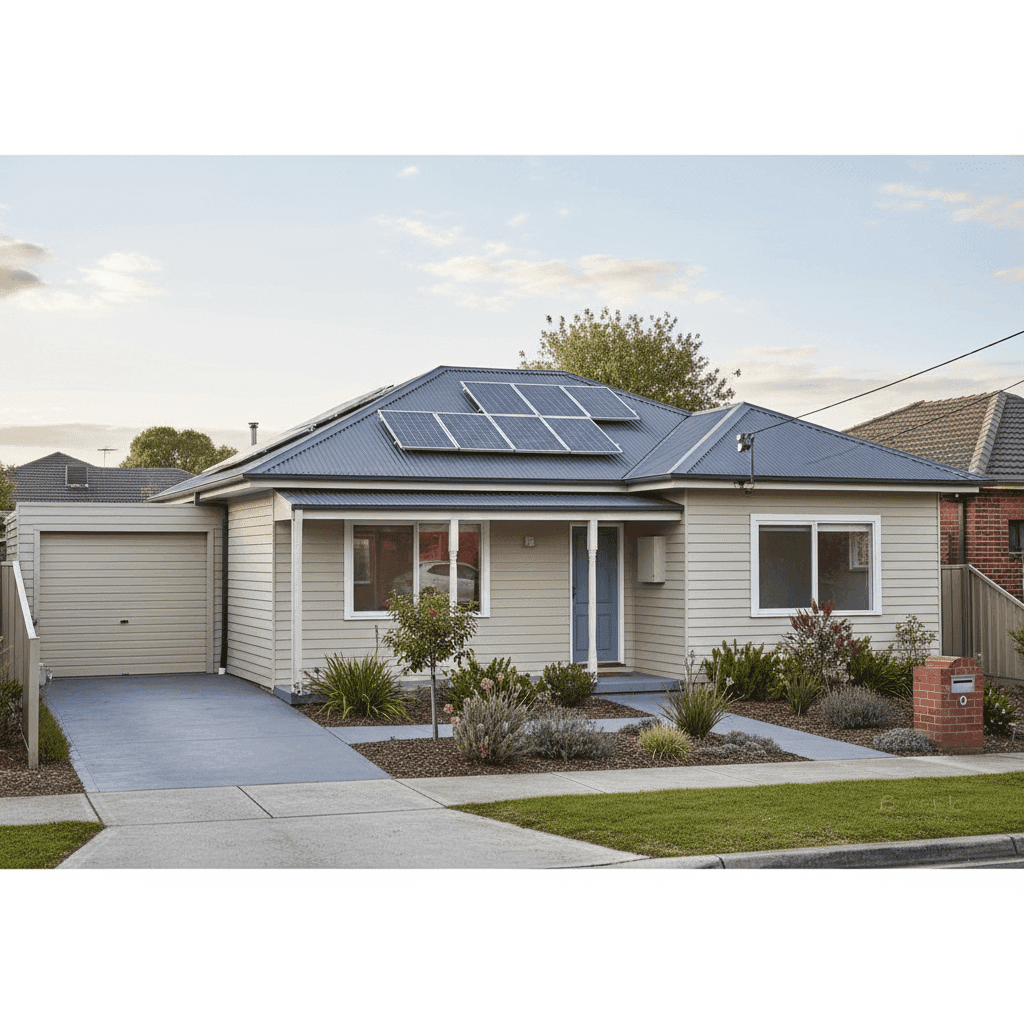
Saint Albans, a well-established suburb in Melbourne's western corridor, is home to a diverse mix of properties — from post-war brick veneer homes to weatherboard houses built in the 1990s. If you own a free standing home here and you're trying to make sense of your building insurance premium, you're in the right place. This article breaks down a real building-only quote for a 3-bedroom, 1-bathroom home in Saint Albans (VIC 3021), and puts the numbers into context so you can decide whether you're getting a fair deal.
---
Is This Quote Fair?
The quote in question comes in at $1,827 per year (or $158 per month) for building-only cover, with a $2,000 excess and a sum insured of $406,000. Our pricing analysis rates this as FAIR — Around Average.
That rating holds up when you look at the data. Based on 40 quotes collected for Saint Albans, the suburb average sits at $1,769 per year, with a median of $1,662. This quote lands about $58 above the suburb average and $165 above the median — not dramatically over the odds, but not the sharpest price on the market either.
To put it another way: 25% of quotes in Saint Albans came in below $1,013, while 75% came in below $2,186. At $1,827, this quote sits comfortably in the upper half of the local market — above average, but well within the typical range for the area. There's room to do better, but there's no cause for alarm.
---
How Saint Albans Compares
One of the most striking takeaways from this data is just how competitive Saint Albans is relative to broader benchmarks.
| Benchmark | Average Premium |
|---|---|
| Saint Albans (suburb) | $1,769/yr |
| Brimbank LGA | $1,707/yr |
| Victoria (state) | $3,000/yr |
| National | $5,347/yr |
Saint Albans homeowners are paying significantly less than the Victorian state average of $3,000 per year — that's a difference of over $1,200 annually. Compared to the national average of $5,347, the gap is even more pronounced. Much of the national figure is driven up by high-risk regions — cyclone-prone areas in Queensland and the Northern Territory, flood-affected zones, and bushfire corridors — none of which apply to Saint Albans.
The Brimbank LGA average of $1,707 is actually slightly below the Saint Albans suburb average, suggesting that while Saint Albans is broadly in line with its council area, there may be some street-level or property-level risk factors nudging certain quotes a touch higher.
For a deeper look at how premiums vary across the postcode, visit the Saint Albans insurance stats page.
---
Property Features That Affect Your Premium
Every insurer assesses risk differently, but the characteristics of this particular property play a meaningful role in shaping the quote.
Weatherboard Timber Walls
Weatherboard construction is one of the most common wall types in Melbourne's western suburbs, particularly in homes built before 2000. While timber weatherboard homes have a certain character and charm, insurers typically view them as higher risk than brick or brick veneer — primarily due to fire susceptibility. This can push premiums slightly higher compared to equivalent brick homes.
Steel/Colorbond Roof
On the positive side, a Colorbond steel roof is generally well-regarded by insurers. It's durable, resistant to ember attack, and holds up well in storm conditions. Compared to older tile roofs (which can crack, slip, or leak), Colorbond tends to attract more favourable treatment at assessment time.
Pole/Stump Foundation
A home built on poles or stumps introduces some additional complexity. These foundations can be susceptible to movement, subsidence, and moisture-related issues over time. Insurers may factor this into their risk assessment, particularly for a home built in 1995 that may be due for restumping inspections.
Solar Panels
This property has solar panels installed, which adds value to the sum insured but can also introduce a modest premium loading. Solar systems are an insurable asset under building cover, and their replacement cost is factored into the $406,000 sum insured.
Ducted Climate Control
Ducted heating and cooling systems are another feature that adds to the replacement value of the home. These systems are expensive to reinstall and are correctly captured in a thorough sum insured calculation.
Timber/Laminate Flooring
Timber and laminate floors are attractive but can be costly to replace following water damage or fire. This is worth keeping in mind when reviewing whether your sum insured is adequate.
---
Tips for Homeowners in Saint Albans
1. Review Your Sum Insured Regularly
Construction costs have risen sharply across Australia in recent years. A sum insured of $406,000 for a 130 sqm home works out to roughly $3,123 per square metre — which is broadly reasonable for a standard-quality build, but worth cross-checking with a quantity surveyor or an online building cost calculator every year or two. Being underinsured can be a costly mistake at claim time.
2. Shop Around — Especially in the Upper Half of the Market
This quote sits above the suburb median. Given the relatively wide spread between the 25th percentile ($1,013) and 75th percentile ($2,186), there's meaningful variation in what insurers are willing to charge for similar properties in Saint Albans. Comparing at least three to four quotes could uncover savings of several hundred dollars per year.
3. Consider Your Excess Carefully
A $2,000 building excess is on the higher end of the spectrum. Choosing a higher excess typically reduces your annual premium — but only makes sense if you can comfortably cover that amount out of pocket in the event of a claim. Review whether this trade-off works for your financial situation.
4. Keep Records of Your Fixtures and Improvements
If you've upgraded your kitchen, added solar panels, or installed ducted climate control since the policy was first taken out, make sure these are reflected in your sum insured. Underdeclaring improvements is one of the most common reasons homeowners find themselves underinsured after a major loss.
---
Ready to Compare?
Whether this quote is the right one for you depends on more than just the price — policy inclusions, claim handling reputation, and excess structures all matter. The best way to find out if you can do better is to compare. Get a building insurance quote at CoverClub and see how your options stack up side by side. It takes just a few minutes and could save you hundreds.