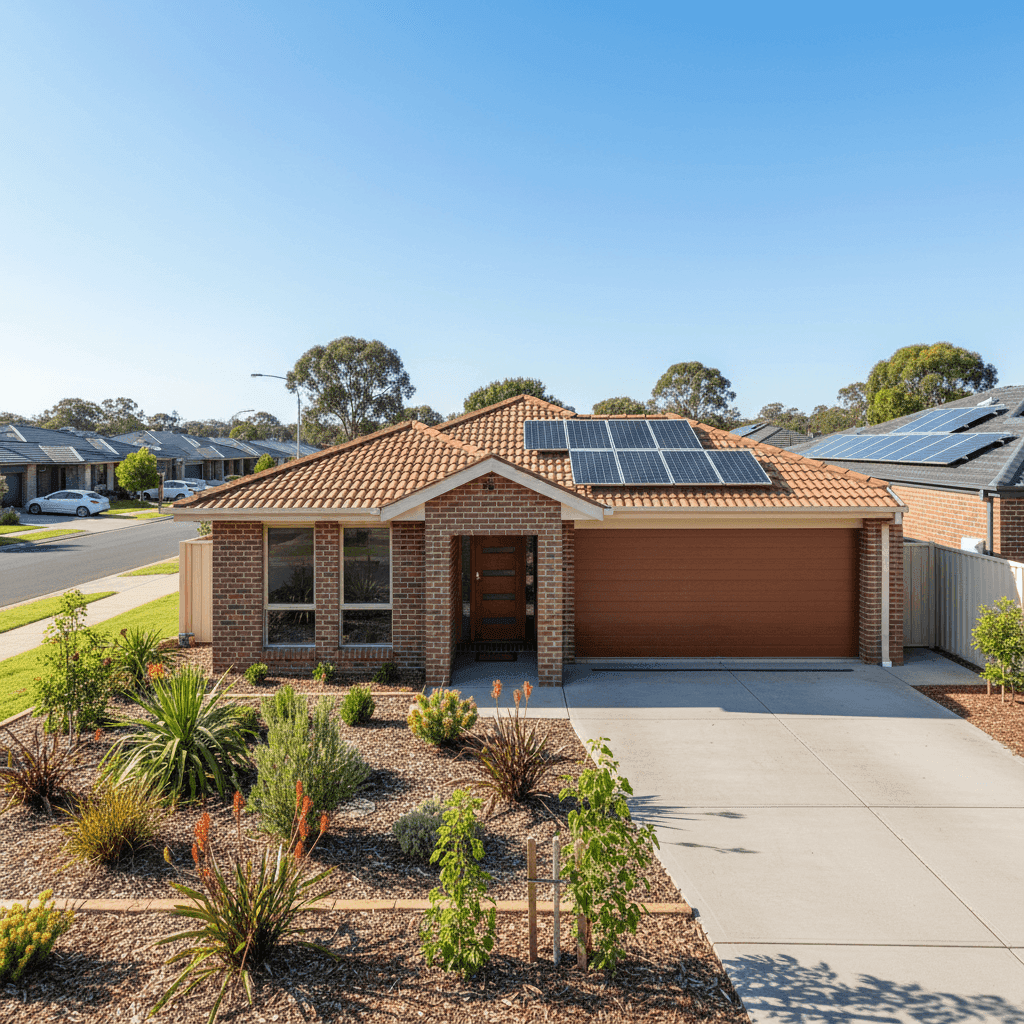
If you own a free standing home in Saint Andrews, NSW 2566, you've probably wondered whether you're paying a fair price for building insurance — or whether there's a better deal out there. This article breaks down a real building-only insurance quote for a four-bedroom, three-bathroom brick veneer home in the suburb, and puts the numbers into context using state and national benchmarks.
---
Is This Quote Fair?
The annual premium for this property comes in at $3,546 per year (or roughly $340 per month), with a building excess of $1,000. Our analysis rates this quote as FAIR — around average for the area and property type.
That rating might sound underwhelming, but in the current Australian insurance climate — where premiums have risen sharply due to increased weather events, reinsurance costs, and inflation in building materials — landing near the average is actually a reasonable outcome. It means you're not being significantly overcharged, though there's still potential room to save by shopping around.
The sum insured is set at $1,500,000, which is on the higher end for a 130 sqm home built in 1985. It's worth confirming this figure accurately reflects your home's rebuild cost (not its market value), as over-insuring can unnecessarily inflate your premium.
---
How Saint Andrews Compares
To put this quote in proper perspective, here's how it stacks up against broader benchmarks:
| Benchmark | Average Premium |
|---|---|
| This Quote | $3,546/yr |
| NSW State Average | $3,801/yr |
| NSW State Median | $3,410/yr |
| National Average | $2,965/yr |
| National Median | $2,716/yr |
| LGA (Camden) Average | $2,312/yr |
A few things stand out here. First, this quote sits below the NSW state average of $3,801 — a positive sign. It's also very close to the NSW median of $3,410, which suggests it's a fairly typical outcome for a New South Wales homeowner.
However, it's notably higher than the national average ($2,965) and the national median ($2,716). This reflects a broader pattern: NSW homeowners generally pay more for home insurance than those in many other states, driven by higher property values, greater exposure to storm and flood risk in parts of the state, and elevated building costs in the Sydney metro region.
Perhaps most striking is the comparison to the Camden LGA average of $2,312/yr — this quote is significantly higher than the local government area average. That gap could reflect the specific risk profile of this property (its age, construction type, or sum insured level), or simply that other homes in the LGA are insured for lower rebuild values. It's a useful data point that suggests there may be room to negotiate or compare alternatives.
You can explore more localised data on the Saint Andrews suburb stats page, or browse the NSW state insurance overview and national home insurance statistics for broader context.
---
Property Features That Affect Your Premium
Several characteristics of this home will be influencing the premium — some favourably, others less so. Here's what's worth knowing:
Brick Veneer Walls & Tiled Roof Brick veneer is generally viewed positively by insurers. It's durable, fire-resistant, and holds up well in most weather conditions. Combined with a tiled roof, this construction profile is considered lower risk than, say, weatherboard cladding or a corrugated iron roof. These features likely contribute to a more competitive premium.
Slab Foundation A concrete slab foundation is a standard, stable choice that insurers tend to view neutrally to positively. It reduces the risk of subsidence and pest-related structural damage compared to older raised foundations.
Construction Year: 1985 At roughly 40 years old, this home sits in a middle ground. It's old enough that some insurers apply age-related loadings — particularly around plumbing, electrical wiring, and roofing — but it's not considered a heritage or high-risk older property. Regular maintenance is key to keeping premiums from creeping up over time.
Solar Panels The presence of solar panels adds a layer of complexity for insurers. Panels represent an additional asset on the roof that can be damaged by hail, storms, or fire. Some insurers include solar panels under building cover automatically, while others require you to specify them. Always confirm your policy explicitly covers solar panels and check the sub-limit that applies.
Ducted Climate Control Ducted air conditioning systems are a significant fixed asset within the home and are typically covered under building insurance. However, mechanical breakdown is usually excluded — so if your system fails due to age or wear, that's unlikely to be a covered event.
No Pool The absence of a swimming pool removes one common source of liability and maintenance risk, which can otherwise contribute to slightly higher premiums.
Standard Fittings With standard-quality fittings throughout, this home avoids the premium loadings that often apply to high-end finishes, custom joinery, or luxury fixtures. This is a factor working in the homeowner's favour.
---
Tips for Homeowners in Saint Andrews
1. Review Your Sum Insured At $1,500,000 for a 130 sqm home, the sum insured is relatively high. Use a professional building cost estimator — or ask your insurer to justify the figure — to ensure you're not over-insured. Reducing an inflated sum insured could meaningfully lower your annual premium without leaving you underprotected.
2. Confirm Solar Panel Coverage Don't assume your solar panels are automatically covered. Read your Product Disclosure Statement carefully and ask your insurer specifically how panels are treated — including whether storm damage, inverter failure, and accidental breakage are included.
3. Compare Quotes Before Renewal The Camden LGA average of $2,312/yr suggests there may be more competitive options available in the local market. Loyalty doesn't always pay in insurance — comparing quotes at renewal is one of the simplest ways to avoid paying more than you need to.
4. Maintain the Property Proactively Given the home's age, staying on top of roof maintenance, gutters, and plumbing can help avoid claims and keep you in good standing with your insurer. Some insurers will also reduce premiums if you can demonstrate recent updates to key systems like electrical or roofing.
---
Ready to Compare?
Whether you're happy with your current quote or think there's room to do better, it pays to see what else is available. Get a home insurance quote at CoverClub and compare building insurance options for your Saint Andrews property in minutes. With access to a range of insurers and transparent pricing data, CoverClub makes it easier to find cover that suits both your home and your budget.