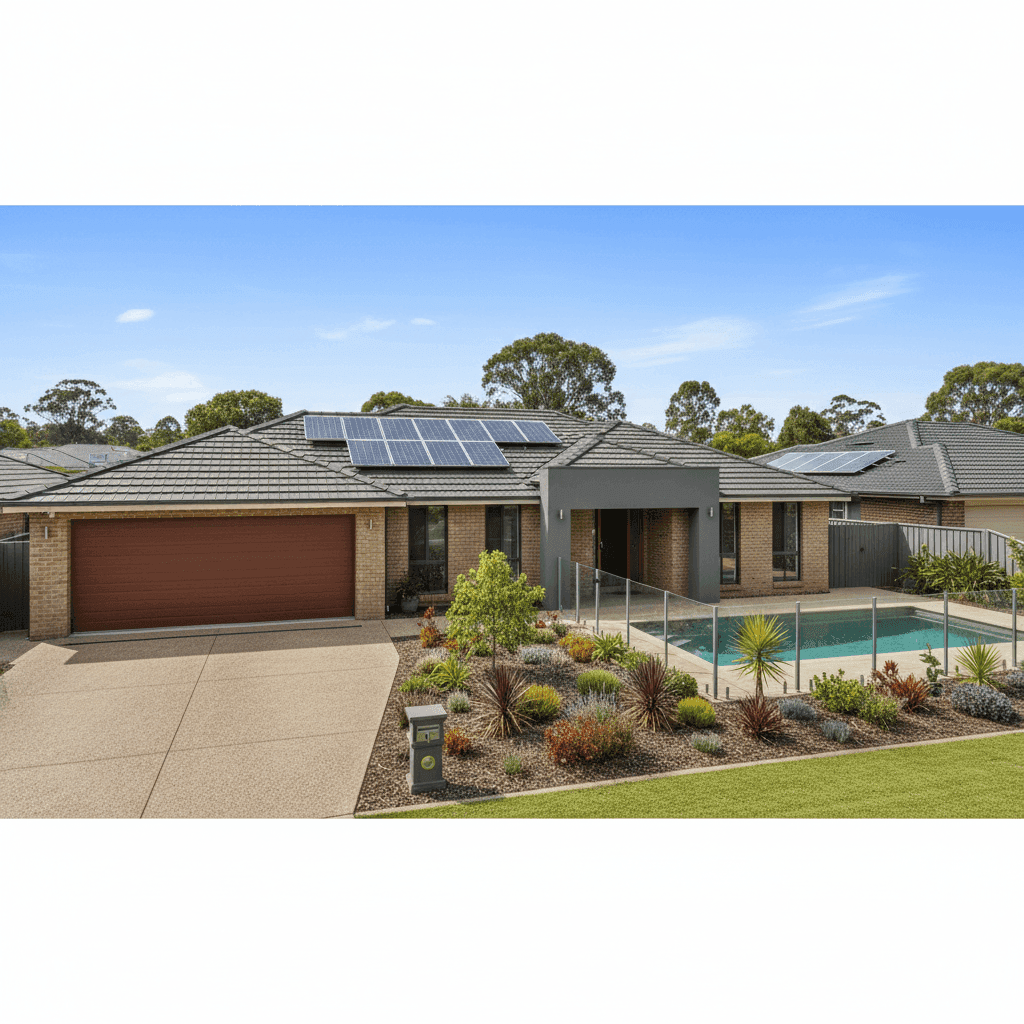
Saint Andrews, a quiet residential suburb in Sydney's south-west, is home to a growing number of families drawn to its spacious blocks and suburban lifestyle. If you own a free standing home here — particularly a four-bedroom brick veneer property built in the 1980s — understanding what you should be paying for home and contents insurance is an important step in protecting one of your most significant assets. This article breaks down a real quote of $2,464 per year (or $236/month) for a property in Saint Andrews (postcode 2566), and puts it in context against local, state, and national benchmarks.
---
Is This Quote Fair?
The short answer: yes, broadly fair — but there's room to do better.
This quote has been rated Fair (Around Average), which means it sits in the middle of the market rather than at the sharp end. For a building sum insured of $800,000 and $40,000 in contents cover, with a $1,000 excess on both building and contents, paying $2,464 per year is not unreasonable — but it's not a standout deal either.
To put this in perspective, the suburb average premium in Saint Andrews sits at $2,162/year, and the median is lower again at $1,879/year. That means this quote is running about $302 above the suburb average and roughly $585 above the median. It does, however, fall comfortably below the 75th percentile of $2,746/year, so you're not being significantly overcharged — you're just not getting the best available rate.
The good news? The spread between the 25th percentile ($1,364/year) and the 75th percentile ($2,746/year) is quite wide, which tells us there's meaningful price variation in this suburb. That's a signal that shopping around could yield real savings.
---
How Saint Andrews Compares
One of the most striking takeaways from this data is just how much cheaper Saint Andrews is compared to the broader New South Wales and national insurance markets. You can explore the full breakdown on the Saint Andrews suburb stats page.
| Benchmark | Average Premium | Median Premium |
|---|---|---|
| Saint Andrews (suburb) | $2,162/yr | $1,879/yr |
| Camden LGA | $1,946/yr | — |
| NSW (state) | $9,528/yr | $3,770/yr |
| National | $5,347/yr | $2,764/yr |
The NSW state average of $9,528/year looks alarming at first glance, but this figure is heavily skewed by high-risk coastal and flood-prone areas — particularly in regional NSW. The NSW state insurance data reflects this wide variance. Similarly, the national average of $5,347/year is influenced by cyclone-prone regions in Queensland and WA, as well as bushfire-affected zones.
For homeowners in Saint Andrews, the Camden LGA average of $1,946/year is arguably the most relevant comparison — and this quote sits about $518 above that benchmark. That gap is worth investigating when your policy comes up for renewal.
---
Property Features That Affect Your Premium
Several characteristics of this property have a direct bearing on the premium calculated by insurers. Understanding these factors can help you have a more informed conversation when comparing policies.
Brick Veneer Walls & Tiled Roof Brick veneer construction with a tiled roof is one of the most common — and generally well-regarded — combinations in Australian suburban housing. Insurers typically view this positively, as brick veneer offers solid fire resistance and tiles are durable under normal weather conditions. This construction profile is unlikely to attract loading on your premium.
Slab Foundation A concrete slab foundation is standard for homes of this era and is generally considered low-risk by insurers. Unlike homes on stumps or piers, slab foundations have fewer issues with subsidence and pest ingress, which can reduce the likelihood of certain claims.
Timber & Laminate Flooring Flooring type can influence contents and building claims. Timber and laminate floors can be susceptible to water damage, which is worth keeping in mind when reviewing your policy's water damage inclusions and sub-limits.
Swimming Pool A pool adds both value and liability to a property. From an insurance standpoint, pools can contribute to a slightly higher premium due to the increased risk of accidental damage and public liability exposure. Ensure your policy explicitly covers pool infrastructure, including pumps and filtration systems.
Solar Panels Solar panels are increasingly common on Australian rooftops, but not all standard home insurance policies cover them adequately. At 244 sqm, this home likely has a meaningful solar installation. Confirm that your policy covers panels for storm damage, hail, and accidental breakage — and that the sum insured for the building accounts for their replacement value.
Ducted Climate Control Ducted air conditioning systems are expensive to repair or replace. As a fixed installation, ducted systems should be covered under your building sum insured — but it's worth double-checking the policy wording, particularly around mechanical breakdown exclusions.
Construction Year: 1984 Homes built in the mid-1980s are now over 40 years old. While structurally sound if well-maintained, older homes can attract slightly higher premiums due to ageing electrical wiring, plumbing, and roofing materials. Some insurers may also apply conditions around maintenance obligations.
---
Tips for Homeowners in Saint Andrews
1. Review your building sum insured annually At $800,000, this policy's building sum insured needs to reflect the true cost of rebuilding — not the market value of the land. Construction costs have risen sharply in recent years, and underinsurance remains a significant risk for Australian homeowners. Use a building cost calculator or speak with a quantity surveyor to verify your figure.
2. Confirm solar panel and pool coverage explicitly Don't assume these features are covered. Ask your insurer specifically how solar panels and pool equipment are treated under the policy, and whether there are any sub-limits or exclusions that apply.
3. Consider increasing your excess to reduce your premium With a $1,000 excess currently in place, there may be an opportunity to save on your annual premium by opting for a higher excess — particularly if you have a healthy emergency fund and are unlikely to make small claims.
4. Shop around at renewal time Given the wide premium spread in this suburb (from $1,364 to $2,746/year), there is clearly a competitive market to tap into. Don't let your policy auto-renew without comparing alternatives. Even a modest saving of $300–$400 per year compounds significantly over time.
---
Compare Your Home Insurance Quote Today
Whether you're reviewing an existing policy or shopping for the first time, getting a clear picture of what the market looks like in your area is the first step to making a confident decision. Use CoverClub to compare home insurance quotes tailored to your property in Saint Andrews — and make sure you're not paying more than you need to.