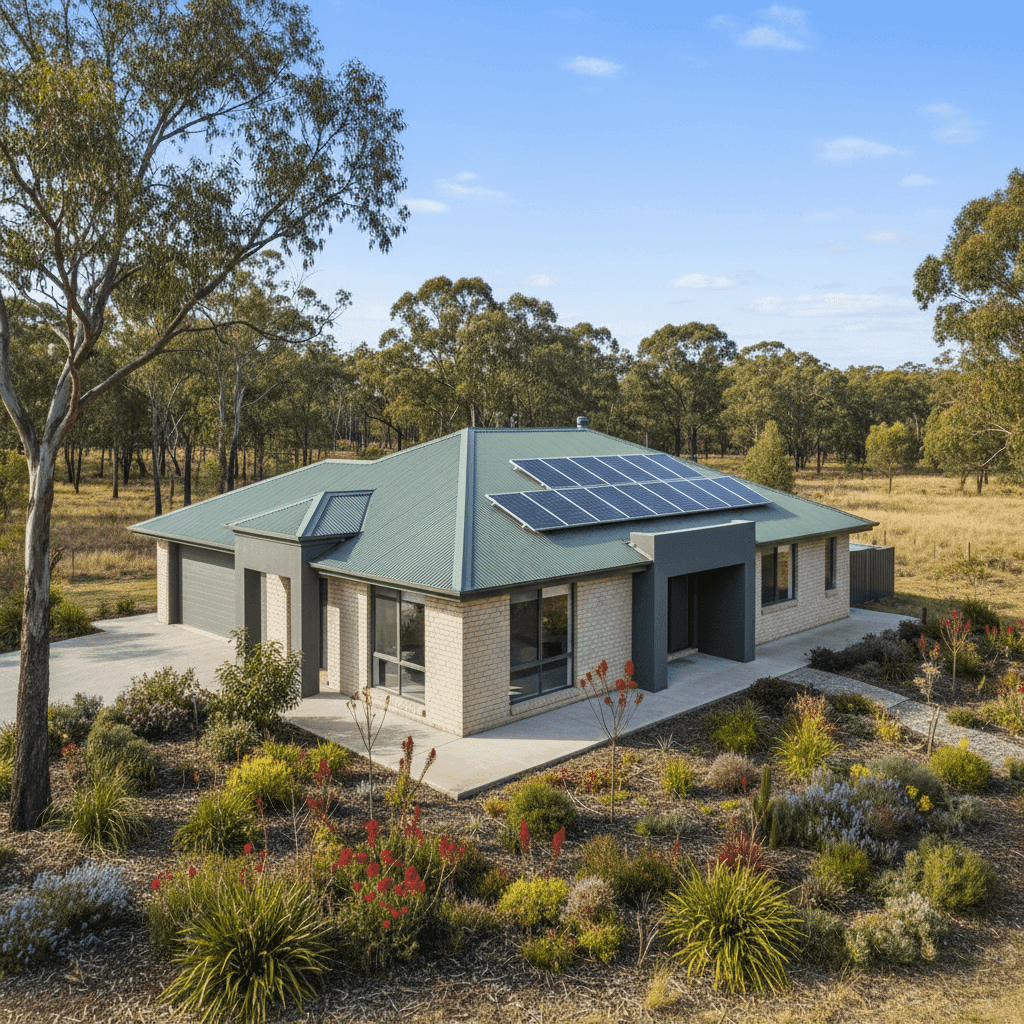
Saint Andrews, nestled in the rolling hills of Melbourne's outer north-east, is a sought-after semi-rural suburb known for its bushland character and acreage lifestyle. For owners of a free standing home in this postcode, securing the right home and contents insurance is not just a financial decision — it's a critical layer of protection given the area's unique risk profile. This article breaks down a recent home and contents insurance quote for a four-bedroom, two-bathroom free standing home in Saint Andrews (VIC 3761), and puts the numbers into context so you can judge whether you're getting a fair deal.
---
Is This Quote Fair?
The quoted annual premium of $6,714 (or $643/month) covers both building (sum insured: $1,200,000) and contents ($206,000), with a $1,000 excess applying to each. CoverClub's pricing engine has rated this quote as FAIR — Around Average, and the data backs that up.
Within Saint Andrews itself, the suburb average sits at $6,038/year and the median at $6,134/year. This quote lands above both of those figures, but it's well within the suburb's 75th percentile of $7,083/year — meaning roughly three-quarters of comparable quotes in the area come in cheaper, but a meaningful portion are more expensive. In other words, this isn't a bargain, but it's not an outlier either.
It's worth noting that the suburb sample size is relatively small (10 quotes), so averages here carry more uncertainty than in denser urban postcodes. A single high-value property or unusual risk profile can shift the suburb average noticeably. With that caveat in mind, a premium sitting between the median and the 75th percentile is a reasonable result for a well-appointed home in this location.
---
How Saint Andrews Compares
One of the most striking aspects of this quote is just how far above state and national benchmarks it sits — and that gap is largely explained by geography and risk, not overpricing.
| Benchmark | Average | Median |
|---|---|---|
| Saint Andrews (3761) | $6,038/yr | $6,134/yr |
| Victoria (VIC) | $3,000/yr | $2,718/yr |
| National | $5,347/yr | $2,764/yr |
| Nillumbik LGA | $3,693/yr | — |
You can explore the full breakdown on the Saint Andrews suburb stats page, the Victoria state stats page, or compare against national home insurance data.
The Victorian state average of $3,000/year is less than half the suburb average for Saint Andrews — a significant gap. Even the national average of $5,347/year, which is pulled upward by high-risk areas in Queensland and Western Australia, sits below what Saint Andrews homeowners are typically paying. The Nillumbik LGA average of $3,693/year is also considerably lower, suggesting that Saint Andrews specifically attracts a premium within its own council area.
Why? Bushfire risk is the dominant factor. Saint Andrews and the surrounding Nillumbik Shire sit in one of Victoria's highest bushfire hazard zones, and insurers price accordingly. The Black Saturday fires of 2009 caused catastrophic losses in this region, and that history is permanently embedded in actuarial models.
---
Property Features That Affect Your Premium
Several characteristics of this property influence the final premium — some pushing it higher, others providing modest relief.
Brick Veneer Walls & Steel/Colorbond Roof Brick veneer construction is generally viewed favourably by insurers due to its fire resistance and structural durability compared to weatherboard or lightweight cladding. Similarly, a Colorbond steel roof is considered a lower-risk roofing material — it doesn't combust, handles ember attacks better than timber, and is durable in high-wind events. These features likely provide some downward pressure on the premium relative to what a timber-clad home might attract.
Slab Foundation A concrete slab foundation is a stable, low-maintenance base that insurers tend to view positively. It eliminates the risks associated with subfloor spaces (such as pest ingress or moisture damage) and is less susceptible to movement in reactive soils.
Timber/Laminate Flooring & Above-Average Fittings Above-average fittings quality — think stone benchtops, quality appliances, and premium fixtures — directly increases the cost to rebuild or repair, which justifies a higher sum insured. Combined with timber and laminate flooring (which can be costly to replace), this contributes to the $1,200,000 building sum insured and elevated premium.
Solar Panels Solar panels are an increasingly common feature and most insurers now include them under building cover as a fixed structure. However, they do add replacement value to the building and can complicate roof repairs, which may have a marginal upward effect on premiums.
Ducted Climate Control Ducted heating and cooling systems are a significant fixed asset within the home. Their inclusion in the building sum insured is appropriate, but it's worth confirming with your insurer exactly what is and isn't covered — particularly for mechanical breakdown versus accidental damage.
New Build (2026) A newly constructed home typically benefits from modern building standards, which can reduce certain risks. However, for insurance purposes, a new build with a high replacement value will still attract a premium commensurate with that value.
---
Tips for Homeowners in Saint Andrews
1. Review Your Bushfire Preparation Annually Some insurers offer discounts or more competitive pricing for homes with documented bushfire mitigation measures — things like ember guards on vents, cleared defendable space, and metal mesh on gutters. Even if your insurer doesn't formally discount for these, being able to demonstrate a well-maintained property can support your case at claim time.
2. Double-Check Your Building Sum Insured At $1,200,000, the building sum insured is substantial — but rebuilding costs in regional Victoria have risen sharply in recent years due to labour shortages and material costs. Use a building cost calculator (many insurers provide one) to verify this figure annually. Being underinsured in a total loss scenario — which is a real risk in bushfire-prone areas — can be financially devastating.
3. Compare Quotes at Renewal A "FAIR" rating means you're not being gouged, but you're also not necessarily getting the best available price. The insurance market is competitive, and premiums can vary significantly between providers for the same property. Use CoverClub's quote comparison tool to benchmark your renewal offer before you accept it.
4. Consider Your Contents Cover Carefully The $206,000 contents value is a meaningful sum. Take time to conduct a home inventory — particularly for high-value items like jewellery, electronics, artwork, and sporting equipment — as these may require specific listing or additional cover (scheduled items) to be fully protected under a standard policy.
---
Compare Your Quote with CoverClub
Whether you're renewing or shopping for the first time, it pays to know where your premium sits relative to the market. CoverClub makes it easy to benchmark your home and contents insurance against real data from your suburb, LGA, and state. Get a quote today and find out if you could be paying less — or whether your current cover is already doing the job.