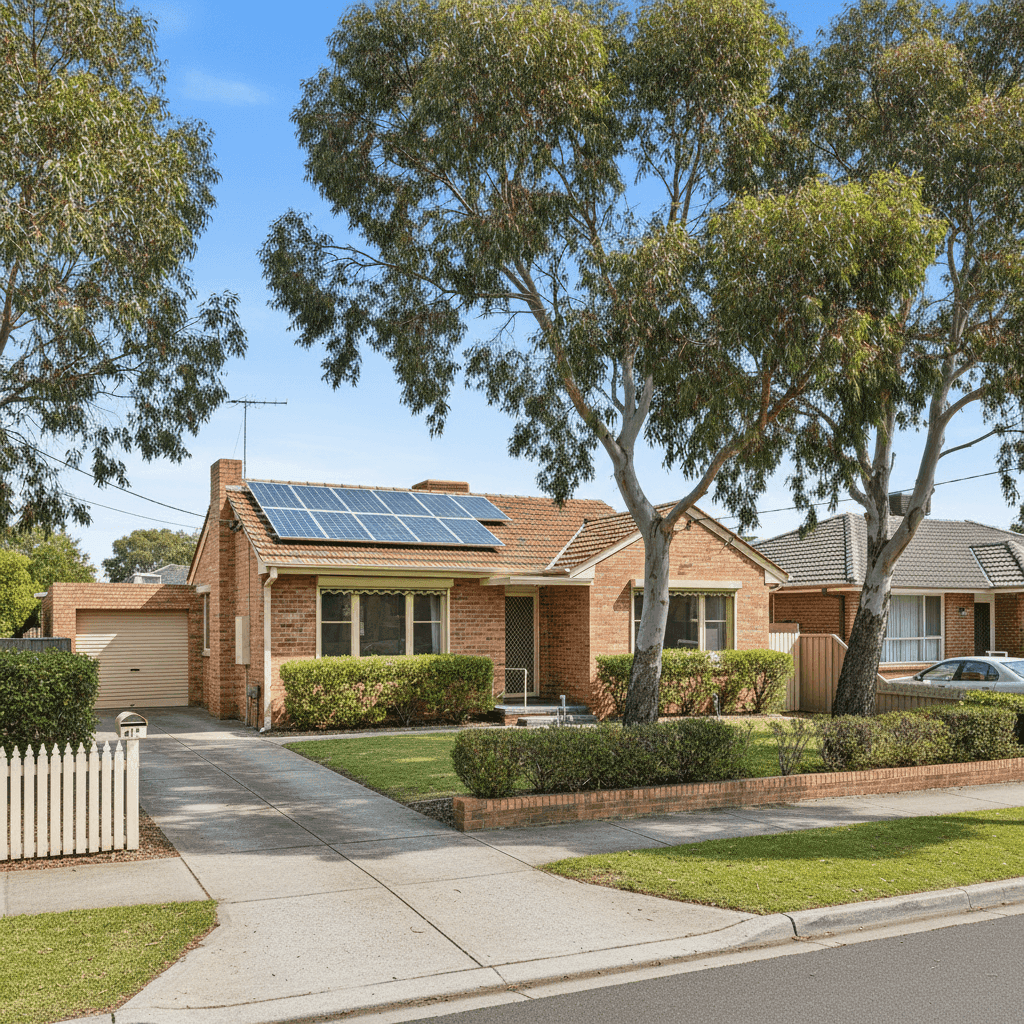
Saint Clair is a well-established residential suburb in the Penrith local government area of Western Sydney, known for its quiet streets, family-friendly atmosphere, and predominantly brick-built homes. If you own a free standing home here — particularly an older-style property built in the 1960s — understanding what you should be paying for home and contents insurance is an important step in protecting one of your biggest assets. This article breaks down a real insurance quote for a 4-bedroom, 1-bathroom brick veneer home in Saint Clair (postcode 2759), and puts the numbers in context so you can make a more informed decision.
---
Is This Quote Fair?
The quote in question comes in at $1,702 per year (or around $163 per month) for combined home and contents cover, with a building sum insured of $549,000 and contents valued at $54,000. Both building and contents carry a $1,000 excess.
Our price rating for this quote is FAIR — Around Average, and the data backs that up. The suburb average for Saint Clair sits at $1,657 per year, meaning this quote is only about $45 above the local average — a negligible difference. It falls comfortably within the middle range of the market, above the 25th percentile ($1,209/yr) but well below the 75th percentile ($2,000/yr). In other words, roughly half of comparable quotes in the area are cheaper, and half are more expensive — which is precisely what "around average" means in practice.
For a 60-year-old home with brick veneer walls, a tiled roof, and solar panels, this is a reasonable outcome. Older properties can attract higher premiums due to the increased likelihood of wear-related claims, but this quote doesn't appear to be penalising the age of the home excessively.
---
How Saint Clair Compares
One of the most striking takeaways from this quote is just how affordable Saint Clair is relative to broader benchmarks. Here's how the numbers stack up:
| Benchmark | Average Premium | Median Premium |
|---|---|---|
| Saint Clair (2759) | $1,657/yr | $1,552/yr |
| Penrith LGA | $2,220/yr | — |
| NSW State | $9,528/yr | $3,770/yr |
| National | $5,347/yr | $2,764/yr |
The suburb average of $1,657 is dramatically lower than both the NSW state average of $9,528 and the national average of $5,347. Even compared to the NSW median of $3,770 — a figure less skewed by high-risk coastal and flood-prone areas — Saint Clair comes in at less than half the price.
It's worth noting that state and national averages can be heavily influenced by high-value properties, extreme weather zones (cyclone regions in Queensland and WA, for instance), and areas with elevated flood or bushfire risk. Saint Clair benefits from its inland location, relatively stable geology, and a housing stock that is broadly consistent in age and construction type.
Compared to the broader Penrith LGA average of $2,220, Saint Clair also performs favourably — suggesting that within the Penrith council area, this particular suburb carries a lower risk profile than some neighbouring localities. You can explore more Saint Clair-specific data on our suburb stats page.
---
Property Features That Affect Your Premium
Several characteristics of this property influence how insurers assess and price the risk:
Brick Veneer Construction Brick veneer is one of the most common wall types in Australian suburban homes built from the 1960s through to the 1980s. Insurers generally view it favourably — it's more fire-resistant than timber weatherboard and holds up well in storms. That said, the veneer layer can be susceptible to cracking over time, particularly on older slab foundations.
Tiled Roof Terracotta or concrete tiles are considered a durable, low-risk roofing material by most insurers. They perform well in hail events compared to metal or fibreglass alternatives, and they have a long lifespan when properly maintained. However, on a home built in 1965, it's worth checking whether the tiles have been re-pointed or replaced in recent decades, as ageing mortar can become a liability.
Slab Foundation A concrete slab is the standard foundation type for homes of this era in Western Sydney. While generally stable, slabs can be prone to movement in clay-heavy soils — something to keep in mind for maintenance purposes, though it rarely has a dramatic effect on premiums in this region.
Solar Panels The presence of solar panels adds a small amount of insurable value to the property. Most home insurance policies cover rooftop solar as part of the building sum insured, but it's always worth confirming this with your insurer. Damage from storms, falling branches, or electrical faults should ideally be included in your cover.
Construction Year: 1965 Age is a factor insurers consider carefully. A 60-year-old home may have older electrical wiring, plumbing, and roofing infrastructure that increases the likelihood of a claim. Ensuring your building sum insured is adequate to cover a full rebuild — including demolition costs and updated compliance requirements — is critical for properties of this vintage.
Building Size: 205 sqm At 205 square metres, this is a mid-to-large family home. The $549,000 sum insured equates to roughly $2,678 per square metre for rebuild costs — broadly in line with current construction cost estimates for standard-quality homes in NSW, though it's worth reviewing this figure annually as building costs continue to rise.
---
Tips for Homeowners in Saint Clair
1. Review your sum insured annually Construction costs in NSW have risen significantly over the past few years. A sum insured that was appropriate two or three years ago may no longer cover the full cost of rebuilding your home. Use a building cost calculator or speak to a quantity surveyor to make sure you're not underinsured.
2. Confirm your solar panels are covered If your policy doesn't explicitly list solar panels as a covered item under the building section, ask your insurer to clarify. Some policies have sub-limits or exclusions for solar systems, particularly for damage caused by power surges or inverter failure.
3. Maintain your roof and gutters For a tiled roof on a 1960s home, regular maintenance is key. Insurers can deny claims for damage that results from lack of upkeep — for example, if water ingress occurs due to cracked or displaced tiles that were left unattended. An annual roof inspection is a worthwhile investment.
4. Consider increasing your excess to reduce your premium With both building and contents excesses set at $1,000, there may be room to adjust. Opting for a higher voluntary excess (say, $2,000 or $2,500) can meaningfully reduce your annual premium — a smart move if you have a financial buffer and rarely make small claims.
---
Compare Quotes and Find Better Value
Whether this quote is the right one for your home depends on more than just the price — policy inclusions, claim limits, and insurer reputation all matter. The best way to know if you're getting a competitive deal is to compare. At CoverClub, we make it easy to benchmark your current premium against real quotes from across the market. Get a home insurance quote today and see how much you could save — or confirm that you're already on a great deal.