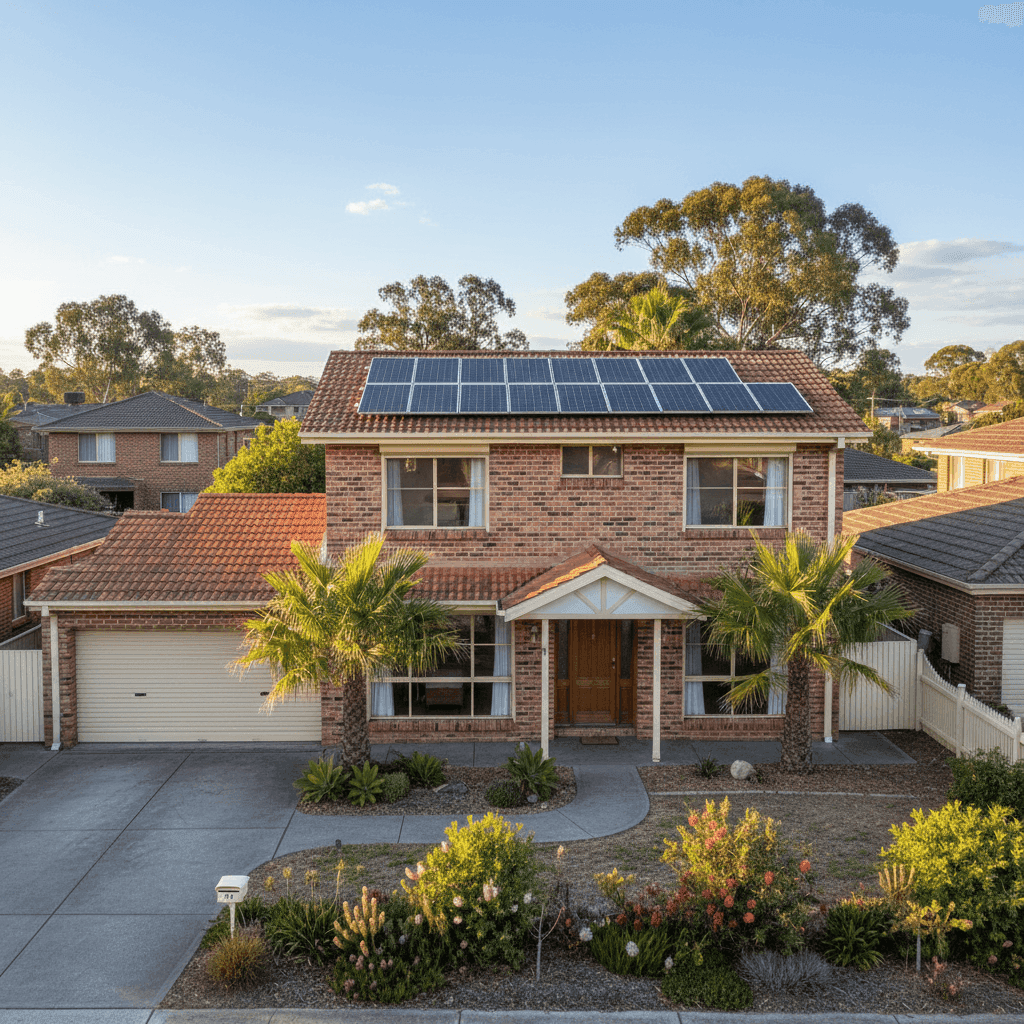
If you own a four-bedroom free standing home in Saint Clair, NSW 2759, you're likely paying close attention to the cost of home and contents insurance — especially as premiums across Australia continue to climb. This article breaks down a real insurance quote for a brick veneer home in the suburb, compares it against local, state, and national benchmarks, and offers practical tips to help you get better value on your cover.
---
Is This Quote Fair?
The quote in question comes to $2,362 per year (or $226/month) for combined home and contents insurance, covering a building sum insured of $935,500 and contents valued at $72,000. Both the building and contents excess sit at $1,000.
Our price rating for this quote is Expensive — above average for the Saint Clair area.
To put that in context: the suburb average annual premium sits at $1,657, and the median is even lower at $1,552. This quote lands well above the 75th percentile threshold of $2,000 — meaning it's pricier than roughly three-quarters of comparable quotes we've seen in the postcode. Based on 66 quotes sampled across Saint Clair, this premium is notably elevated relative to what most local homeowners are paying.
That said, "expensive" doesn't automatically mean "wrong." A higher sum insured, the inclusion of solar panels, ducted climate control, and the age of the property can all push premiums upward. The key question is whether you're getting the right level of cover for the price — and whether there's room to shop around.
---
How Saint Clair Compares
Understanding where your suburb sits in the broader insurance landscape can be genuinely eye-opening. Here's how Saint Clair stacks up:
| Benchmark | Annual Premium |
|---|---|
| This Quote | $2,362 |
| Saint Clair Suburb Average | $1,657 |
| Saint Clair Suburb Median | $1,552 |
| Saint Clair 25th Percentile | $1,209 |
| Saint Clair 75th Percentile | $2,000 |
| Penrith LGA Average | $2,220 |
| NSW State Average | $9,528 |
| NSW State Median | $3,770 |
| National Average | $5,347 |
| National Median | $2,764 |
A few things stand out here. First, Saint Clair is actually a relatively affordable suburb to insure compared to the broader NSW market — the state average of $9,528 is dramatically higher, driven by high-risk coastal, flood-prone, and bushfire-affected postcodes across New South Wales. Even the NSW median of $3,770 is well above what most Saint Clair homeowners pay.
Compared to the national average of $5,347 and a national median of $2,764, Saint Clair sits in a fairly comfortable position. The suburb's relatively low risk profile — no cyclone zone, no coastal exposure, established suburban infrastructure — keeps premiums more manageable than many parts of the country.
Interestingly, the Penrith LGA average of $2,220 is closer to this quote than the Saint Clair suburb average, suggesting that some properties across the broader LGA carry higher risk characteristics that inflate the local government area figure.
You can explore full premium data for the postcode on the Saint Clair insurance stats page, or browse NSW-wide insurance benchmarks for further context.
---
Property Features That Affect Your Premium
Several characteristics of this particular property are worth examining when it comes to understanding why the premium sits where it does.
Brick veneer construction with a tiled roof is generally viewed favourably by insurers. Brick veneer offers solid weather resistance and is less susceptible to fire than timber-framed cladding, while terracotta or concrete tiles are durable and perform well in most weather conditions. These features typically help keep premiums in check.
Built in 1983, the home is over 40 years old. Older properties can attract slightly higher premiums because ageing plumbing, wiring, and structural elements carry a greater risk of failure or damage. Insurers may factor in the increased likelihood of claims related to wear and tear, even if the property has been well maintained.
Solar panels are an increasingly common feature but one that adds to the replacement cost of a home. If panels are damaged by hail, storms, or fire, they can be expensive to repair or replace — and this is reflected in the sum insured and, by extension, the premium.
Ducted climate control is another high-value fixture. Ducted systems are costly to install and replace, and they add to the overall rebuild cost of the property. A building sum insured of $935,500 for a 139 sqm home reflects these inclusions, and ensuring adequate cover is important — underinsurance remains a significant issue for Australian homeowners.
The slab foundation and vinyl flooring are relatively neutral factors from an insurance perspective, though vinyl flooring is worth noting for contents cover if the policy extends to floor coverings.
---
Tips for Homeowners in Saint Clair
1. Review your sum insured carefully At $935,500 for a 139 sqm home, the building sum insured is substantial. Make sure this figure reflects the actual cost to rebuild — not the market value of the property. Use an independent building cost calculator or speak with a quantity surveyor to validate the figure. Overinsuring can unnecessarily inflate your premium; underinsuring can leave you exposed after a claim.
2. Compare multiple quotes before renewing Given that this quote sits above the suburb's 75th percentile, there's a real opportunity to find more competitive pricing without sacrificing cover quality. Insurers price risk differently, and premiums for the same property can vary significantly between providers. Use CoverClub to compare quotes and see what's available in your area.
3. Consider a higher excess to lower your premium Both the building and contents excess on this policy are set at $1,000. Opting for a higher voluntary excess — say $2,000 — can meaningfully reduce your annual premium. This works best if you have the financial buffer to cover a larger out-of-pocket cost in the event of a claim.
4. Bundle and consolidate where possible If your home and contents are insured separately, consolidating them under a single combined policy (as this quote does) often attracts a discount. Also check whether your insurer offers loyalty or multi-policy discounts — though it's still worth comparing these bundled rates against competitors annually.
---
Ready to Find a Better Deal?
Whether you're reviewing your current policy or shopping for cover for the first time, comparing quotes is the single most effective way to ensure you're not overpaying. At CoverClub, we make it easy to see how your premium stacks up and explore alternatives — all in one place.