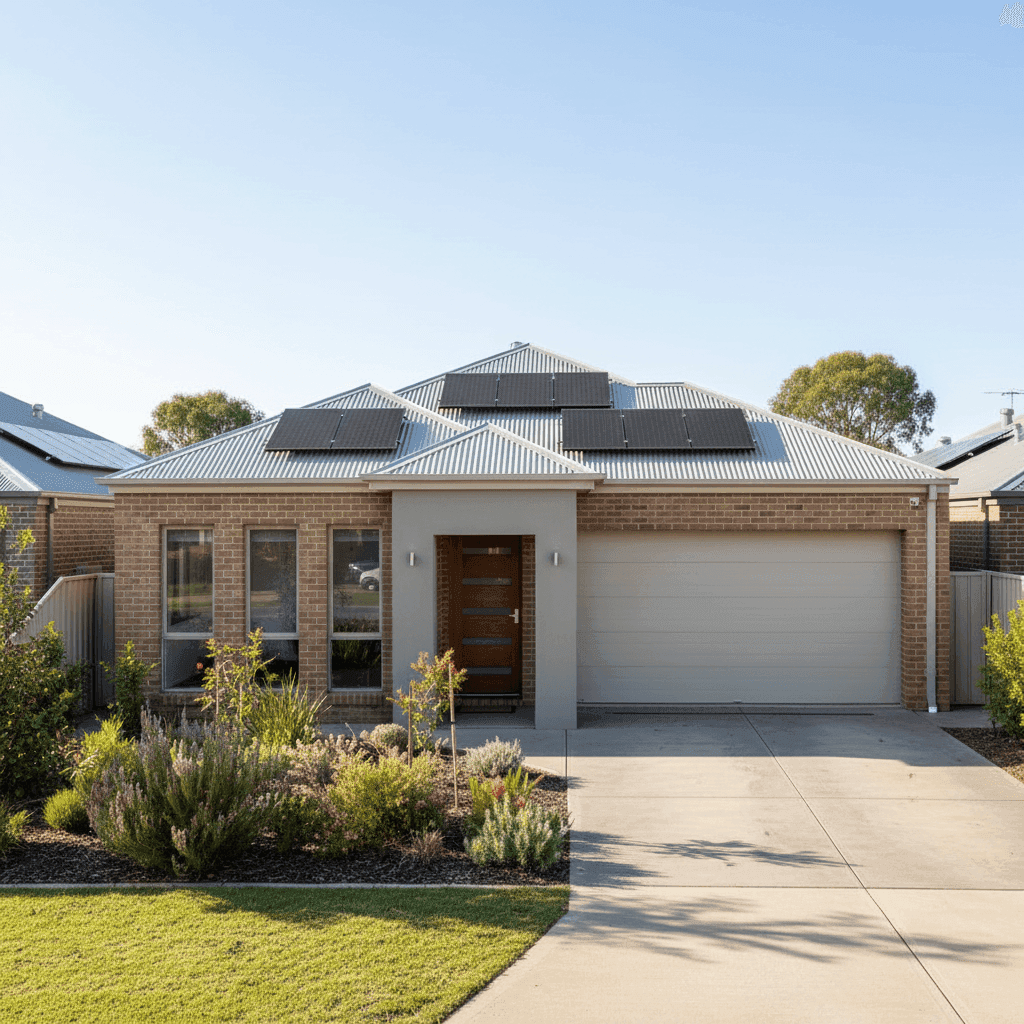
If you own a free standing home in Saint Clair, SA 5011, you're likely wondering whether the insurance quote sitting in your inbox is a fair deal — or whether you could be paying less (or getting more). This article breaks down a real building insurance quote for a three-bedroom, two-bathroom home in Saint Clair, compares it against local, state, and national benchmarks, and offers practical advice for homeowners in the area.
---
Is This Quote Fair?
The short answer: yes — and then some. This quote comes in at just $792 per year (or $74 per month) for building-only cover on a home insured for $480,000. That places it firmly in the "Cheap" category, meaning it's well below average for both South Australia and the country as a whole.
To put that in perspective, the SA state average premium sits at $1,933 per year, with a state median of $1,787. That means this quote is roughly 59% cheaper than the average South Australian homeowner is paying — a substantial saving of over $1,100 annually.
Compared to national figures, the contrast is even starker. The national average premium is $2,965/yr and the national median is $2,716/yr — meaning this quote is less than 27% of what the average Australian homeowner pays. For a standard three-bedroom brick veneer home, that's a genuinely impressive result.
A building excess of $2,000 is on the higher end of what's typical, which may partly explain the lower premium — insurers often reward policyholders who are willing to absorb more of the initial cost of a claim. It's worth weighing that trade-off carefully: a lower premium with a higher excess works well if you're unlikely to make small claims, but could sting if you do.
---
How Saint Clair Compares
Saint Clair sits within the City of Charles Sturt local government area (LGA), which has an average premium of $1,695 per year — already below the broader SA average. This suggests the Charles Sturt area is generally considered a relatively lower-risk zone by insurers, which is good news for local homeowners.
Even so, this particular quote undercuts the LGA average by more than $900 per year. You can explore more detailed pricing trends for the area on the Saint Clair suburb stats page.
It's worth noting that no suburb-level comparison data was available at the time of writing, so we're working from LGA and state figures. As more data becomes available, suburb-specific benchmarks will give an even clearer picture of where Saint Clair sits relative to neighbouring postcodes.
---
Property Features That Affect Your Premium
Several characteristics of this property work in the homeowner's favour from an insurance pricing perspective:
- Brick Veneer Walls: Brick veneer is one of the most common and well-regarded external wall materials in Australia. It's durable, fire-resistant, and widely understood by insurers — all of which typically contribute to lower premiums compared to materials like weatherboard or cladding.
- Steel/Colorbond Roof: Colorbond roofing is popular across South Australia for good reason. It's lightweight, highly resistant to fire and corrosion, and performs well in extreme heat — a relevant consideration for an Adelaide suburb. Insurers generally view it favourably.
- Concrete Slab Foundation: Slab foundations are considered stable and low-risk in most conditions, particularly in areas without significant flood or subsidence exposure. This reduces the likelihood of structural claims.
- Construction Year (2013): A home built in 2013 is relatively modern and would have been constructed to contemporary Australian building codes. Newer builds tend to attract lower premiums than older properties, which may have outdated wiring, plumbing, or structural elements.
- Solar Panels: The presence of rooftop solar panels is worth flagging. While they don't necessarily raise premiums significantly, it's important to confirm with your insurer that the panels are explicitly covered under your building policy — particularly for damage caused by storms, hail, or fire. Some policies cover them as standard; others require an endorsement.
- Ducted Climate Control: Ducted air conditioning systems are a valuable fixed asset and are typically covered under building insurance. However, it's worth checking whether your policy covers mechanical breakdown separately, as standard building cover usually only applies to damage from insured events.
- No Pool, No Cyclone Risk: The absence of a swimming pool removes a common source of liability and maintenance claims. Saint Clair is also outside any designated cyclone risk zone, which keeps premiums lower than they might be in northern parts of Australia.
- Timber/Laminate Flooring: While flooring is more commonly a contents consideration, high-quality timber flooring can influence the cost-to-rebuild calculation. At 139 sqm, the building size is modest, which helps keep the sum insured — and therefore the premium — reasonable.
---
Tips for Homeowners in Saint Clair
1. Review your sum insured regularly. Your home is insured for $480,000, which should reflect the full cost to rebuild — not the market value. Building costs have risen sharply in recent years, so it's worth getting an independent assessment or using a building cost calculator every year or two to make sure you're not underinsured.
2. Confirm solar panel coverage explicitly. Don't assume your panels are covered. Contact your insurer and ask directly whether rooftop solar panels are included under your building policy, and under what circumstances. Storm damage, fire, and accidental breakage are the most common scenarios to clarify.
3. Consider whether your excess is right for you. A $2,000 building excess is relatively high. If you have the financial buffer to absorb that cost in the event of a claim, it's a smart way to keep premiums down. If not, it may be worth requesting a quote with a lower excess to compare the premium difference.
4. Don't let your policy auto-renew without checking. Even if this quote is excellent value today, insurance pricing changes. Before your renewal date each year, take 10 minutes to compare quotes at CoverClub to make sure you're still getting a competitive rate. Loyalty doesn't always pay in the insurance market.
---
Compare Your Own Quote
Whether you're a Saint Clair local or a homeowner anywhere in Australia, it pays to know how your premium stacks up. CoverClub makes it easy to benchmark your current policy against real market data and find cover that suits your home and budget. Start comparing home insurance quotes today — it only takes a few minutes.