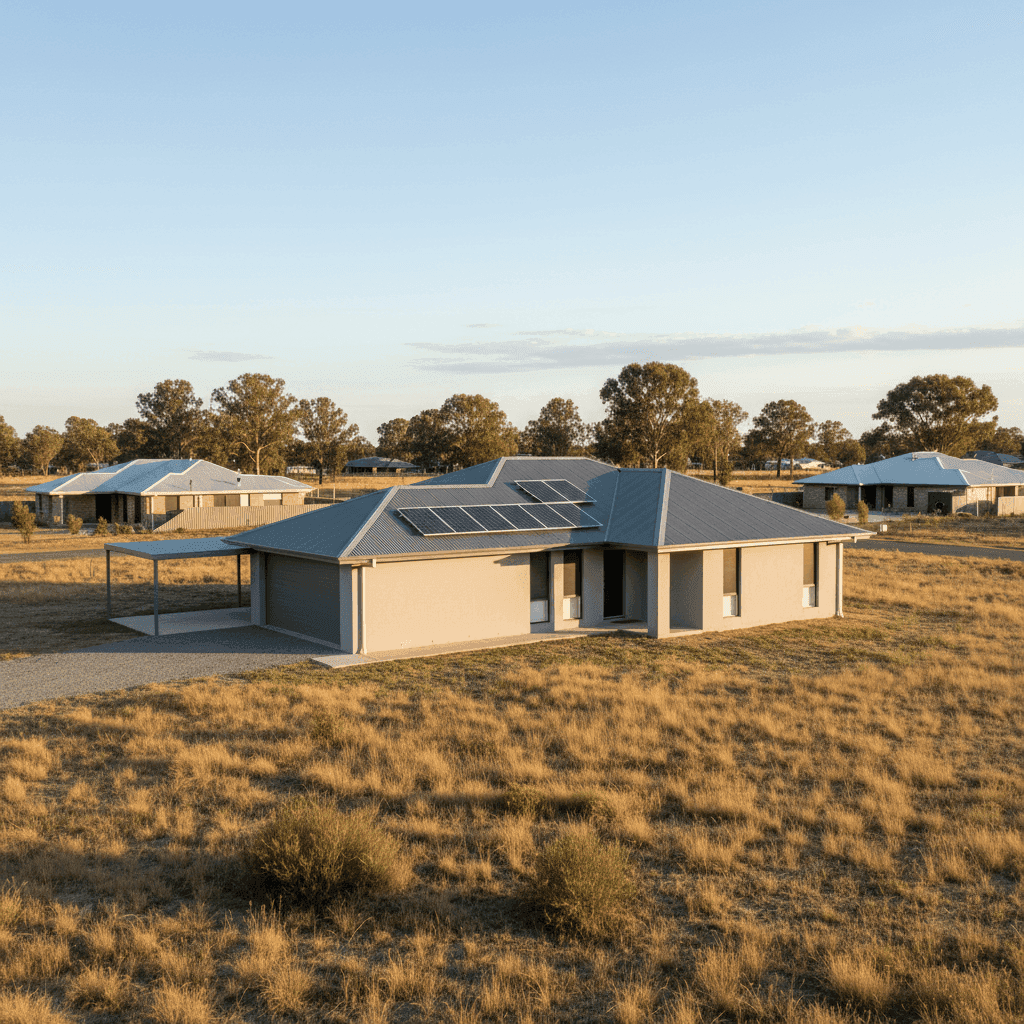
Nestled in outback Queensland's Balonne Shire, Saint George (QLD 4487) is a regional town known for its agricultural roots and the wide, sunburnt landscapes of the Maranoa region. If you own a free standing home here, understanding what you should be paying for building insurance is more important than ever — premiums across regional Queensland can vary wildly, and not all quotes are created equal.
This article breaks down a recent building-only insurance quote for a 3-bedroom, 1-bathroom free standing home in Saint George, compares it against local, state, and national benchmarks, and offers practical tips to help you get the best value on your cover.
---
Is This Quote Fair?
The quote in question comes in at $4,267 per year (or $409/month) for building-only cover, with a sum insured of $400,000 and a building excess of $5,000. Our price rating for this quote is CHEAP — meaning it sits below the average for comparable properties in the area.
That's genuinely good news for the homeowner. In a region where insurance costs can spiral due to flood exposure, remoteness, and the general challenges of insuring rural Queensland properties, landing a below-average premium is a result worth noting.
To put it in perspective: the national average for home building insurance sits at $5,347 per year, with a national median of $2,764. This quote is above the national median but comfortably below the national average — a reasonable position for a regional Queensland property.
---
How Saint George Compares
The pricing picture in Saint George is striking — and a little unusual. According to suburb-level data for Saint George (4487), the suburb average premium is a staggering $110,708 per year, though the median tells a more grounded story at $23,281/yr. That enormous gap between the mean and median suggests a small number of very high-risk or high-value properties are pulling the average up significantly — a common occurrence in areas with significant flood exposure.
The interquartile range (25th to 75th percentile) runs from $13,045 to $31,345 per year, which gives a more realistic picture of what most Saint George homeowners are paying. At $4,267/yr, this quote sits well below even the 25th percentile, making it an exceptionally competitive result.
Zooming out to the Queensland state level, the average premium is $9,129/yr with a median of $3,903. Our quote sits just above the state median — again, a solid outcome. The Maranoa LGA average of $24,979/yr further underscores just how competitive this particular quote is relative to the broader region.
| Benchmark | Premium |
|---|---|
| This Quote | $4,267/yr |
| Suburb Median (4487) | $23,281/yr |
| Suburb 25th Percentile | $13,045/yr |
| QLD State Average | $9,129/yr |
| QLD State Median | $3,903/yr |
| Maranoa LGA Average | $24,979/yr |
| National Average | $5,347/yr |
| National Median | $2,764/yr |
The data makes it clear: this is a well-priced quote for the area.
---
Property Features That Affect Your Premium
Several characteristics of this property likely contribute to its competitive premium. Let's unpack the key ones:
Hardiplank / Hardiflex External Walls
Fibre cement cladding such as Hardiplank and Hardiflex is generally viewed favourably by insurers. It's non-combustible, resistant to rot and termites, and holds up well in harsh Australian climates. This wall type is likely contributing positively to the premium outcome.
Steel / Colorbond Roof
A Colorbond steel roof is one of the most insurer-friendly roof types available in Australia. It's durable, fire-resistant, lightweight, and performs well in high-wind events. Compared to older materials like terracotta tiles or corrugated iron in poor condition, a well-maintained Colorbond roof can meaningfully reduce your premium.
Slab Foundation
Concrete slab foundations are considered structurally sound and low-risk by most insurers. They're less susceptible to subsidence and pest-related damage than older timber stumped homes, which is a common feature in regional Queensland.
Construction Year: 1985
At roughly 40 years old, this home sits in a middle ground for insurers. It's old enough to potentially have ageing plumbing or wiring, but modern enough to have been built under reasonable construction standards. Keeping on top of maintenance is key for homes of this era.
Solar Panels
The presence of solar panels adds a modest layer of complexity for insurers — panels need to be covered for storm, hail, or fire damage, and faulty installations can occasionally be a liability risk. It's worth confirming with your insurer that your solar system is explicitly included in your building cover.
No Pool, No Ducted Climate Control
The absence of a pool eliminates liability and equipment risks, while no ducted air conditioning removes another potential source of mechanical claims. Both factors can keep premiums leaner.
Tiles Flooring & Standard Fittings
Standard-quality fittings and tiled flooring keep the replacement cost estimate grounded. High-end or bespoke finishes can push the sum insured — and therefore the premium — significantly higher.
---
Tips for Homeowners in Saint George
1. Review Your Sum Insured Regularly A $400,000 sum insured for a 130 sqm home in Saint George may be appropriate, but building costs change year to year. Use a building cost calculator to ensure you're not underinsured — especially given rising construction costs across regional Queensland in recent years.
2. Understand Your Flood Exposure Saint George sits near the Balonne River and has historically experienced significant flood events. Check whether your policy explicitly includes flood cover (not just storm or water damage) and review the Product Disclosure Statement carefully. Flood cover is sometimes excluded or offered as an optional add-on.
3. Maintain Your Property to Protect Your Claim Insurers can reduce or reject claims if damage is attributed to lack of maintenance. For a 1985-built home, pay particular attention to roof condition, guttering, plumbing, and electrical systems. Annual inspections are a worthwhile investment.
4. Compare Before You Renew Even if your current premium is competitive, the insurance market shifts constantly. Use a comparison tool like CoverClub at renewal time to ensure you're still getting value — loyalty doesn't always pay in insurance.
---
Get a Quote for Your Saint George Home
Whether you're a first-time buyer or a long-time homeowner in Saint George, comparing building insurance quotes is one of the smartest things you can do. Premiums in this region vary enormously — as the suburb data clearly shows — and the difference between a well-priced policy and an overpriced one can run into thousands of dollars each year. Head to CoverClub to compare quotes tailored to your property and see where your current cover stacks up.