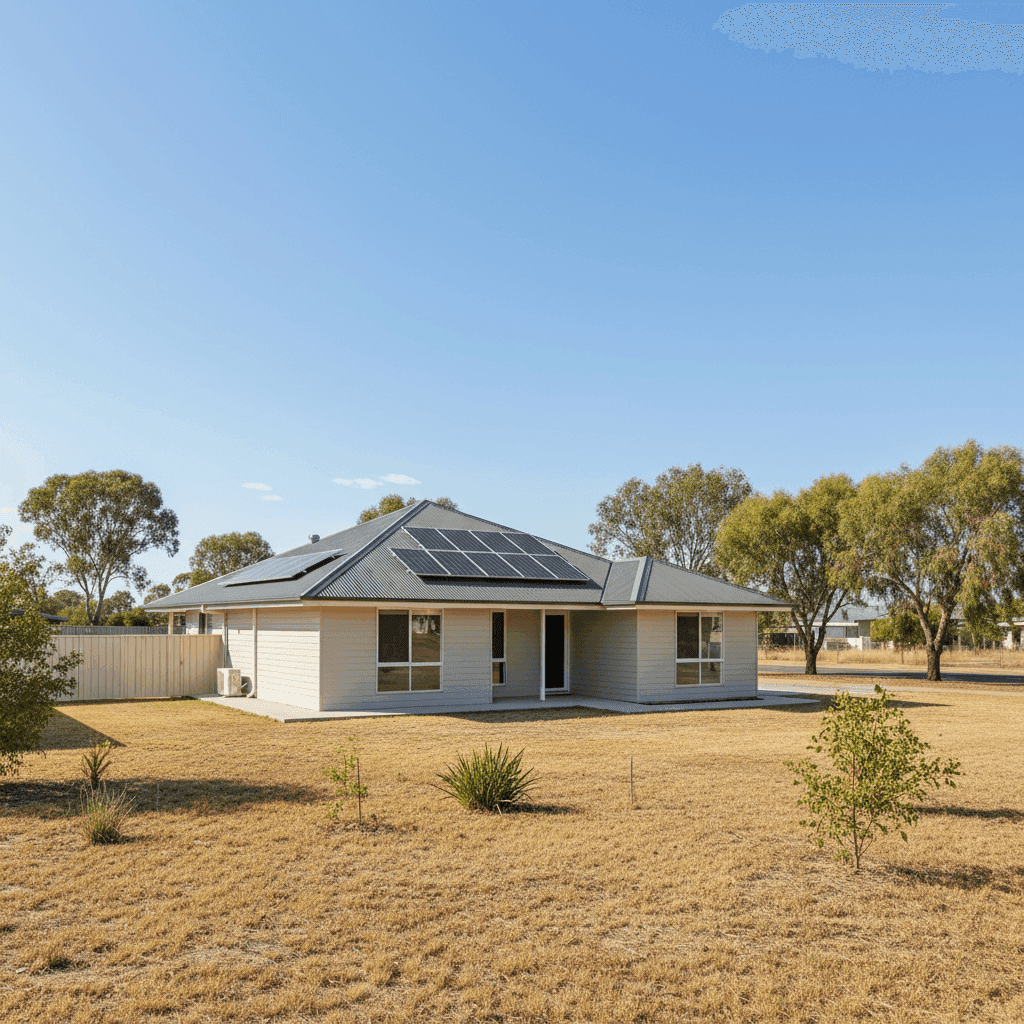
If you own a free standing home in Saint George, QLD 4487, you already know that getting the right home insurance is one of the most important financial decisions you can make. Saint George sits in Queensland's Maranoa region — a largely rural area where insurance premiums can be surprisingly high compared to metropolitan areas. In this article, we break down a real building insurance quote for a 4-bedroom, 2-bathroom home in the suburb, analyse whether the price stacks up, and share practical tips to help you manage your costs.
---
Is This Quote Fair?
The quote in question is $5,836 per year (or $571 per month) for building-only cover on a 214 sqm free standing home insured for $500,000, with a $2,000 building excess.
Our price rating for this quote is FAIR — Around Average.
That assessment holds up when you look at the numbers in context. The suburb average premium for Saint George (4487) sits at $5,311 per year, with a median of $5,392. This quote at $5,836 lands just above the suburb median, placing it in the upper-middle range of what locals are paying — but still comfortably below the 75th percentile of $6,177. In other words, roughly a quarter of comparable quotes in the area are actually more expensive than this one.
So while $5,836 is not the cheapest option available, it is within a reasonable band for the local market. Homeowners who are paying closer to the 25th percentile ($4,470) are likely benefiting from more competitive insurer pricing, higher excesses, or slightly different property characteristics. If you're currently paying above $6,177, it's well worth shopping around.
---
How Saint George Compares
The numbers become particularly striking when you zoom out beyond the suburb.
| Benchmark | Annual Premium |
|---|---|
| This Quote | $5,836 |
| Saint George Suburb Average | $5,311 |
| Saint George Suburb Median | $5,392 |
| QLD State Average | $4,547 |
| QLD State Median | $3,931 |
| National Average | $2,965 |
| National Median | $2,716 |
Homeowners in Saint George are paying roughly 28% more than the Queensland state average, and nearly double the national average. That's a significant premium to carry, and it's not a coincidence.
Queensland as a whole already sits well above national benchmarks due to its exposure to extreme weather events — floods, storms, and hail — but regional and rural Queensland tends to attract even steeper premiums. The Maranoa LGA, which encompasses Saint George, has an eye-watering average premium of $24,979 per year across all quotes collected — a figure that reflects the presence of large rural and farm properties in the region that skew the LGA-level data significantly. For a standard residential home, the suburb-level figures are a far more relevant comparison.
The key takeaway: if you're a Saint George homeowner feeling the sting of your insurance bill, you're not imagining it. Premiums here are structurally higher than most of the country, driven by the region's geography and claims history.
---
Property Features That Affect Your Premium
Several characteristics of this particular property influence where its premium lands.
Hardiplank/Hardiflex external walls are a positive factor. Fibre cement cladding is considered a durable, fire-resistant material, and insurers generally view it more favourably than older timber weatherboard homes. This can help keep premiums more competitive compared to properties with less resilient wall materials.
Steel/Colorbond roofing is another tick in the right column. Metal roofing is well-regarded for its longevity and resistance to fire and pests. In a region like the Maranoa where storms can be severe, a robust roof can reduce the likelihood of weather-related claims — something insurers factor into their pricing.
Slab foundation is standard for Queensland homes of this era and doesn't typically attract a loading or discount on its own, though it does provide good structural stability.
Solar panels are worth noting. While they add value to the property, they also represent an additional asset that insurers need to account for under building cover. It's important to confirm with your insurer that your solar system is explicitly included in your sum insured — some policies cover panels automatically, while others may require them to be listed separately.
The 1985 construction year means the home is over 40 years old, which can influence premiums. Older homes may have ageing plumbing, wiring, or structural elements that increase the likelihood of a claim. However, with standard fittings quality and a relatively modern material profile (Hardiflex cladding and Colorbond roofing may have been retrofitted over the years), the impact here appears moderate.
The $500,000 sum insured for a 214 sqm home works out to approximately $2,336 per square metre — a reasonable figure for regional Queensland when accounting for the cost of rebuilding, including labour, materials, and professional fees.
---
Tips for Homeowners in Saint George
1. Review your sum insured annually Building costs in regional Queensland have risen considerably in recent years. Make sure your sum insured reflects current rebuild costs — not what it cost to build a decade ago. Underinsurance is one of the most common and costly mistakes homeowners make.
2. Consider increasing your excess to reduce your premium This quote carries a $2,000 building excess. If you have a financial buffer and rarely make small claims, opting for a higher excess (say, $2,500 or $3,000) can bring your annual premium down meaningfully. Just ensure the excess remains manageable in the event of a significant loss.
3. Confirm your solar panels are covered With solar panels on the roof, it's essential to check the fine print of your policy. Ask your insurer directly: are the panels covered under building insurance? What's the process if they're damaged in a storm or hail event? Getting clarity now avoids nasty surprises at claim time.
4. Compare quotes at renewal — every year The home insurance market is competitive, and the cheapest option for your property today may not be the same insurer as last year. Loyalty doesn't always pay in insurance. Running a fresh comparison at each renewal is one of the simplest ways to make sure you're not overpaying.
---
Find a Better Deal with CoverClub
Whether your current premium feels too high or you simply want to know you're getting value for money, comparing quotes is always a smart move. CoverClub makes it easy to see what multiple insurers would charge for your specific property — no obligation, no hassle. Get a home insurance quote today and find out if you could be paying less for the same level of cover.
For more data on home insurance pricing in your area, visit the Saint George suburb stats page or explore QLD-wide insurance trends.