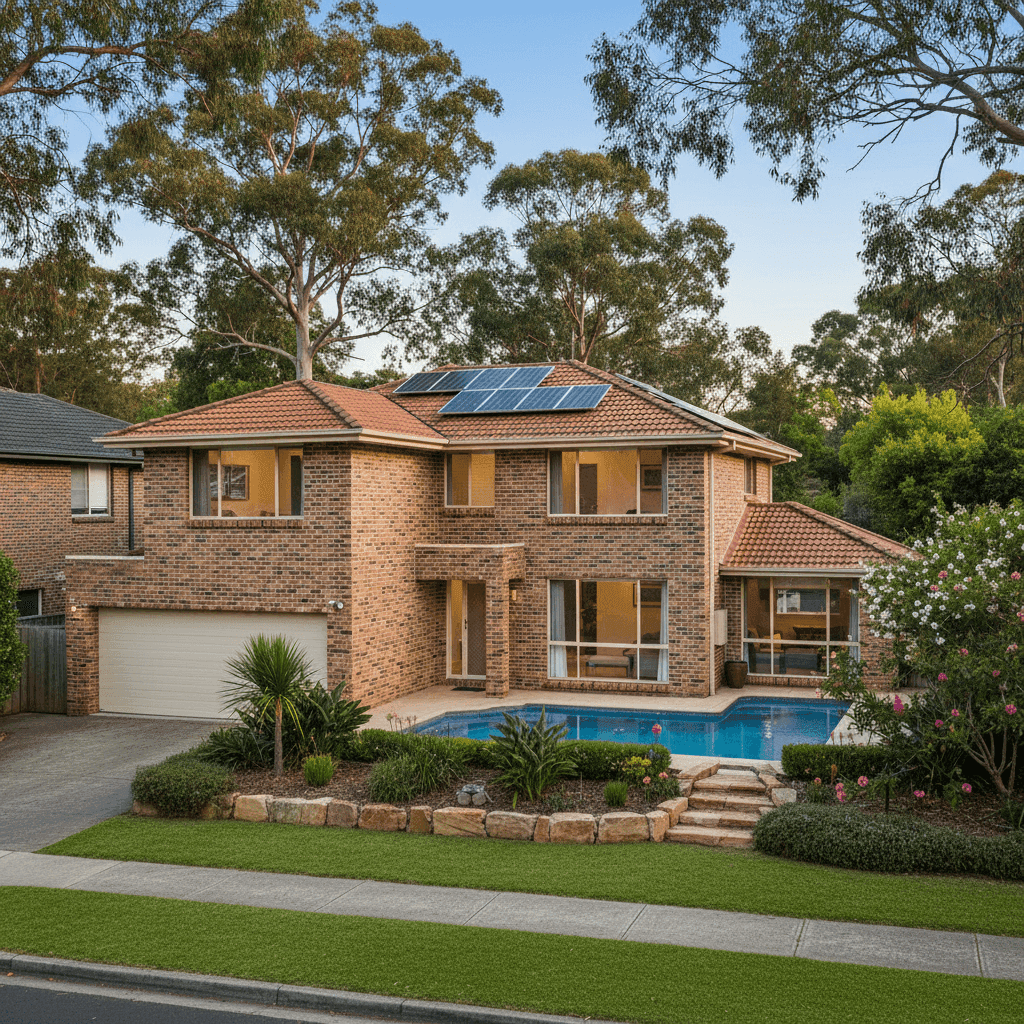
Saint Ives Chase is one of Sydney's leafy upper North Shore suburbs — a sought-after pocket of NSW 2075 known for its bushland setting, generous block sizes, and well-established family homes. If you own a free standing home here, you're likely paying a meaningful amount for home and contents insurance, and for good reason. This article breaks down a real quote for a 4-bedroom, 4-bathroom brick veneer home in Saint Ives Chase, helping you understand whether the premium stacks up — and what you can do about it if it doesn't.
---
Is This Quote Fair?
The quote in question comes in at $4,730 per year (or $425/month) for combined home and contents cover, with a building sum insured of $1,360,000 and contents valued at $141,000. Both the building and contents excess sit at $2,000.
Our price rating for this quote is Expensive — above average for the suburb.
To put that in context: the average home and contents premium among comparable quotes in Saint Ives Chase sits at $3,495 per year, with a median of $3,491. The 25th–75th percentile range for the suburb runs from $3,316 to $3,674. At $4,730, this quote lands well above the 75th percentile — meaning it's pricier than at least three-quarters of comparable quotes we've seen in the area.
That said, "expensive" doesn't automatically mean "wrong." A higher building sum insured ($1,360,000 is substantial), a pool, solar panels, and ducted climate control all push premiums upward. The question is whether the gap can be fully explained by those features — or whether there's room to find a better deal elsewhere.
---
How Saint Ives Chase Compares
Understanding where this suburb sits in the broader insurance landscape helps put things in perspective. Here's a quick snapshot:
| Benchmark | Average Premium | Median Premium |
|---|---|---|
| Saint Ives Chase (NSW 2075) | $3,495/yr | $3,491/yr |
| New South Wales | $9,528/yr | $3,770/yr |
| National | $5,347/yr | $2,764/yr |
| LGA (Northern Beaches) | $3,266/yr | — |
A few things stand out here. The NSW average of $9,528 looks alarming at first glance, but the median of $3,770 tells a more grounded story — the average is being pulled up by high-risk or high-value properties across the state. Saint Ives Chase's median of $3,491 is actually slightly below the NSW median, which reflects the suburb's relatively low natural hazard profile (no cyclone risk, moderate bushfire exposure).
Nationally, the median sits at $2,764 — noticeably lower than Saint Ives Chase. This is partly because Sydney's property values (and therefore rebuilding costs) are among the highest in the country, which flows directly into building sum insured figures and, in turn, premiums.
The LGA average for Northern Beaches comes in at $3,266 — slightly below the Saint Ives Chase suburb average, which suggests this particular suburb may attract a modest risk or value premium compared to its broader council area.
---
Property Features That Affect Your Premium
Several characteristics of this property have a direct bearing on what insurers charge. Here's how they play out:
Brick veneer construction and tiled roof Brick veneer walls combined with a tiled roof is one of the more insurer-friendly combinations in Australia. Both materials are durable, fire-resistant, and well-understood by underwriters. This typically works in the homeowner's favour compared to, say, weatherboard cladding or a metal deck roof.
1981 construction on a slab foundation Homes built in the early 1980s are solidly constructed but are now over 40 years old. Insurers may factor in the age of plumbing, wiring, and roofing materials when pricing risk. A slab foundation is generally considered low-risk for subsidence compared to stumped or pier foundations.
Timber and laminate flooring Timber and laminate floors can be costly to repair or replace after water damage or flooding events, which may contribute modestly to the contents and building premium.
Swimming pool A pool adds both replacement value to the building sum insured and liability considerations. Pools also introduce water-related risks (leaks, pump failures) that insurers price into the policy.
Solar panels Rooftop solar is increasingly common, but it does add to the insured value of the home. Panels can be damaged by hail, storms, or fire, and their replacement cost is non-trivial — particularly for larger systems.
Ducted climate control Ducted air conditioning systems are expensive to replace and can be a source of water ingress or electrical faults. Their presence adds to the overall replacement cost of the building.
Building sum insured: $1,360,000 This is the single biggest driver of the premium. At 235 sqm, this works out to roughly $5,787 per square metre — which is on the higher end but not unreasonable for a well-appointed home in this part of Sydney, particularly when factoring in the pool, solar, and ducted systems.
---
Tips for Homeowners in Saint Ives Chase
1. Review your building sum insured carefully The most common reason for an inflated premium is an over-estimated building sum insured. Make sure your figure reflects the cost to rebuild — not the market value of the property. Use a quantity surveyor or an online rebuild calculator to sense-check the number. Overcovering by even $100,000–$200,000 can add hundreds of dollars to your annual premium.
2. Compare quotes from multiple insurers With this quote sitting above the suburb's 75th percentile, there's a real chance a comparable policy is available for less elsewhere. Insurers price risk differently, and the spread between the cheapest and most expensive quotes for similar properties in Saint Ives Chase can be significant. Get a comparison quote at CoverClub to see what else is available.
3. Consider your excess level Both excesses on this policy sit at $2,000. Opting for a higher excess — say $2,500 or $3,000 — can reduce your annual premium. If you have the financial buffer to cover a larger out-of-pocket cost in a claim, this is often a smart trade-off for lower-risk, well-maintained homes.
4. Bundle and ask about discounts Many insurers offer discounts for bundling home and contents policies (which this quote already does), as well as for security features like monitored alarms, deadbolts, and security screens. Saint Ives Chase's bushland setting also means it's worth confirming with your insurer whether you have appropriate bushfire cover — and whether any mitigation measures (ember guards, cleared gutters) are recognised in the pricing.
---
Ready to Find a Better Deal?
Whether you're renewing an existing policy or shopping around for the first time, comparing quotes is the single most effective way to make sure you're not overpaying. At CoverClub, you can enter your property details and see how your current premium stacks up against real quotes from across the market — all in one place. With this quote rated as expensive relative to the Saint Ives Chase average, it's well worth taking five minutes to explore your options.
For more data on home insurance pricing in your area, visit the Saint Ives Chase suburb stats page, the NSW state overview, or the national benchmarks.