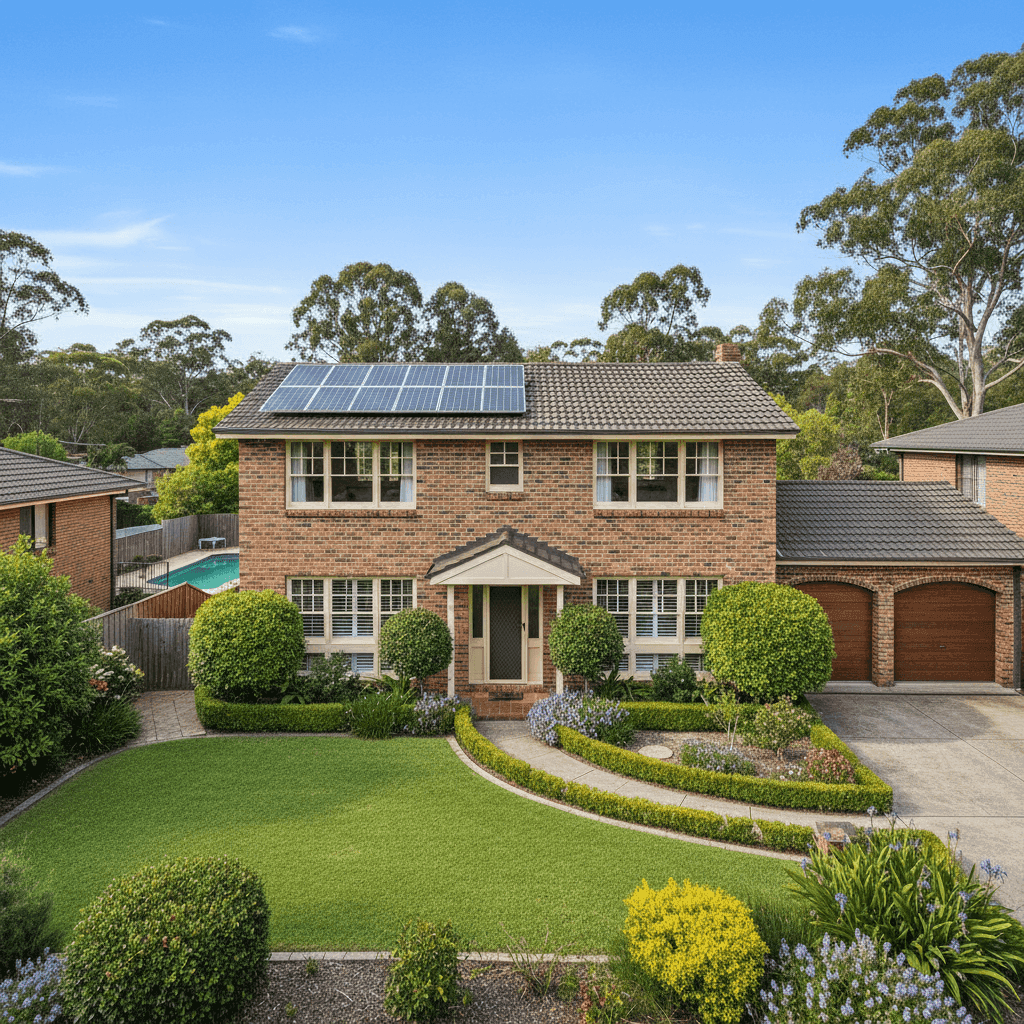
Saint Ives Chase is one of Sydney's leafy upper north shore suburbs — a quiet, bush-fringed pocket of postcode 2075 where well-established homes sit on generous blocks. If you own a free standing home here, you're likely paying a meaningful amount to protect it. This article breaks down a real home and contents insurance quote for a 4-bedroom, 4-bathroom brick veneer home in Saint Ives Chase, examines how the premium stacks up against local, state, and national benchmarks, and offers practical tips to help you get better value from your cover.
---
Is This Quote Fair?
The quote in question comes in at $3,869 per year (or $366/month) for combined home and contents insurance, covering a building sum insured of $1,405,000 and contents valued at $131,000. Both the building and contents excess are set at $5,000.
Our price rating for this quote is Expensive — above average for the Saint Ives Chase area.
To put that in context: the suburb average premium sits at $3,495/year, and the median is $3,491/year. This quote lands $374 above the suburb average — roughly 10.7% more than what comparable homes in the area are typically paying. It also sits above the suburb's 75th percentile of $3,674/year, meaning fewer than one in four quotes in this postcode come in higher.
That said, "expensive" is relative. The building sum insured of $1,405,000 is substantial, and the property has several features — a pool, solar panels, and ducted climate control — that add to the insurer's risk exposure and replacement cost calculations. A higher sum insured naturally pushes the premium up, so some of the price gap is likely attributable to the property's specifications rather than the insurer simply overcharging.
Still, it's worth shopping around. A difference of $374/year adds up to nearly $1,900 over five years — money that could stay in your pocket with the right policy comparison.
---
How Saint Ives Chase Compares
Understanding where your premium sits relative to broader benchmarks helps you gauge whether you're being treated fairly by the market.
| Benchmark | Premium |
|---|---|
| This quote | $3,869/yr |
| Suburb average (Saint Ives Chase) | $3,495/yr |
| Suburb median | $3,491/yr |
| Suburb 75th percentile | $3,674/yr |
| LGA average (Northern Beaches) | $3,266/yr |
| NSW state median | $3,770/yr |
| NSW state average | $9,528/yr |
| National median | $2,764/yr |
| National average | $5,347/yr |
A few things stand out here. First, the NSW state average of $9,528/year looks startling — but averages are heavily skewed by high-risk properties (think flood-prone or cyclone-affected areas), which is why the state median of $3,770/year is a far more useful comparison point. Against that median, this quote is only modestly above average.
Second, the national median of $2,764/year is noticeably lower — but Saint Ives Chase is a premium Sydney suburb with high rebuild costs, so it's expected that local premiums will exceed the national midpoint.
You can explore the full data for this postcode at our Saint Ives Chase insurance stats page, or zoom out to view NSW-wide home insurance trends and national benchmarks.
---
Property Features That Affect Your Premium
Several characteristics of this property have a direct bearing on the premium calculated by insurers. Here's what's most relevant:
Brick Veneer Walls & Tiled Roof
Brick veneer construction with a tiled roof is one of the more common combinations in Sydney's established suburbs, and insurers generally view it favourably. Both materials are durable and fire-resistant, which can help moderate premiums compared to, say, weatherboard cladding or corrugated iron roofing.
Slab Foundation
A concrete slab foundation is typically seen as stable and low-risk by underwriters. Unlike homes with raised timber subfloors, slabs offer less exposure to subfloor moisture damage and pest ingress — a minor but positive factor for risk assessment.
Timber & Laminate Flooring
While attractive, timber and laminate flooring can be costly to repair or replace after water damage or impact events. Insurers factor in the higher replacement cost of quality flooring when calculating your contents and building sum insured.
Swimming Pool
A pool adds both value and liability to a property. From an insurance perspective, it increases the overall replacement cost of the building and may attract additional liability considerations. Pools also require ongoing maintenance — a neglected pool can become a safety and structural risk.
Solar Panels
Solar panel systems are now a standard feature on many Australian homes, but they're not always automatically covered under every policy. With a system installed on this property, it's essential to confirm whether the panels are included under the building sum insured and what events (hail, storm, electrical fault) are covered.
Ducted Climate Control
Ducted air conditioning systems are expensive to install and replace. A full ducted system can cost $10,000–$25,000 or more, and this should be factored into the building sum insured to avoid being underinsured in the event of a total loss.
Construction Year: 1981
Homes built in the early 1980s are well past their initial construction phase, but may have ageing electrical wiring, plumbing, and roofing components that increase the likelihood of a claim. Some insurers apply loading to older homes, particularly if no evidence of recent upgrades is provided.
---
Tips for Homeowners in Saint Ives Chase
1. Review Your Sum Insured Annually
With $1,405,000 in building cover, it's critical to ensure this figure reflects the true cost of rebuilding — not the market value of the land. Construction costs in Sydney have risen sharply in recent years. Use a building cost calculator or speak with a quantity surveyor to validate your sum insured each year.
2. Confirm Solar Panel Coverage
Don't assume your solar panels are automatically included. Check your policy wording carefully and ask your insurer whether storm damage, hail, and electrical faults are covered events. If your panels aren't listed, request an endorsement or consider a specialist policy.
3. Shop the Market at Renewal Time
Loyalty doesn't always pay in home insurance. Insurers frequently offer better rates to new customers than to existing ones. Set a reminder to compare quotes at least 3–4 weeks before your renewal date. Even a small saving per year compounds significantly over time.
4. Consider a Higher Excess to Lower Your Premium
Both the building and contents excess on this policy are set at $5,000 — already on the higher end. However, if you have the financial buffer to absorb a larger out-of-pocket cost in a claim, some insurers will offer a further premium reduction for an even higher voluntary excess. Just make sure the trade-off makes sense for your situation.
---
Compare Your Options with CoverClub
Whether you're renewing soon or just curious about what else is out there, CoverClub makes it easy to compare home and contents insurance quotes tailored to your property. Our data is drawn from real quotes across Australia, so you can see exactly where your premium sits relative to your neighbours — and find a better deal if one exists. Get a quote today at CoverClub and make sure you're not paying more than you need to.