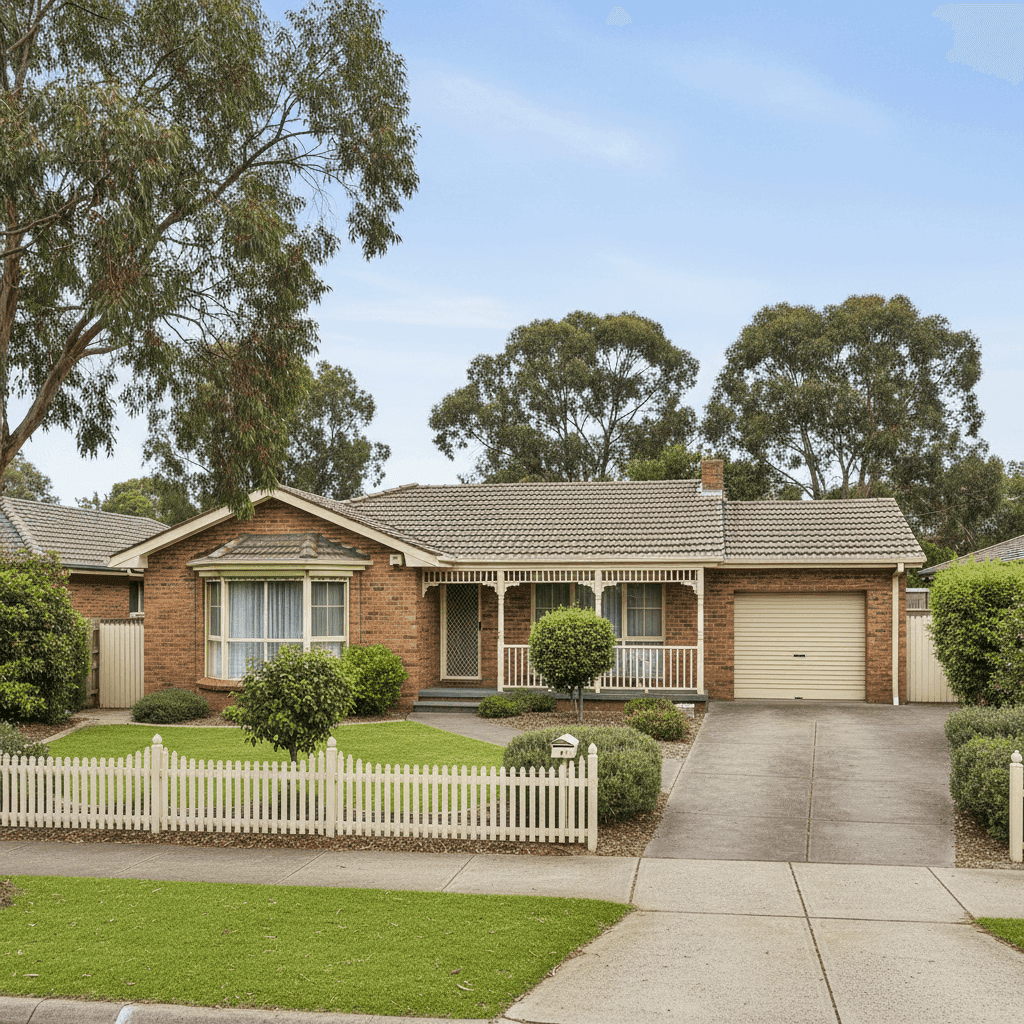
If you own a free standing home in Sale, VIC 3850, understanding what you should expect to pay for home and contents insurance is an important step in protecting one of your biggest assets. Sale is a regional city in the Wellington local government area, sitting at the heart of Gippsland — a region with its own unique risk profile that insurers factor into every quote they generate.
This article breaks down a real home and contents insurance quote for a four-bedroom, two-bathroom brick veneer home in Sale, compares it against local, state and national benchmarks, and offers practical tips to help homeowners in the area get better value from their cover.
---
Is This Quote Fair?
The annual premium for this property came in at $2,370 per year (or $247/month), covering a building sum insured of $900,000 and $300,000 in contents. The building excess is set at $3,000, with a separate $1,000 excess applying to contents claims.
Our pricing engine rates this quote as Fair — Around Average, and the numbers back that up. Based on 85 quotes collected for Sale and the surrounding 3850 postcode, the suburb average sits at $2,352/yr and the median at $1,974/yr. This quote lands just above the suburb average and comfortably within the 25th–75th percentile range of $1,587–$2,489/yr.
In other words, this isn't a bargain, but it's also not an outlier. For a four-bedroom home with a relatively high building sum insured of $900,000, paying close to the suburb average is a reasonable outcome. Homeowners who find themselves above the 75th percentile threshold — that is, paying more than $2,489/yr — should treat that as a signal to shop around.
---
How Sale Compares to the Rest of Victoria and Australia
One of the most useful things you can do when evaluating any insurance quote is zoom out and look at the broader context. Here's how Sale stacks up:
| Benchmark | Average Premium | Median Premium |
|---|---|---|
| Sale (3850) | $2,352/yr | $1,974/yr |
| Victoria (VIC) | $3,000/yr | $2,718/yr |
| National | $5,347/yr | $2,764/yr |
| Wellington LGA | $4,409/yr | — |
A few things stand out immediately. Sale's suburb average of $2,352/yr is significantly below the Victorian state average of $3,000/yr — roughly 22% cheaper. That's a meaningful difference and reflects the relatively lower risk profile of Sale compared to higher-density metro areas or coastal and flood-prone regions of Victoria.
The Wellington LGA average of $4,409/yr is notably higher than Sale's suburb figure, which suggests that other parts of the Wellington local government area — which covers a large swathe of Gippsland — carry considerably more risk in the eyes of insurers. Sale itself appears to be one of the more favourably rated pockets within the LGA.
Nationally, the picture is dramatic. The national average premium of $5,347/yr is more than double Sale's suburb average, driven heavily by high-cost states like Queensland and Western Australia where cyclone, flood and bushfire risks push premiums sky-high. Even the national median of $2,764/yr sits above what most Sale homeowners are paying. You can explore Victorian premium trends in more detail here.
---
Property Features That Affect Your Premium
Insurers don't price every home the same way — the physical characteristics of a property play a significant role in determining risk, and therefore cost. Here's how this particular property's features are likely influencing its premium:
Brick Veneer Walls Brick veneer is one of the most common wall constructions in regional Victoria and is generally viewed favourably by insurers. It offers solid fire resistance compared to timber-framed or cladded homes, which can help keep premiums in check.
Tiled Roof A tiled roof is considered a durable and relatively low-risk roofing material. Compared to Colorbond or older corrugated iron, tiles tend to perform well in hail events and are straightforward to repair or replace — both factors that insurers appreciate.
Slab Foundation A concrete slab foundation is standard for homes of this era and is generally considered stable. Unlike homes on stumps or raised foundations, slab homes have less exposure to subsidence and pest-related structural damage.
Timber and Laminate Flooring While aesthetically popular, timber and laminate floors can be more susceptible to water damage than tiles or polished concrete. This is worth keeping in mind when assessing your contents and building cover — particularly around escape of liquid claims.
1980 Construction Homes built around 1980 are well past the early post-war era but predate many modern building codes. They may have older plumbing and electrical systems that can increase the likelihood of certain claims. Some insurers apply age-related loadings to properties of this vintage.
Ducted Climate Control The presence of a ducted heating and cooling system adds to the replacement value of the home, which is one reason a $900,000 building sum insured may be appropriate here despite the 139 sqm floor area. Mechanical systems like these are expensive to replace and should always be factored into your sum insured calculation.
---
Tips for Homeowners in Sale
1. Double-check your building sum insured At $900,000 for a 139 sqm home, the sum insured here is on the higher end — but that may be entirely justified once you account for demolition costs, site clearance, professional fees and the ducted climate control system. Use an independent building cost calculator or speak with a quantity surveyor to validate your figure. Being underinsured is a far more costly mistake than slightly overpaying on premium.
2. Consider your excess strategically This quote carries a $3,000 building excess and a $1,000 contents excess. Opting for a higher excess is one of the most direct levers you have to reduce your annual premium. If you have sufficient savings to cover a larger out-of-pocket cost in the event of a claim, increasing your excess could meaningfully lower what you pay each year.
3. Review your contents sum insured regularly $300,000 in contents cover is a substantial figure — but it's easy for the value of your belongings to creep up over time, especially with home renovations, new appliances or furniture purchases. Conduct an annual home inventory to make sure your contents sum insured reflects reality. Both under- and over-insuring have real financial consequences.
4. Stay on top of home maintenance Insurers in regional Victoria are increasingly attentive to maintenance-related claims, particularly around water damage and storm events. Keeping gutters clear, checking roof tiles after storms and maintaining plumbing in good condition can reduce your claims risk — and potentially support a better renewal premium over time.
---
Compare Home Insurance Quotes in Sale
Whether this quote looks right for your situation or you're keen to see if you can do better, the smartest move is always to compare. CoverClub makes it easy to get multiple home and contents insurance quotes for your Sale property in minutes — so you can see exactly where you sit against the market and make a confident, informed decision.