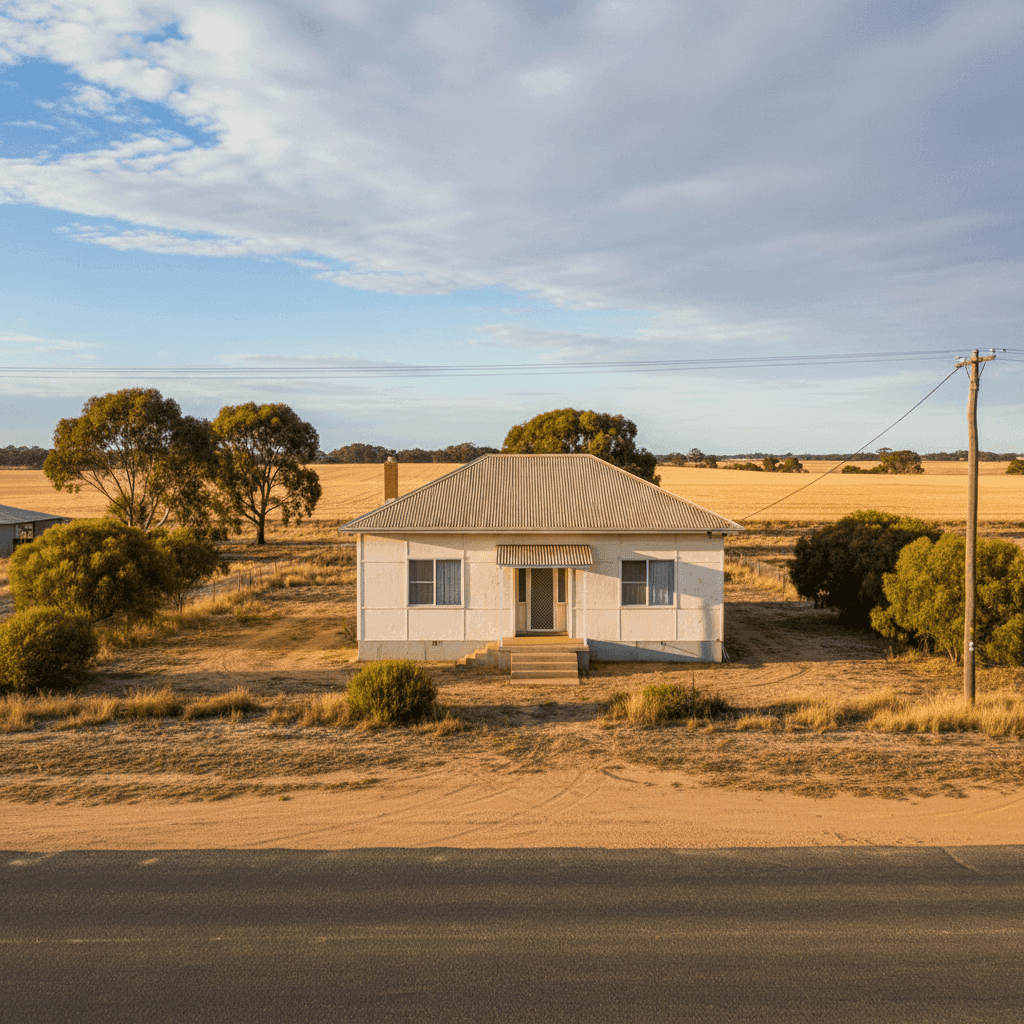
If you own a free standing home in Salmon Gums, WA 6445, you might be wondering whether you're getting a fair deal on your home and contents insurance — or quietly overpaying year after year. This article breaks down a real insurance quote for a three-bedroom property in this quiet wheatbelt community, benchmarks it against local, state, and national figures, and highlights the specific features of the property that are likely influencing the price.
---
Is This Quote Fair?
The quote in question comes in at $1,950 per year (or $187/month) for combined home and contents cover, with a building sum insured of $250,000 and contents cover of $20,000. Both the building and contents excess are set at $1,000.
Our price rating for this quote is CHEAP — below average — which is genuinely good news for the homeowner. To put that in perspective:
- The WA state average premium sits at $2,811/year, and the state median is $2,127/year
- The national average is a striking $5,347/year, with a national median of $2,764/year
At $1,950/year, this quote is comfortably below the WA median and well under half the national average. For a homeowner in regional Western Australia, that's a meaningful saving — roughly $177/year less than the WA median, and nearly $815/year less than the WA average.
It's worth noting that the Esperance LGA average (which covers Salmon Gums) is even lower at $1,619/year, suggesting that some properties in this region attract even more competitive premiums. The quote here sits modestly above that LGA average, which is entirely reasonable given the property's specific characteristics (more on those below).
---
How Salmon Gums Compares
Salmon Gums is a small rural locality in the Shire of Esperance, roughly 100 kilometres north of Esperance itself. It's a tight-knit agricultural community with relatively low population density — a factor that generally works in homeowners' favour when it comes to insurance pricing, as theft and vandalism risk tends to be lower than in urban centres.
Here's a quick snapshot of how this quote stacks up:
| Benchmark | Annual Premium |
|---|---|
| This Quote | $1,950 |
| Esperance LGA Average | $1,619 |
| WA State Median | $2,127 |
| WA State Average | $2,811 |
| National Median | $2,764 |
| National Average | $5,347 |
You can explore more detailed premium data for this postcode at the Salmon Gums suburb stats page, or broaden your view with WA state insurance statistics and national home insurance benchmarks.
---
Property Features That Affect Your Premium
Every home is different, and insurers assess a range of property characteristics when calculating your premium. Here's how the features of this particular property are likely influencing the price.
Fibro Asbestos External Walls
This is arguably the most significant risk factor for this property. Homes built with fibro asbestos cladding — common in Australian construction from the 1940s through to the late 1980s — can be more expensive to repair or rebuild due to the specialist handling, containment, and disposal requirements for asbestos-containing materials. Many insurers load premiums for fibro homes, or apply specific conditions to their policies. Homeowners should ensure their insurer is aware of the wall material and that asbestos-related repair costs are adequately covered under the policy.
Construction Year: 1963
A home built in 1963 is over 60 years old, which introduces a degree of age-related risk. Older properties may have ageing electrical wiring, plumbing, and structural components that can increase the likelihood of certain claims. That said, many well-maintained older homes are perfectly insurable at competitive rates.
Stump Foundation
Homes on stumps (also known as pier or post foundations) are common in regional WA and can be cost-effective to repair in some scenarios. However, they may also be more vulnerable to subsidence or pest damage over time. Insurers factor this in when assessing structural risk.
Steel/Colorbond Roof
This is a genuine positive for insurance pricing. Colorbond roofs are durable, fire-resistant, and low-maintenance — qualities that insurers tend to reward. Compared to older terracotta or concrete tile roofs, a steel roof is generally associated with lower repair and replacement costs.
Ducted Climate Control
The presence of ducted climate control adds to the replacement value of the home's fixtures and fittings, which is relevant to the building sum insured. It's a relatively minor factor but worth noting.
No Pool, No Solar Panels
The absence of a pool removes a common liability risk, and no solar panels means one less system to insure or replace. Both factors contribute to keeping the premium lean.
Standard Fittings Quality
With standard (rather than premium or high-end) fittings, the cost to repair or replace internal fixtures is lower, which generally supports a more competitive premium.
---
Tips for Homeowners in Salmon Gums
1. Confirm your asbestos cover in writing If your home has fibro asbestos walls, don't assume your policy automatically covers asbestos removal and disposal as part of a claim. Ask your insurer directly, and get the answer in writing. Some policies exclude or limit this cover, which could leave you significantly out of pocket after a loss event.
2. Review your sum insured regularly Building costs have risen sharply across Australia in recent years, and $250,000 may or may not be sufficient to fully rebuild a three-bedroom home in regional WA today. Use a building cost calculator or speak with a local builder to sense-check your sum insured annually — underinsurance is one of the most common and costly mistakes homeowners make.
3. Check your stumps and subfloor annually Homes on stump foundations benefit from periodic inspections of the subfloor space. Pest activity (particularly termites), moisture damage, and stump deterioration can go unnoticed for years. Catching issues early can prevent major structural claims and keep your insurance history clean.
4. Compare quotes before your renewal date Even if your current premium looks competitive, the insurance market shifts constantly. Set a reminder to compare quotes 4–6 weeks before your renewal date each year. A few minutes on CoverClub could reveal a better deal — or confirm you're already on a good thing.
---
Ready to Compare?
Whether you're a first-time buyer or a long-term Salmon Gums resident, it pays to know where your premium stands. Use CoverClub to compare home and contents insurance quotes for your property in minutes — no jargon, no pressure, just clear comparisons to help you make a confident decision.