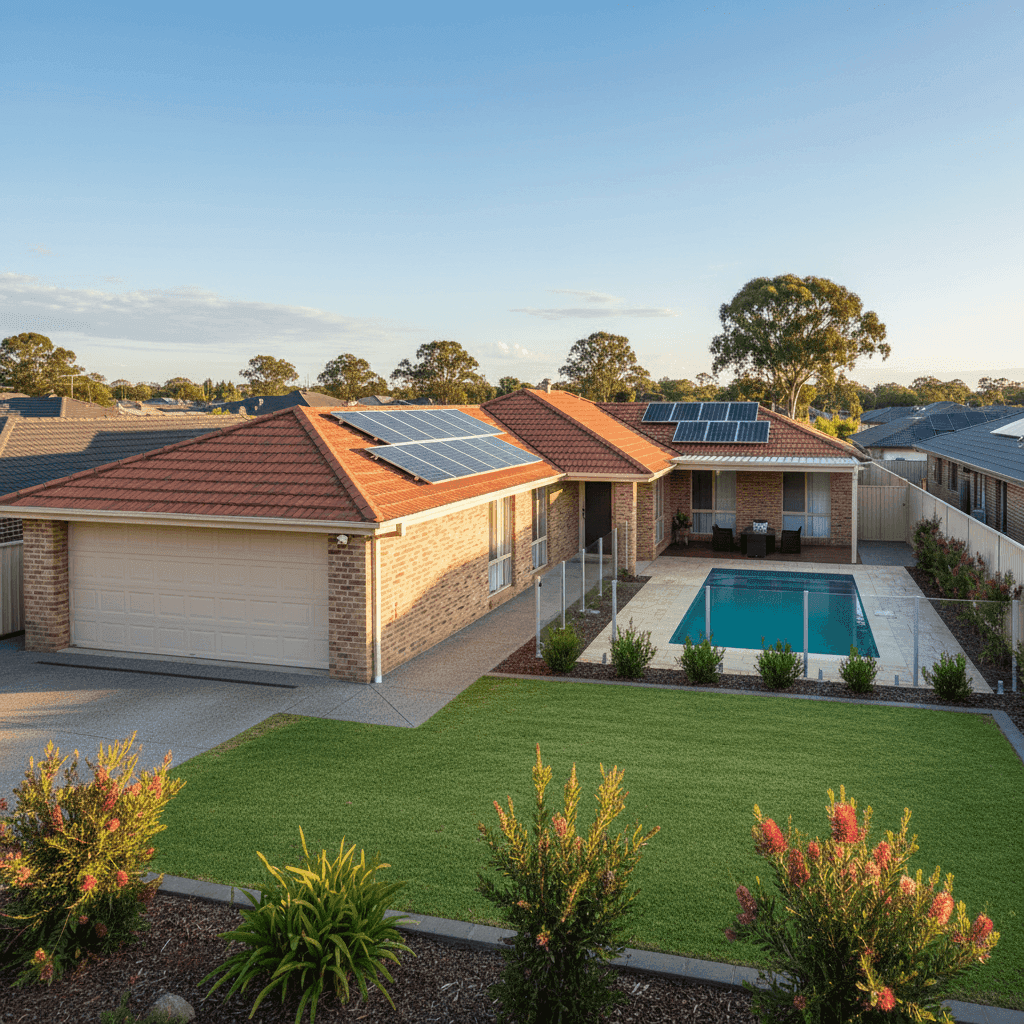
Salt Ash is a quiet residential suburb tucked within the Port Stephens local government area on the mid-north coast of New South Wales. Known for its relaxed lifestyle, proximity to Tilligerry Creek, and easy access to the Hunter Valley, it attracts families and sea-changers alike. For homeowners in the area, understanding what drives home insurance costs — and whether a quote represents genuine value — is an important part of protecting one of their biggest assets.
This article takes a close look at a recent home and contents insurance quote for a three-bedroom, two-bathroom free-standing home in Salt Ash (postcode 2318), comparing it against local, state, and national benchmarks to help you make an informed decision.
---
Is This Quote Fair?
The annual premium for this property came in at $5,665 per year (or roughly $536 per month), covering both building and contents. The building sum insured is set at $871,000, with contents valued at $50,000, and both building and contents carry a $1,000 excess.
Based on CoverClub's pricing data, this quote has been rated Fair — Around Average. That's not a red flag, but it's also not a standout deal. Here's why that rating makes sense:
- The quote sits just above the suburb's 25th percentile ($5,633/yr), meaning roughly three-quarters of comparable Salt Ash quotes are more expensive.
- It comes in below the suburb average ($6,187/yr) and below the suburb median ($6,272/yr), which suggests the pricing is competitive within the local market.
- The suburb's 75th percentile sits at $6,701/yr — so this quote is well clear of the pricier end of the local range.
In short, while the label "Fair" might sound underwhelming, the numbers tell a reasonably positive story for this property. The premium is tracking below the typical Salt Ash price point, even if there's still room to shop around.
---
How Salt Ash Compares
One of the most useful ways to assess a home insurance quote is to zoom out and look at the broader picture. You can explore the full breakdown on the Salt Ash suburb stats page, the NSW state stats page, and national insurance stats.
Here's how the numbers stack up:
| Benchmark | Premium |
|---|---|
| This quote | $5,665/yr |
| Salt Ash suburb average | $6,187/yr |
| Salt Ash suburb median | $6,272/yr |
| Port Stephens LGA average | $3,116/yr |
| NSW state average | $9,528/yr |
| NSW state median | $3,770/yr |
| National average | $5,347/yr |
| National median | $2,764/yr |
A few things stand out here. First, the NSW state average of $9,528/yr is extraordinarily high — this is likely pulled upward by high-risk properties in flood plains, coastal erosion zones, and bushfire-prone areas across the state. The state median of $3,770/yr is a more grounded reference point and sits well below this quote.
Second, the Port Stephens LGA average of $3,116/yr is notably lower than the Salt Ash suburb average. This could reflect a mix of property types and risk profiles across the broader LGA, including more modest dwellings or properties with lower sum insured values.
Third, the national average of $5,347/yr is actually close to this quote, suggesting that on a nationwide scale, $5,665/yr is broadly in line with what Australians are paying for comparable cover — though the national median of $2,764/yr is a reminder that many policies (often with lower cover levels) come in much cheaper.
The relatively small sample size for Salt Ash (11 quotes) means these suburb-level figures should be treated as a useful guide rather than a definitive benchmark.
---
Property Features That Affect Your Premium
Several characteristics of this property have a meaningful influence on the premium. Understanding them can help you anticipate costs and identify potential savings.
Brick veneer construction and tiled roof Brick veneer walls paired with a tiled roof is one of the more insurer-friendly combinations in Australia. Both materials offer solid fire resistance and durability, which typically attracts more competitive premiums compared to timber-clad homes or those with metal roofing in certain risk zones.
Slab foundation A concrete slab foundation is generally considered low-risk by insurers. Unlike homes on stumps or piers, slabs are less susceptible to subsidence, pest damage, and moisture-related issues — all factors that can push premiums higher.
Construction year: 1986 At nearly 40 years old, this home sits in a middle ground for insurers. It's old enough that some components (plumbing, electrical, roofing) may be approaching the end of their serviceable life, which can marginally increase risk. However, it's not so old as to attract the significant loading that pre-1960s homes sometimes face.
Swimming pool Pools add liability exposure and increase the overall replacement cost of the property, both of which can nudge premiums upward. Ensuring your pool is properly fenced and maintained to Australian standards is not just a legal requirement — it can also support your insurance position.
Solar panels Solar panels are an increasingly common feature on Australian homes, but they do add to the insured value of the building. Make sure your building sum insured accounts for the full replacement cost of your solar system, including installation.
Ducted climate control Ducted air conditioning systems are a significant built-in asset. Like solar panels, they contribute to the overall replacement value of the home and should be factored into your building sum insured to avoid being underinsured.
Timber and laminate flooring These flooring types are more vulnerable to water damage than tiles, which is worth keeping in mind when reviewing your contents and building cover. Water ingress events — whether from burst pipes or storm damage — can be costly to remediate.
---
Tips for Homeowners in Salt Ash
1. Review your building sum insured regularly With a sum insured of $871,000, this policy covers a 214 sqm home with a pool, solar panels, and ducted air conditioning. Construction costs have risen sharply in recent years, so it's worth checking that your sum insured reflects current rebuild costs — not just what you paid for the property. Underinsurance is one of the most common and costly mistakes homeowners make.
2. Shop around at renewal time A "Fair" rating means there's a reasonable chance you could find a more competitive premium by comparing quotes. Insurers price risk differently, and loyalty doesn't always pay. Use a comparison tool like CoverClub to benchmark your renewal quote before accepting it.
3. Consider your excess carefully Both the building and contents excess on this policy are set at $1,000. Opting for a higher excess can reduce your annual premium, but make sure you're comfortable covering that amount out of pocket in the event of a claim. For a property of this value, a $1,000 excess is relatively modest.
4. Maintain your pool and solar system Insurers expect homeowners to keep their property in good repair. Neglected pools, damaged solar panels, or poorly maintained systems can complicate claims or even void cover in some circumstances. Regular servicing and documentation of maintenance can make a real difference when it matters most.
---
Compare Your Home Insurance with CoverClub
Whether you're a first-time buyer or a long-time Salt Ash resident, it pays to know where your premium sits relative to the market. CoverClub makes it easy to compare home and contents insurance quotes in one place, giving you the data you need to make a confident decision.
Get a quote today at CoverClub and see how your current policy stacks up against the competition.