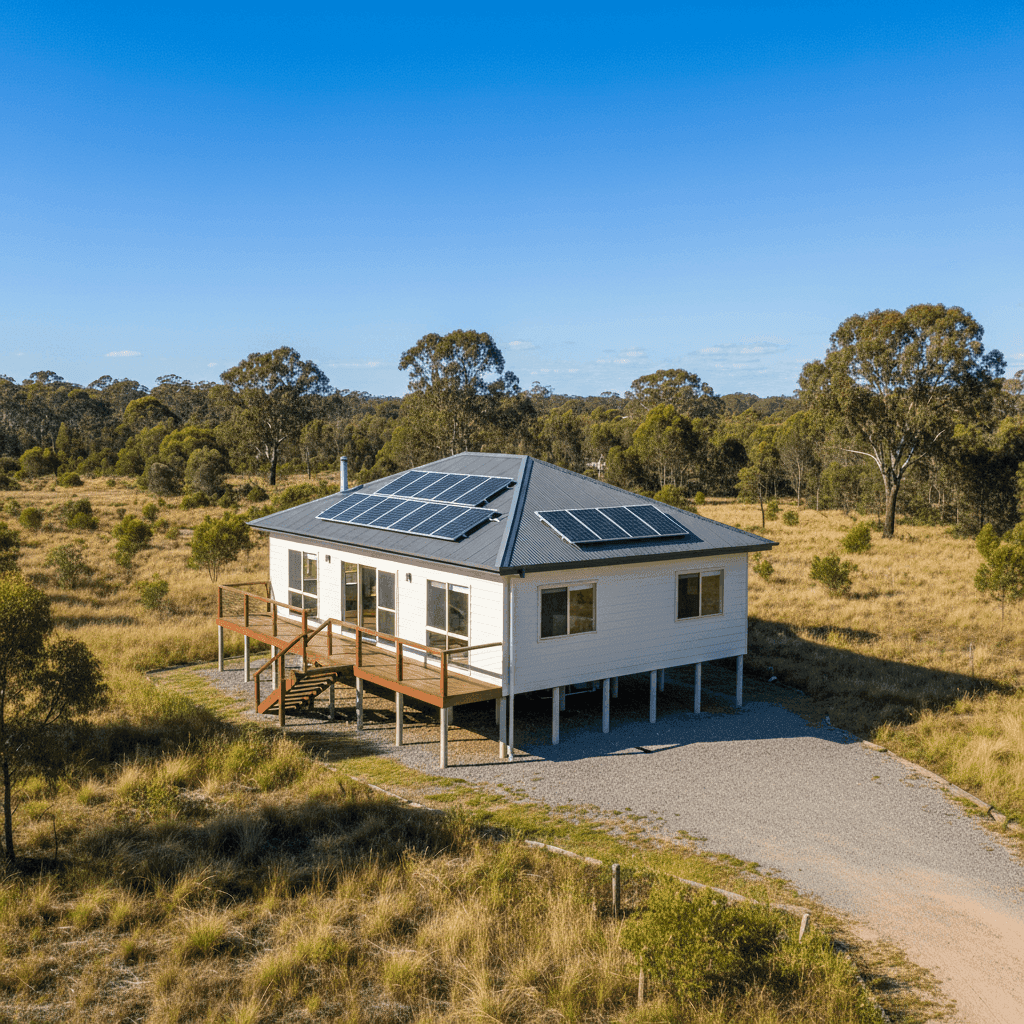
If you own a free standing home in Salt Creek, SA 5264, you're likely no stranger to the unique considerations that come with insuring a rural South Australian property. This article takes a close look at a real home insurance quote for a four-bedroom, two-bathroom free standing home in the area — and breaks down exactly what the numbers mean for local homeowners.
---
Is This Quote Fair?
The quote in question comes in at $2,694 per year (or $251 per month) for combined Home and Contents cover, with a $502,000 building sum insured and $90,000 in contents cover. Both the building and contents excess are set at $1,000.
Our pricing analysis rates this quote as FAIR — around average. That means it's not a standout bargain, but it's also not overpriced. For a property of this size and construction type in a regional South Australian location, landing near the average is a reasonable outcome — though there's always room to explore whether a better deal exists elsewhere.
---
How Salt Creek Compares
Understanding where your premium sits relative to local and broader benchmarks is one of the most useful things you can do as a homeowner. Here's how this quote stacks up:
| Benchmark | Premium |
|---|---|
| This quote | $2,694/yr |
| Salt Creek suburb average | $3,751/yr |
| Salt Creek suburb median | $3,286/yr |
| Salt Creek 25th percentile | $2,443/yr |
| Salt Creek 75th percentile | $5,120/yr |
| SA state average | $2,433/yr |
| SA state median | $1,679/yr |
| Unincorporated SA (LGA) average | $1,823/yr |
| National average | $5,347/yr |
| National median | $2,764/yr |
A few things stand out here. This quote sits well below the Salt Creek suburb average of $3,751 and also below the suburb median of $3,286 — meaning it's cheaper than more than half of quotes seen in the area. That's a positive sign.
Compared to the broader SA state average of $2,433, the quote is slightly higher, which is expected given the specific property characteristics and the higher sum insured. Interestingly, the LGA average for Unincorporated SA is just $1,823 — notably lower — though this may reflect a wider mix of property types and cover levels across that large geographic area.
Against the national average of $5,347, this quote looks quite competitive. Home insurance costs vary enormously across Australia, with high-risk regions (cyclone zones, flood-prone areas, bushfire corridors) pushing national averages up significantly. Salt Creek's relatively modest premium reflects its lower exposure to some of those extreme risk factors.
You can explore more local data on the Salt Creek insurance stats page, or compare against all of South Australia and national benchmarks.
> Note: The Salt Creek sample size used in this comparison is 8 quotes, so while directionally useful, the suburb averages should be interpreted with some caution. A larger dataset would provide greater statistical confidence.
---
Property Features That Affect Your Premium
Every property is different, and insurers weigh up a range of factors when calculating your premium. Here's how the key features of this home likely influence the price:
Hardiplank/Hardiflex external walls Fibre cement cladding like Hardiplank is generally viewed favourably by insurers. It's durable, fire-resistant, and holds up well against the elements — all of which can contribute to a more competitive premium compared to older weatherboard or brick veneer construction.
Steel/Colorbond roof A Colorbond roof is another tick in the right column. It's lightweight, resistant to corrosion, and performs well in heat and moderate wind events. Insurers tend to price steel roofing more favourably than older tile or asbestos-cement alternatives.
Stump foundation Homes built on stumps (also known as pier-and-beam foundations) can be more susceptible to movement and subfloor issues over time, particularly as stumps age. This 1985-built home is now 40 years old, which means the foundation is worth monitoring — and insurers may factor this in when assessing risk.
Solar panels Solar panels add value to the property and represent an additional asset to insure. They can also introduce risks such as electrical faults or storm damage. It's worth confirming with your insurer whether your solar system is explicitly covered under your building policy, and for how much.
Ducted climate control Ducted air conditioning systems are a significant fixed asset and are typically covered as part of the building sum insured. Ensuring your $502,000 building cover adequately accounts for the replacement cost of this system (along with all other permanent fixtures) is important.
Carpet flooring Carpet is generally straightforward from an insurance perspective, though it does contribute to contents replacement costs in the event of water damage or fire. At $90,000, the contents sum insured should account for floor coverings if they're included under contents rather than building.
1985 construction Homes built in the mid-1980s are well-established but may have ageing electrical wiring, plumbing, and structural elements. Some insurers apply age-related loading to older homes, so it's worth shopping around to find a provider comfortable with the property's vintage.
---
Tips for Homeowners in Salt Creek
1. Review your building sum insured regularly At $502,000, the building cover needs to reflect the full cost of rebuilding — not the market value of the property. Construction costs have risen sharply in recent years, so it's worth getting a building replacement cost estimate to make sure you're not underinsured.
2. Confirm solar panel coverage Not all policies automatically cover rooftop solar systems under the building component. Ask your insurer directly whether your panels are covered, what the limit is, and whether accidental damage or inverter failure is included.
3. Shop around — even when your quote seems fair A "fair" rating means you're around average, but that doesn't mean you can't do better. With premiums in the suburb ranging from $2,443 (25th percentile) to over $5,000 (75th percentile), there's clearly significant variation in what insurers are willing to charge for similar properties. Comparing quotes takes minutes and could save you hundreds.
4. Check your stump foundation condition If your stumps haven't been inspected recently, it may be worth having a building inspector take a look. Some policies exclude damage related to gradual deterioration or inadequate maintenance — so staying on top of subfloor condition is both a safety and insurance consideration.
---
Ready to Compare?
Whether you're happy with your current quote or keen to see if you can do better, CoverClub makes it easy to compare home insurance options tailored to your property. Get a quote today and see how your premium stacks up — you might be surprised at the difference a comparison can make.