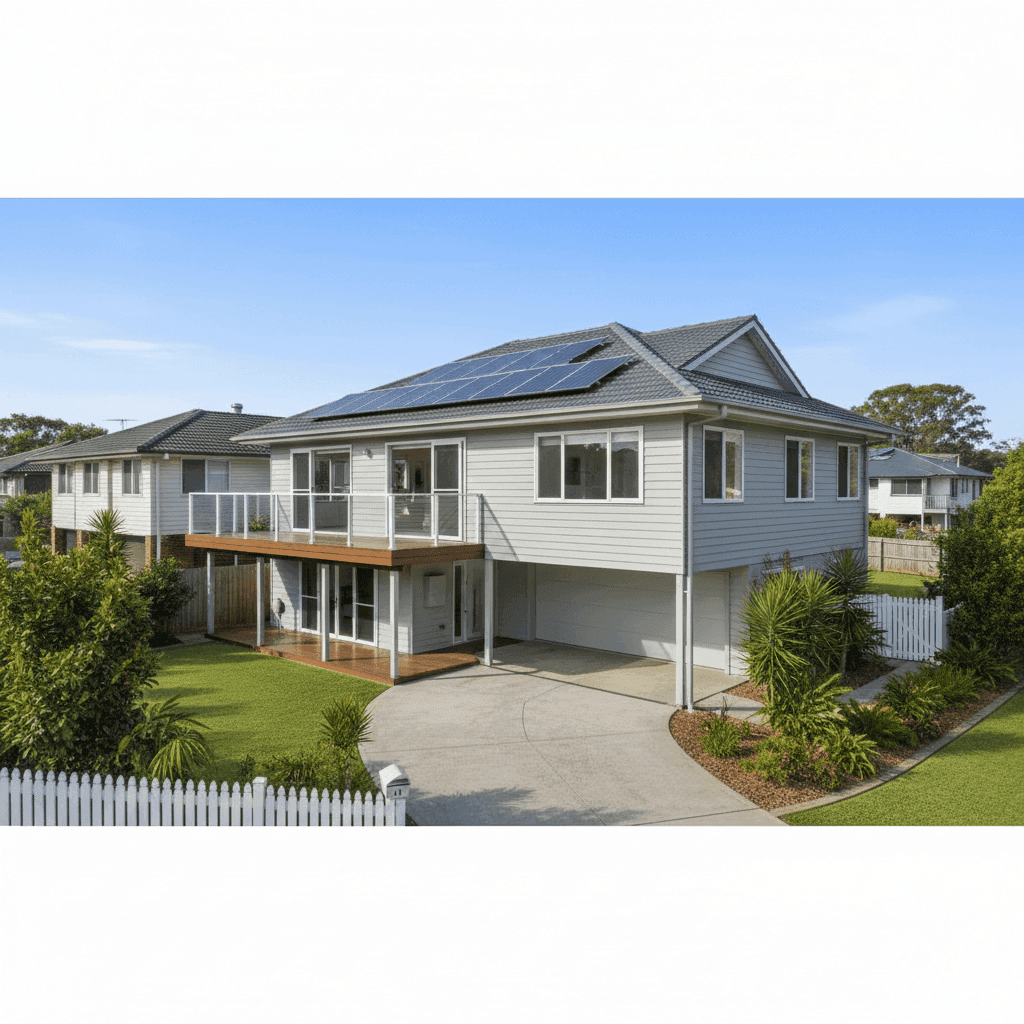
Home insurance costs in San Remo, NSW 2262 can vary considerably depending on your property's specific characteristics, and understanding where your quote sits relative to the market is key to making an informed decision. This article breaks down a real home and contents insurance quote for a four-bedroom, free-standing home in San Remo on the NSW Central Coast — examining what's driving the price and how it stacks up against local, state, and national benchmarks.
---
Is This Quote Fair?
The quote in question comes in at $4,085 per year (or $391 per month) for combined home and contents cover, with a building sum insured of $724,000 and contents valued at $10,000. Both the building and contents excesses are set at $1,000.
Based on our pricing data, this quote is rated Expensive — above average for the San Remo area.
To put that in perspective, the suburb average premium sits at $3,338 per year, while the median — which is often a more reliable indicator since it's less influenced by outliers — is just $2,336 per year. This quote is roughly 75% higher than the local median, placing it well above what most San Remo homeowners are paying.
That said, the 75th percentile for the suburb is $3,553 per year, meaning this quote actually exceeds even the higher end of the typical range. For a homeowner on a tight budget, that's a meaningful gap worth investigating.
There are legitimate reasons a quote can land on the higher end — the property's specific features, the insurer's risk appetite, and the level of cover all play a role. But it's always worth shopping around to ensure you're not overpaying for comparable protection.
---
How San Remo Compares
Understanding the broader pricing landscape helps put this quote into sharper context. Here's how San Remo fares against state and national figures:
| Benchmark | Average Premium | Median Premium |
|---|---|---|
| San Remo (NSW 2262) | $3,338/yr | $2,336/yr |
| NSW (State) | $9,528/yr | $3,770/yr |
| National | $5,347/yr | $2,764/yr |
| Central Coast LGA | $8,387/yr | — |
A few things stand out here. The NSW state average of $9,528 per year is extraordinarily high — largely driven by extreme weather-prone regions, high-value coastal properties, and flood-affected areas across the state. San Remo's local median of $2,336 is actually well below the national median of $2,764, suggesting it's a relatively affordable suburb to insure on the whole.
Interestingly, the Central Coast LGA average of $8,387 per year is significantly higher than San Remo's suburb-level figures, which indicates that other parts of the LGA may be pulling that average up — possibly due to flood zones, bushfire-prone areas, or higher-value homes in neighbouring suburbs.
You can explore the full pricing data for this postcode at our San Remo insurance statistics page, compare it against all NSW suburbs, or view national home insurance benchmarks.
---
Property Features That Affect Your Premium
Several characteristics of this particular property are likely influencing the premium — some pushing it higher, others potentially keeping it in check.
Elevated Foundation on Stumps
The home is elevated by at least one metre on a stump foundation. This is a double-edged sword for insurers. On one hand, elevation can reduce flood risk by keeping the floor level above potential inundation. On the other, elevated homes on stumps can be more expensive to repair after storm or wind events, as the sub-floor area is exposed and structural damage can be more complex to remediate.
Hardiplank / Hardiflex External Walls
Fibre cement cladding such as Hardiplank is generally considered a moderate-risk material by insurers. It's durable and fire-resistant compared to timber weatherboards, but it can be more costly to replace than brick veneer, which may nudge premiums slightly upward.
Tiled Roof
Terracotta or concrete tile roofs are generally viewed favourably by insurers — they're durable, fire-resistant, and have a long lifespan. This is unlikely to be a negative factor in the premium calculation.
Solar Panels
The presence of solar panels adds to the insured value of the property. Panels themselves can be damaged by hail, storms, or falling debris, and their replacement cost is non-trivial. Some insurers include solar panels automatically under building cover; others may require a specific endorsement. It's worth confirming exactly what's covered under this policy.
Timber and Laminate Flooring
Timber and laminate floors are more susceptible to water damage than tiles, which can increase the cost of claims — particularly in the event of a burst pipe or storm water ingress. This may be a contributing factor to a higher premium.
Ducted Climate Control
Ducted air conditioning systems are a significant fixed asset in a home. Damage to ductwork, compressors, or indoor units can result in large claims. Insurers factor in the replacement cost of these systems when calculating premiums.
Construction Year: 1989
A home built in 1989 is now over 35 years old. Older homes can carry higher risk due to ageing plumbing, wiring, and roofing materials, even if they've been well maintained. Insurers may price this in, particularly for a home of this size (244 sqm).
---
Tips for Homeowners in San Remo
If you're looking to get better value on your home insurance without compromising on cover, here are some practical steps worth taking:
- Shop around with a comparison tool. The single most effective way to reduce your premium is to compare quotes from multiple insurers. A quote rated "expensive" relative to the suburb median suggests there's likely a better deal available for similar cover. Use CoverClub's free quote comparison tool to see what else is on the market.
- Review your sum insured carefully. A building sum insured of $724,000 for a 244 sqm home works out to roughly $2,967 per square metre — which is on the higher end for a standard-fit home. Make sure your sum insured reflects the actual cost to rebuild (not the market value), as over-insuring can unnecessarily inflate your premium.
- Confirm solar panel coverage. Given the solar panels on this property, it's important to check whether they're explicitly covered under the building policy and what events are included (e.g., hail, storm, fire). Some policies have sublimits or exclusions for solar systems, so read the Product Disclosure Statement carefully.
- Consider a higher excess to reduce your premium. Both excesses on this policy are set at $1,000. Increasing the excess — if you have the financial buffer to cover a larger out-of-pocket cost in a claim — can meaningfully reduce your annual premium. Many insurers offer significant discounts for excesses of $2,000 or more.
---
Ready to Compare?
Whether you're reviewing an existing policy or shopping for cover for the first time, CoverClub makes it easy to compare home insurance quotes from a range of Australian insurers. Enter your property details at coverclub.com.au and see what's available in your area — you might be surprised how much you could save.