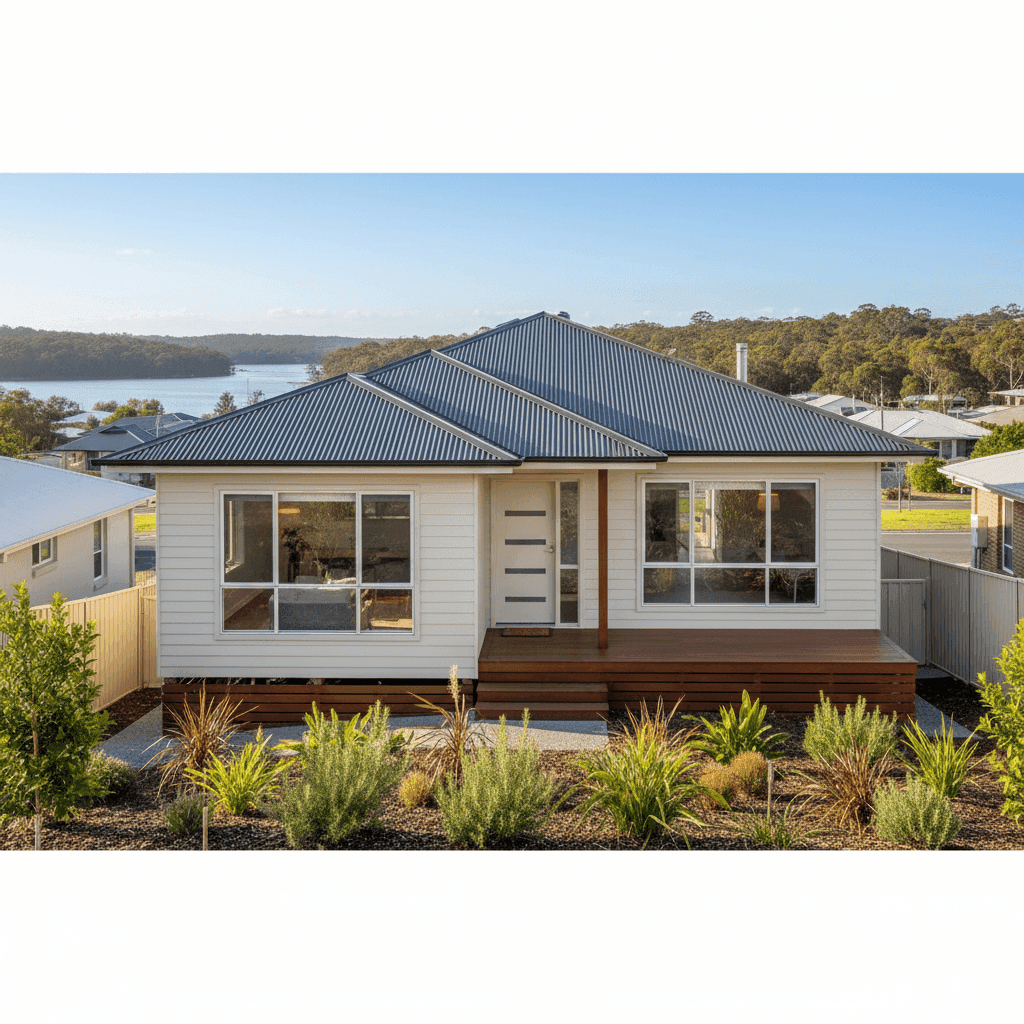
Sanctuary Point is a relaxed coastal suburb on the shores of St Georges Basin, about two and a half hours south of Sydney. It's popular with families, retirees, and sea-changers drawn to its waterfront lifestyle and relative affordability — but like any coastal community, it pays to make sure your home insurance is working as hard as you are. This article takes a close look at a recent quote for a three-bedroom, two-bathroom free-standing home in Sanctuary Point, breaking down what the price means, how it compares to the broader market, and what local homeowners can do to keep their premiums in check.
---
Is This Quote Fair?
The quote in question comes in at $886 per year (or about $83 per month) for combined home and contents cover, with a building sum insured of $399,000 and contents valued at $99,000. CoverClub's pricing engine rates this as Fair — Around Average.
At first glance, $886 might seem modest, but context is everything. Within Sanctuary Point itself, the 25th percentile of quotes sits right around $880 per year — meaning this premium is sitting just above the cheapest quarter of comparable quotes in the suburb. In other words, while it isn't the lowest price available, it's genuinely competitive and well below the suburb's average and median figures.
Given the property's characteristics — a brand-new 2024 build with above-average fittings, Hardiplank Hardiflex cladding, a steel Colorbond roof, and a modest 139 sqm footprint — a "Fair" rating reflects solid value. New builds typically attract more favourable underwriting because modern construction standards reduce risk. That said, above-average fittings and a larger contents value of $99,000 will naturally push a premium higher than a bare-bones policy. All things considered, this quote represents a reasonable starting point, though there may still be room to sharpen the price with a few adjustments.
---
How Sanctuary Point Compares
To put this quote in perspective, here's how Sanctuary Point stacks up against broader benchmarks:
| Benchmark | Average Premium | Median Premium |
|---|---|---|
| Sanctuary Point (2540) | $2,075/yr | $1,923/yr |
| NSW | $3,801/yr | $3,410/yr |
| National | $2,965/yr | $2,716/yr |
The $886 quote sits dramatically below every one of these benchmarks — roughly 57% below the suburb average, 77% below the NSW average, and 70% below the national average. Even accounting for the fact that the suburb's 25th percentile is around $880, this is a notably affordable result.
It's worth noting that Sanctuary Point premiums, while lower than the state and national averages, can vary widely — the suburb's 75th percentile reaches $3,519 per year, indicating that some properties in the area attract significantly higher premiums. Flood exposure, proximity to waterways, and older building stock are likely contributors to that upper-end spread.
You can explore the full picture for this postcode at the Sanctuary Point insurance stats page, compare it to the NSW state average, or see where it sits against national benchmarks.
---
Property Features That Affect Your Premium
Several characteristics of this property work in the homeowner's favour from an insurance pricing perspective:
New Construction (2024) A home built in 2024 benefits from modern building codes, improved structural standards, and materials that meet current fire and weather-resistance requirements. Insurers generally view new builds as lower risk than older homes, which can translate directly into lower premiums.
Hardiplank Hardiflex External Walls Fibre cement cladding like Hardiplank is a popular choice in coastal areas for good reason — it's resistant to moisture, rot, and termites. Insurers tend to view it more favourably than older weatherboard or fibro, which can be more susceptible to storm and moisture damage.
Steel Colorbond Roof A steel Colorbond roof is one of the most insurer-friendly roofing materials available in Australia. It's durable, fire-resistant, and performs well in high-wind conditions. Compared to terracotta tiles or older corrugated iron, Colorbond typically attracts lower premiums.
Stump Foundation with Elevation Under 1 Metre The home sits on stumps, elevated less than one metre off the ground. This style of construction can offer some protection against minor surface water flooding, though it's worth confirming your policy's flood cover terms carefully given the property's proximity to St Georges Basin waterways.
Ducted Climate Control The presence of ducted air conditioning is a positive for liveability but does represent an insurable asset. It's worth confirming this system is adequately captured within the building sum insured, as ducted systems can be costly to repair or replace.
Above-Average Fittings Above-average fittings — think stone benchtops, quality appliances, and premium fixtures — increase the rebuild cost of a home and the replacement value of contents. This is appropriately reflected in the $399,000 building sum insured and $99,000 contents figure.
---
Tips for Homeowners in Sanctuary Point
1. Review Your Sum Insured Annually Construction costs have risen sharply across Australia in recent years. A building sum insured set at purchase may no longer reflect the true cost to rebuild. Use a building cost calculator or speak with a quantity surveyor to ensure your $399,000 figure keeps pace with current labour and materials costs in the Shoalhaven region.
2. Check Your Flood Cover Inclusions Sanctuary Point borders St Georges Basin, and parts of the surrounding Shoalhaven area have known flood risk. Review your policy's flood definition carefully — some policies distinguish between riverine flooding, stormwater runoff, and storm surge. Make sure you're covered for the scenarios most relevant to your specific location.
3. Consider Raising Your Excess Strategically This quote carries a $2,000 building excess and $1,000 contents excess. If you have the financial buffer to absorb a higher excess in the event of a claim, opting for a higher voluntary excess is one of the most straightforward ways to reduce your annual premium. Run the numbers to find the right balance for your situation.
4. Bundle and Compare Regularly Home and contents cover is already bundled here, which typically attracts a discount over separate policies. However, insurance pricing changes frequently — what's competitive today may not be in 12 months. Make a habit of comparing quotes at renewal, even if you're happy with your current insurer.
---
Ready to Compare?
Whether you're buying, building, or simply reviewing your existing cover, CoverClub makes it easy to see how your premium stacks up. Get a home insurance quote today and find out if you could be paying less — or getting more for what you already pay.