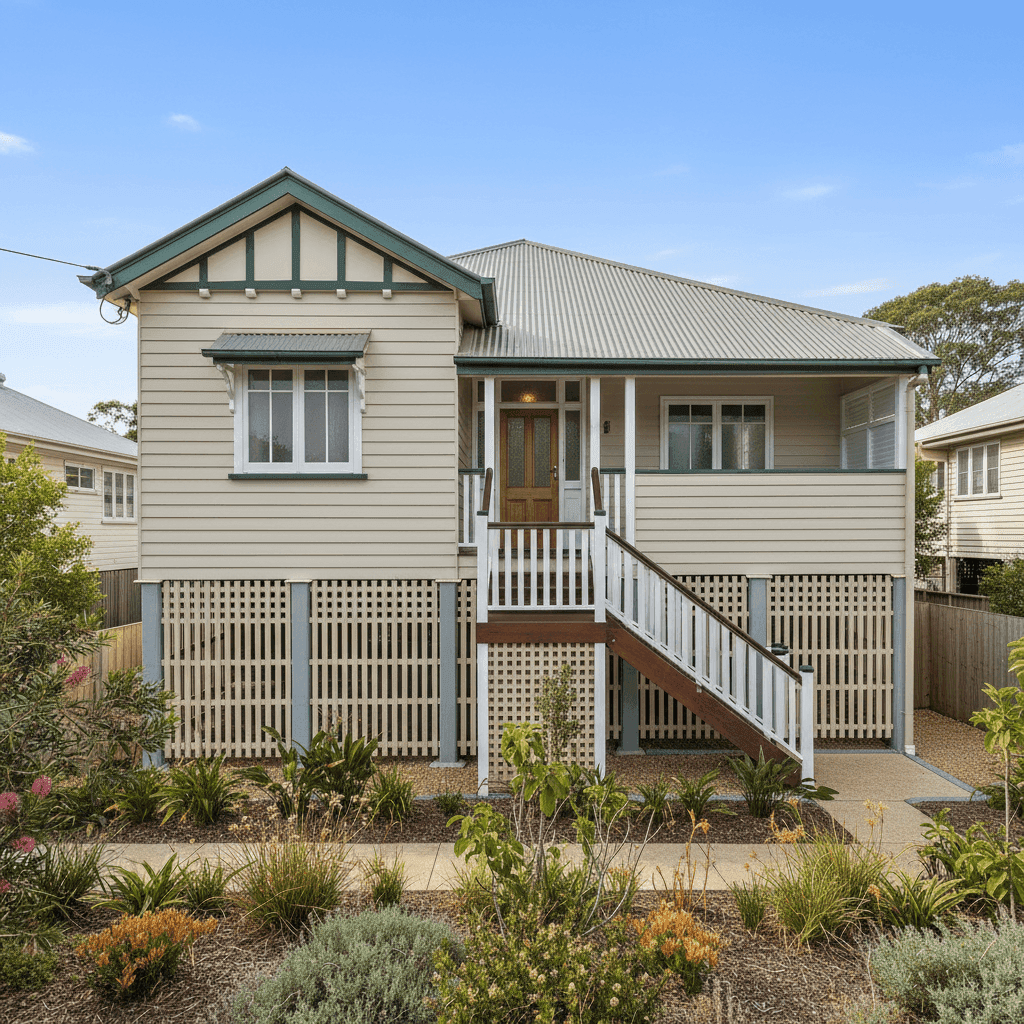
Sandgate is one of Brisbane's most charming bayside suburbs — a relaxed coastal community with a strong sense of history and a streetscape dotted with character homes. If you own a free standing home here, particularly one of the older weatherboard Queenslanders that define the area, understanding what you should be paying for home insurance is genuinely worthwhile. This article breaks down a real home and contents insurance quote for a 3-bedroom property in Sandgate (postcode 4017) and puts it in context against local, state, and national benchmarks.
---
Is This Quote Fair?
The annual premium for this quote comes in at $3,508 per year (or $336/month), covering both building (sum insured: $722,000) and contents ($19,000). The price rating assigned to this quote is Fair — Around Average, and the data backs that up.
Compared to the suburb median of $3,436/yr for Sandgate, this quote sits just $72 above the midpoint — a negligible difference. It falls comfortably within the interquartile range for the suburb (25th percentile: $3,164/yr; 75th percentile: $4,339/yr), meaning it's neither a standout bargain nor cause for concern.
In short: this is a reasonable quote for the property type and location. That said, "fair" doesn't mean you can't do better — and shopping around is always worthwhile.
---
How Sandgate Compares
To really understand whether $3,508 is competitive, it helps to zoom out and look at the broader picture.
| Benchmark | Average Premium | Median Premium |
|---|---|---|
| Sandgate (4017) | $4,094/yr | $3,436/yr |
| Queensland | $9,129/yr | $3,903/yr |
| National | $5,347/yr | $2,764/yr |
| Brisbane LGA | $16,277/yr | — |
A few things stand out here. The Queensland state average of $9,129/yr is dramatically higher than the median of $3,903/yr — a classic sign that extreme premiums in high-risk areas (cyclone-prone Far North Queensland, flood-affected regions, etc.) are pulling the average upward. Sandgate, sitting in Brisbane's bayside, avoids the worst of those risk categories, which is reflected in its more moderate pricing.
At the national level, the average of $5,347/yr tells a similar story — skewed by disaster-prone postcodes around the country. The national median of $2,764/yr is actually lower than Sandgate's median, suggesting that while Sandgate isn't cheap, it's not dramatically out of step with the broader market either.
The Brisbane LGA average of $16,277/yr deserves a special mention. This figure is heavily distorted by flood-affected and high-risk suburbs within the Brisbane council area — it's not a useful direct comparison for Sandgate, but it does illustrate just how varied premiums can be within a single local government area.
For more localised data, you can explore Sandgate's suburb insurance stats directly.
---
Property Features That Affect Your Premium
Several characteristics of this property have a meaningful influence on what insurers charge. Understanding them can help you have more informed conversations with your insurer.
Age and Construction (Built 1957, Weatherboard Timber)
Older homes built before modern building codes carry higher risk in the eyes of insurers. This property, constructed in 1957, is nearly 70 years old. Weatherboard timber walls — while beautiful and quintessentially Queensland — are more susceptible to fire, rot, and storm damage than brick or rendered masonry. Insurers typically apply a loading for timber-framed homes, particularly older ones.
Elevated on Stumps
Being elevated by at least one metre on stumps is a double-edged feature. On the positive side, it significantly reduces flood and inundation risk — a major concern in low-lying parts of Sandgate near Moreton Bay. On the other hand, stumped homes can be more vulnerable to wind uplift and subfloor issues. Overall, the elevation is likely a net positive for this property's risk profile in a coastal suburb.
Steel/Colorbond Roof
A Colorbond steel roof is generally viewed favourably by insurers. It's durable, fire-resistant, and holds up well in storms. Compared to terracotta tiles or older corrugated iron, Colorbond is a lower-maintenance and lower-risk roofing material — a modest premium benefit.
Ducted Climate Control
The presence of ducted climate control is worth noting. This system adds to the replacement value of the home and is factored into the building sum insured. At $722,000, the sum insured appears reasonable for a 139 sqm home in this area, accounting for construction costs, fixtures, and systems like ducted air conditioning.
No Pool, No Solar
The absence of a pool removes a liability and maintenance risk that some insurers price in. Similarly, no solar panels means there's no additional coverage complexity around inverters or panel damage — keeping the risk profile relatively straightforward.
---
Tips for Homeowners in Sandgate
1. Review your building sum insured regularly. Construction costs in South East Queensland have risen sharply in recent years. A sum insured of $722,000 for 139 sqm may be appropriate today, but it's worth recalculating annually using your insurer's calculator or an independent quantity surveyor's estimate. Being underinsured at claim time is a costly mistake.
2. Check your flood cover carefully. Sandgate's proximity to Moreton Bay and low-lying creek systems means flood risk is a real consideration for some streets. Confirm whether your policy covers riverine flooding (not just storm surge or flash flooding) and whether your specific address sits in a designated flood zone. Council flood maps are a useful starting point.
3. Maintain the subfloor and stumps. For a home elevated on timber or concrete stumps, regular inspection of the subfloor is essential. Insurers may not cover damage arising from gradual deterioration or pest activity. Annual checks — and treatment for termites — can prevent expensive claims being declined.
4. Compare quotes at renewal time. A "fair" rating is a good starting point, but the insurance market shifts constantly. Premiums can vary by hundreds of dollars for the same property across different insurers. Set a reminder to compare quotes before your renewal date — it only takes a few minutes and could save you a meaningful amount each year.
---
Ready to Compare?
Whether you're reviewing an existing policy or shopping for the first time, CoverClub makes it easy to see how your quote stacks up. Get a home insurance quote today at CoverClub and compare your options against real suburb and state data — so you can make a confident, informed decision.