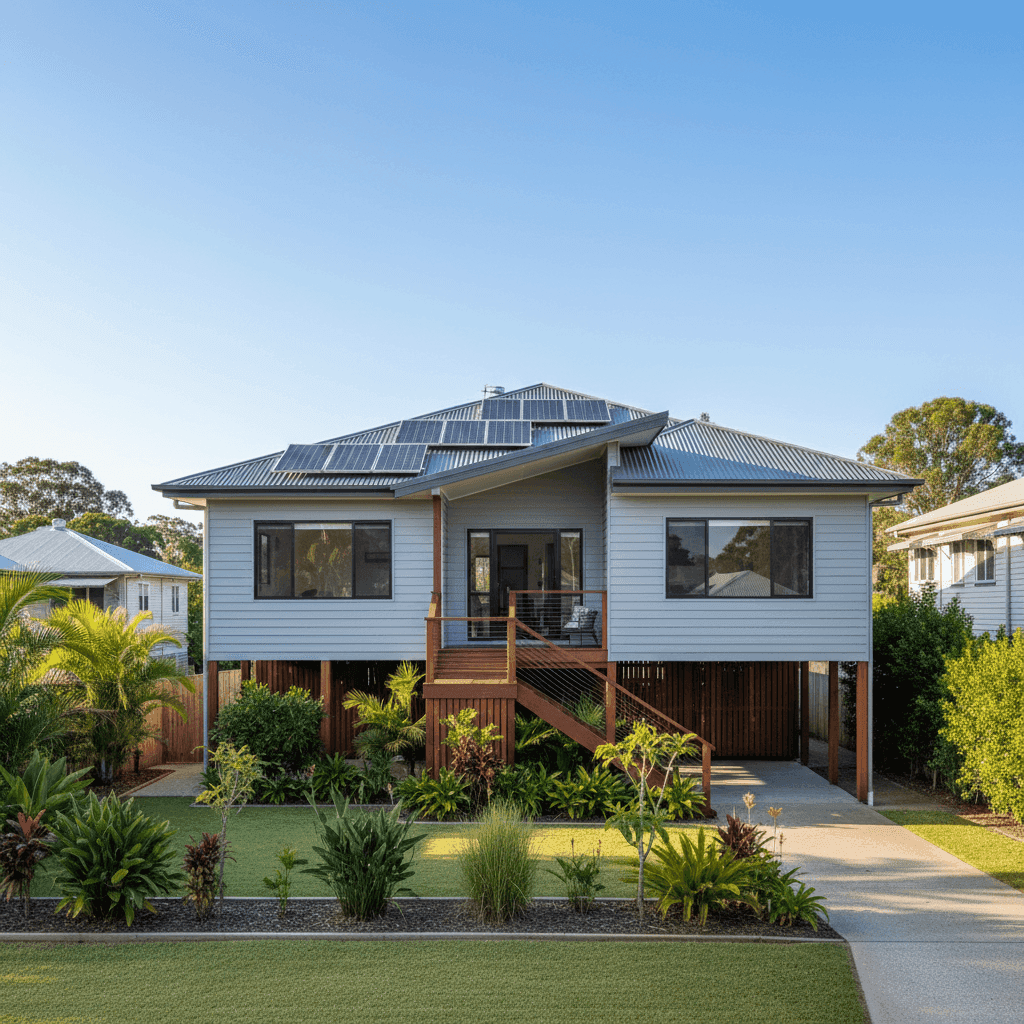
Sandgate is one of Brisbane's most charming bayside suburbs — a relaxed coastal community that sits roughly 20 kilometres north of the CBD. With its Moreton Bay foreshore, heritage streetscapes, and growing popularity among families and sea-changers alike, it's no surprise that property values here have climbed steadily. But with desirable real estate comes the responsibility of protecting it properly. This article breaks down a real home and contents insurance quote for a four-bedroom, free-standing home in Sandgate, QLD 4017, helping you understand whether the premium stacks up — and what's driving the cost.
---
Is This Quote Fair?
The quote in question comes to $3,616 per year (or $340 per month) for combined home and contents cover, with a building sum insured of $943,000 and $50,000 in contents cover. Both the building and contents excesses are set at $5,000.
Our pricing engine has rated this quote as FAIR — Around Average, and the data backs that up. At $3,616 annually, this premium sits comfortably between the suburb's 25th percentile ($3,164/yr) and the 75th percentile ($4,339/yr), and comes in just below the Sandgate suburb average of $4,094 per year. It's also slightly above the suburb median of $3,436 — meaning roughly half of comparable quotes in the area come in lower, and half come in higher.
In plain terms: this isn't a bargain, but it's not overpriced either. For a property of this size and specification — 235 sqm, elevated on stumps, with solar panels and aluminium cladding — landing near the middle of the local market range is a reasonable outcome.
It's worth noting that the $5,000 excess on both building and contents is on the higher end. Choosing a higher excess is a common way to reduce your annual premium, so if you're comparing this quote to others with lower excesses, you'd expect those alternatives to cost more upfront each year.
---
How Sandgate Compares
To put this quote in proper context, it helps to zoom out and look at the broader pricing landscape. Here's how Sandgate sits relative to Queensland and the national picture:
| Benchmark | Average Premium | Median Premium |
|---|---|---|
| Sandgate (4017) | $4,094/yr | $3,436/yr |
| Brisbane LGA | $16,277/yr | — |
| Queensland | $9,129/yr | $3,903/yr |
| National | $5,347/yr | $2,764/yr |
A few things stand out here. The Brisbane LGA average of $16,277 per year is extraordinarily high — this is heavily influenced by flood-prone and high-risk postcodes within the broader LGA, which can dramatically skew the average upward. Sandgate's own figures are far more moderate, reflecting its relatively lower risk profile compared to low-lying or flood-affected parts of Brisbane.
Queensland's state average of $9,129 is similarly inflated by high-risk regions — cyclone-prone Far North Queensland, flood corridors along the Brisbane River, and coastal areas with significant storm surge exposure. The state median of $3,903 is a more grounded figure, and this quote at $3,616 actually sits below that median, which is a positive sign.
Nationally, the average of $5,347 reflects the wide variation across Australian postcodes, from low-risk metro suburbs to bushfire and cyclone zones. The national median of $2,764 is lower than this quote, but that's largely because many lower-risk metropolitan areas in Victoria, NSW, and WA pull that figure down.
For a bayside Queensland suburb with its own set of weather exposures, a premium of $3,616 is genuinely competitive.
---
Property Features That Affect Your Premium
Several characteristics of this property have a meaningful influence on what insurers charge. Understanding these factors can help you make smarter decisions at renewal time.
Elevated on Stumps This is arguably the most significant risk-mitigating feature of this home. Being elevated by at least one metre above ground level dramatically reduces exposure to inundation from storm surge, localised flooding, and heavy rainfall runoff — all real considerations for a bayside suburb like Sandgate. Insurers generally view elevated homes more favourably, and this feature likely contributes to a more competitive premium.
Aluminium External Walls Aluminium cladding is a durable, low-maintenance material that performs well in coastal and humid environments. It resists corrosion and doesn't require the same level of upkeep as timber weatherboards. From an insurance perspective, it's generally considered a sound construction type with good weather resistance.
Steel / Colorbond Roof Colorbond steel is one of the most popular roofing choices in Australia for good reason — it's lightweight, durable, and holds up well in high-wind events. It's typically viewed positively by insurers compared to older roofing materials like terracotta tiles, which can become projectiles in severe storms.
Solar Panels The property includes solar panels, which are factored into the building sum insured. It's important to ensure your policy explicitly covers solar panels as part of the building, as some policies treat them as an optional extra. At a building sum insured of $943,000 for a 235 sqm home, there appears to be adequate allowance for the full replacement cost including solar infrastructure.
Timber / Laminate Flooring Timber and laminate floors can be more susceptible to water damage than tiles, which may nudge the risk assessment slightly. However, given the elevated foundation, the practical risk of ground-level water ingress is substantially reduced.
No Pool, No Ducted Climate Control, Not in a Cyclone Zone The absence of a pool removes a common liability risk. No ducted air conditioning means fewer mechanical systems that could fail or cause damage. And sitting outside a designated cyclone risk area is a meaningful factor — cyclone-rated premiums in Far North Queensland can be several times higher than what's quoted here.
---
Tips for Homeowners in Sandgate
1. Review Your Building Sum Insured Annually Construction costs in South East Queensland have risen sharply over the past few years. A sum insured of $943,000 for a 235 sqm home works out to roughly $4,013 per square metre — which is within a reasonable range for a quality build, but worth verifying against current rebuild cost estimates each year. Being underinsured at claim time can be a costly mistake.
2. Check That Solar Panels Are Explicitly Covered Not all home insurance policies automatically include solar panels under the building definition. Ask your insurer directly whether your panels are covered for damage from storms, hail, and fire — and whether the inverter is included. Given the investment involved, this is a detail worth confirming in writing.
3. Consider Whether Your Excess Level Still Makes Sense A $5,000 excess on both building and contents is a deliberate trade-off: lower annual premiums in exchange for a higher out-of-pocket cost if you need to claim. This works well if you have the financial buffer to cover that excess comfortably. If your circumstances have changed, it may be worth modelling what a lower excess would cost you in additional premium.
4. Compare Quotes at Renewal — Not Just at Purchase Insurance markets shift constantly, and loyalty doesn't always pay. The Sandgate suburb data shows a meaningful spread between the 25th and 75th percentile premiums — meaning there's genuine variation in what different insurers charge for the same risk. Running a comparison at renewal takes minutes and could save you hundreds.
---
Ready to Compare?
Whether you're reviewing an existing policy or shopping for cover on a new purchase, CoverClub makes it easy to see how your quote stacks up. Get a home insurance quote today and benchmark your premium against real data from your suburb, your state, and across Australia. A few minutes of comparison could make a real difference to what you pay.