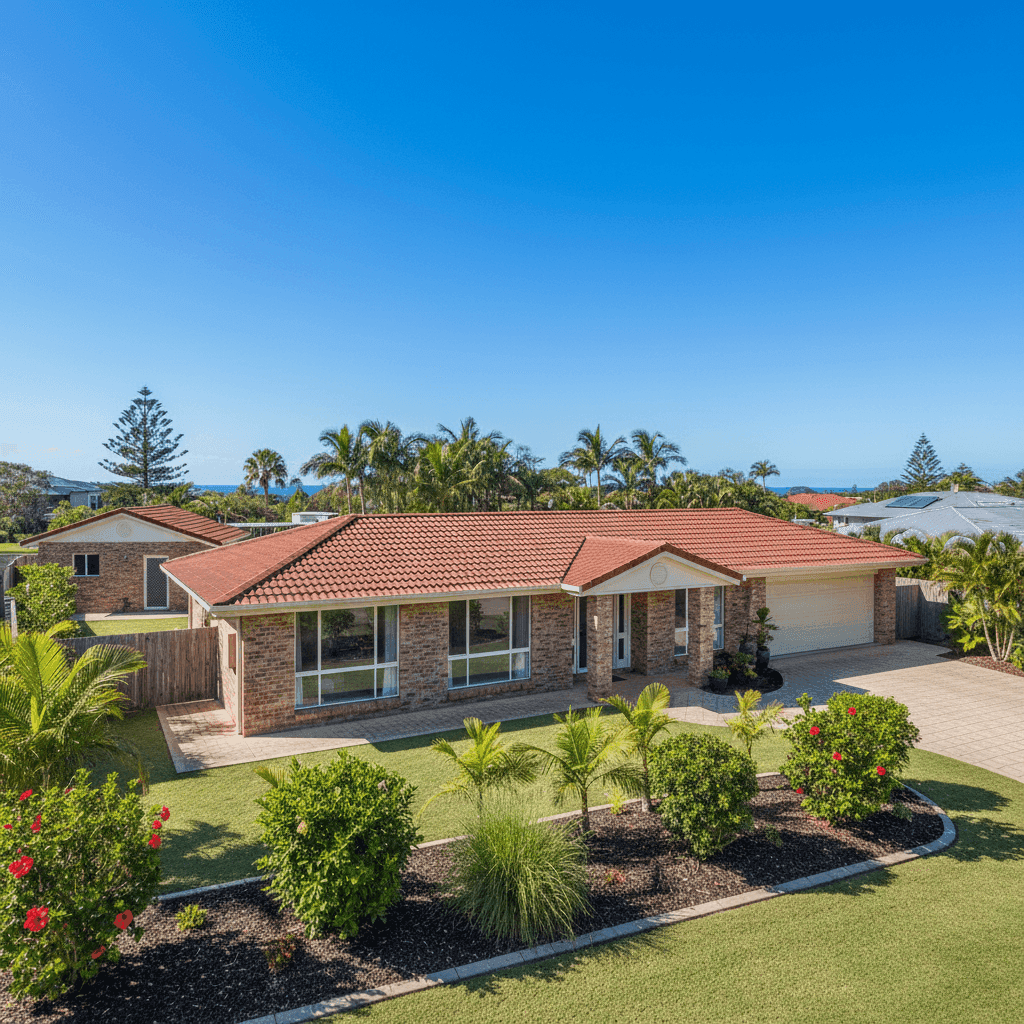
Sandstone Point is a relaxed coastal suburb on the Pumicestone Passage in South East Queensland, popular with families and sea-changers drawn to its waterside lifestyle and relative affordability compared to Brisbane's inner suburbs. For owners of a free standing home in this area, understanding what drives your insurance premium — and whether you're paying a fair price — is an important part of protecting one of your biggest assets.
This article breaks down a real home and contents insurance quote for a five-bedroom, four-bathroom brick veneer home in Sandstone Point (postcode 4511), compares it against local, state and national benchmarks, and offers practical tips to help you get the best value cover.
---
Is This Quote Fair?
The annual premium for this property came in at $2,138 per year (or $199 per month), covering a building sum insured of $903,000 and $50,000 in contents. Our analysis rates this quote as FAIR — Around Average, which is a solid outcome for a home of this size and value.
To put that in context:
- The suburb average for Sandstone Point is $2,179/yr, and the median sits at $2,293/yr — meaning this quote lands below both, which is a positive sign.
- The quote falls comfortably within the middle band of the local market: the 25th percentile is $1,741/yr and the 75th percentile is $2,616/yr, placing this premium right in the heart of what most comparable homes in the area are paying.
A "Fair" rating doesn't mean you can't do better — it means the quote is competitive without being a standout bargain. There's still a reasonable spread between the cheapest and most expensive quotes in the suburb (nearly $900 separating the 25th and 75th percentiles), so shopping around remains worthwhile.
The building excess on this policy is $3,000 and the contents excess is $1,000. A higher excess typically lowers your premium, so it's worth considering whether those levels suit your financial situation before locking in.
---
How Sandstone Point Compares
One of the most striking takeaways from this quote is just how favourably Sandstone Point compares to broader Queensland and national benchmarks.
| Benchmark | Average Premium |
|---|---|
| Sandstone Point (suburb avg) | $2,179/yr |
| Moreton Bay LGA average | $3,145/yr |
| QLD state average | $4,547/yr |
| National average | $2,965/yr |
| National median | $2,716/yr |
Queensland as a whole carries some of the highest home insurance premiums in the country, largely driven by the state's significant exposure to cyclones, flooding, and severe storms — particularly in northern and coastal regions. At $4,547/yr on average across QLD, the state average is dramatically higher than what homeowners in Sandstone Point are typically paying.
Even against the national average of $2,965/yr, this Sandstone Point quote of $2,138 looks competitive. The suburb's position in South East Queensland — outside the cyclone risk zone and on relatively stable ground — helps keep premiums more manageable than many other parts of the state.
You can explore the full breakdown of insurance costs for the area at the Sandstone Point suburb stats page, which is updated regularly with real quote data.
---
Property Features That Affect Your Premium
Several characteristics of this particular property influence how insurers price the risk — some favourably, some less so.
Brick veneer construction with a tiled roof is generally viewed positively by insurers. Brick veneer walls offer good fire resistance and structural durability, while tiled roofs tend to outlast colorbond or corrugated iron alternatives and are less susceptible to wind uplift in moderate weather events. Together, these features can contribute to a more competitive premium.
Slab foundation is the standard construction method for Queensland homes built around this era and presents no particular risk flag for insurers. Similarly, tiled flooring throughout is practical in the Queensland climate and less prone to water damage than carpet or timber — another subtle positive from an underwriting perspective.
Building size of 334 sqm is substantial, and the high sum insured of $903,000 reflects both the size and the cost of rebuilding a quality five-bedroom, four-bathroom home to current standards. It's important that your sum insured keeps pace with rising construction costs — underinsurance is a common and costly mistake.
The granny flat is a noteworthy feature. Many insurers treat secondary dwellings differently, and some standard policies may not automatically cover a granny flat under the main building sum insured. It's essential to confirm with your insurer that the granny flat structure — and any contents within it — is explicitly included in your policy.
The absence of a pool, solar panels and ducted climate control simplifies the risk profile and removes several potential claims triggers, which may contribute to the relatively competitive premium.
---
Tips for Homeowners in Sandstone Point
1. Verify your granny flat is fully covered Don't assume your main building policy extends to a secondary dwelling. Ask your insurer directly whether the granny flat is included in your building sum insured, and whether any tenants or occupants in the flat affect your cover. You may need a separate policy or an endorsement.
2. Review your sum insured annually Construction costs in South East Queensland have risen significantly in recent years. A sum insured that was accurate in 2022 may leave you underinsured today. Use a building cost calculator or speak with a quantity surveyor to make sure your $903,000 cover still reflects the true rebuild cost — especially for a large home with a granny flat.
3. Compare quotes before renewal A "Fair" rating is encouraging, but the $875 gap between the 25th and 75th percentile in Sandstone Point shows there's meaningful variation in the market. Getting a fresh quote through CoverClub before your renewal date takes only a few minutes and could reveal a better deal without sacrificing cover quality.
4. Consider your excess settings carefully This policy carries a $3,000 building excess — on the higher end. While a higher excess reduces your premium, it also means a larger out-of-pocket cost when you do need to claim. Think about what you could comfortably absorb in an emergency and adjust your excess accordingly. Even a modest reduction in excess can provide meaningful peace of mind.
---
Ready to Compare?
Whether you're renewing your existing policy or insuring a new property in Sandstone Point, it pays to see what the broader market has to offer. CoverClub makes it easy to compare home and contents insurance quotes from a range of Australian insurers in one place. Start your free quote today and find out if you could be paying less — or getting more — for your cover.