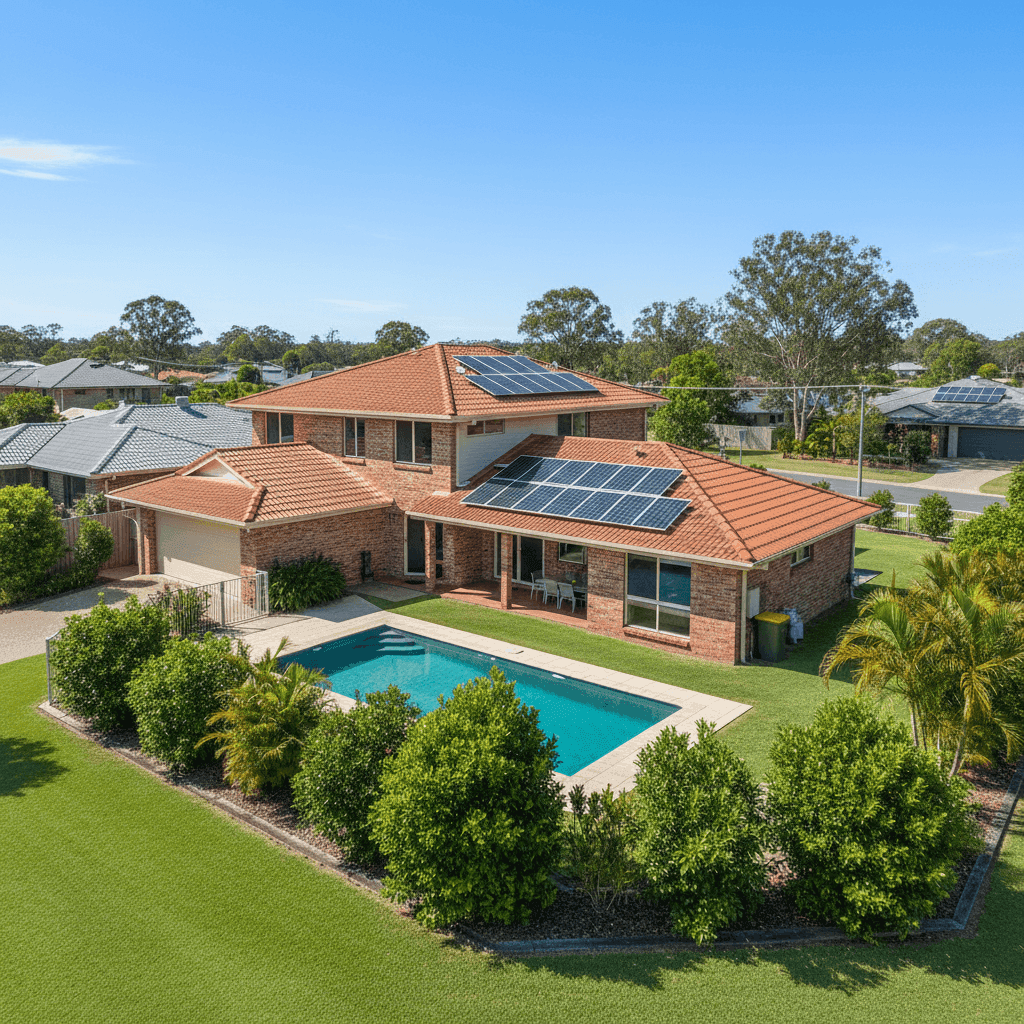
Sandstone Point is a peaceful coastal suburb on the Bribie Island peninsula in Moreton Bay, Queensland — popular with families and sea-changers drawn to its relaxed lifestyle and waterfront proximity. If you own a free standing home in this area, understanding what you should be paying for home and contents insurance is essential. This article breaks down a real quote for a four-bedroom property in Sandstone Point QLD 4511, compares it against local, state and national benchmarks, and offers practical tips to help you get better value on your cover.
---
Is This Quote Fair?
The quote in question sits at $3,916 per year (or $375 per month) for combined home and contents insurance, covering a building sum insured of $1,054,000 and contents valued at $98,000. Both the building and contents excess are set at $1,000.
Our price rating for this quote is Expensive (Above Average).
To put that in context, the suburb average premium in Sandstone Point is $2,583 per year, and the median sits at $2,426. This quote is roughly 52% above the suburb average and about 61% above the suburb median — a meaningful gap that's worth investigating before simply accepting the renewal.
That said, "expensive" doesn't automatically mean "wrong." Several property-specific features can legitimately push a premium higher than typical. The key is understanding why the quote is elevated and whether there are opportunities to reduce it without compromising your protection.
---
How Sandstone Point Compares
To get a full picture, it helps to zoom out and look at how Sandstone Point premiums stack up against broader benchmarks.
| Benchmark | Annual Premium |
|---|---|
| This Quote | $3,916 |
| Suburb Average (4511) | $2,583 |
| Suburb Median (4511) | $2,426 |
| Suburb 75th Percentile | $3,183 |
| LGA Average (Moreton Bay) | $3,435 |
| QLD State Median | $3,903 |
| National Median | $2,764 |
A few things stand out here. First, while this quote exceeds the suburb average by a wide margin, it actually sits just above the Queensland state median of $3,903 — which tells us that QLD premiums in general are elevated compared to the rest of the country, largely due to the state's exposure to severe weather events, flooding, and storm damage.
Second, the quote exceeds the suburb's 75th percentile of $3,183, meaning it's priced higher than at least three-quarters of comparable quotes in the area. This reinforces the "expensive" rating and suggests there may be room to negotiate or shop around.
The QLD state average of $9,129 per year is notably high, skewed upward by properties in cyclone-prone and flood-risk regions across North Queensland. By comparison, the national average of $5,347 reflects a similarly skewed picture. Medians — which are less distorted by extreme values — tend to be more useful reference points, and on that measure, this quote is sitting above both the suburb and national median.
---
Property Features That Affect Your Premium
Several characteristics of this property have a direct bearing on what insurers charge. Here's how the key features play out:
Brick Veneer Walls & Tiled Roof Brick veneer construction is generally viewed favourably by insurers — it's durable, fire-resistant, and performs well in storms. Combined with a tiled roof (also considered a lower-risk roofing material compared to metal or fibrous cement), this property's construction profile should, in theory, attract competitive rates.
Slab Foundation A concrete slab foundation is standard for Queensland homes built in this era and is generally considered a neutral-to-positive risk factor. It offers good structural stability and reduces the risk of subsidence-related claims.
Built in 2010 At around 15 years old, this home sits in a comfortable middle ground — modern enough to meet contemporary building codes, but not so new that replacement costs are at a premium. Homes built after 1990 typically benefit from improved cyclone and storm-resistant construction standards in QLD.
Swimming Pool A pool adds to the insured value of the property and can also introduce liability considerations. Insurers factor in the cost of pool equipment, fencing compliance, and potential liability, all of which contribute to a higher premium.
Solar Panels Solar panels are an increasingly common feature in QLD homes, but they do add to the replacement cost of the building. A quality solar system can represent a significant portion of the building sum insured, and insurers price accordingly.
Ducted Climate Control Ducted air conditioning is a high-value fixture that adds to the overall building replacement cost. Like solar panels, it's a feature that can quietly push up your sum insured — and therefore your premium.
High Building Sum Insured ($1,054,000) At 214 sqm, the building sum insured of just over $1 million works out to roughly $4,925 per sqm. This is on the higher end for a standard brick veneer home, and it's worth reviewing whether this figure accurately reflects your rebuild cost or whether it has crept up over time through automatic indexation.
---
Tips for Homeowners in Sandstone Point
1. Review your sum insured carefully Automatic indexation can cause your building sum insured to increase year on year, sometimes beyond what's needed to actually rebuild your home. Use an independent building cost calculator to verify your figure — over-insuring doesn't pay out more in a claim, but it does cost you more in premiums.
2. Compare quotes before renewing Given this quote sits above the 75th percentile for the suburb, shopping around is well worth the effort. Get a comparison quote at CoverClub to see what other insurers are offering for the same level of cover.
3. Consider your excess settings Both excesses on this policy are set at $1,000. Opting for a higher voluntary excess (say, $2,000) can meaningfully reduce your annual premium. If you have a solid emergency fund and are unlikely to make small claims, this is often a smart trade-off.
4. Bundle and ask for discounts Many insurers offer discounts when you hold multiple policies — for example, combining home and contents with car insurance. It's also worth asking directly about loyalty discounts, security system discounts, or any promotional rates that may not be automatically applied.
---
Find a Better Deal with CoverClub
Whether you're reviewing an existing policy or shopping for new cover, CoverClub makes it easy to compare home insurance options tailored to your property and location. With suburb-level data for Sandstone Point and insights drawn from thousands of quotes across Queensland, you can make a genuinely informed decision — not just go with the first number that lands in your inbox. Start your comparison today and see what a fair premium for your home actually looks like.