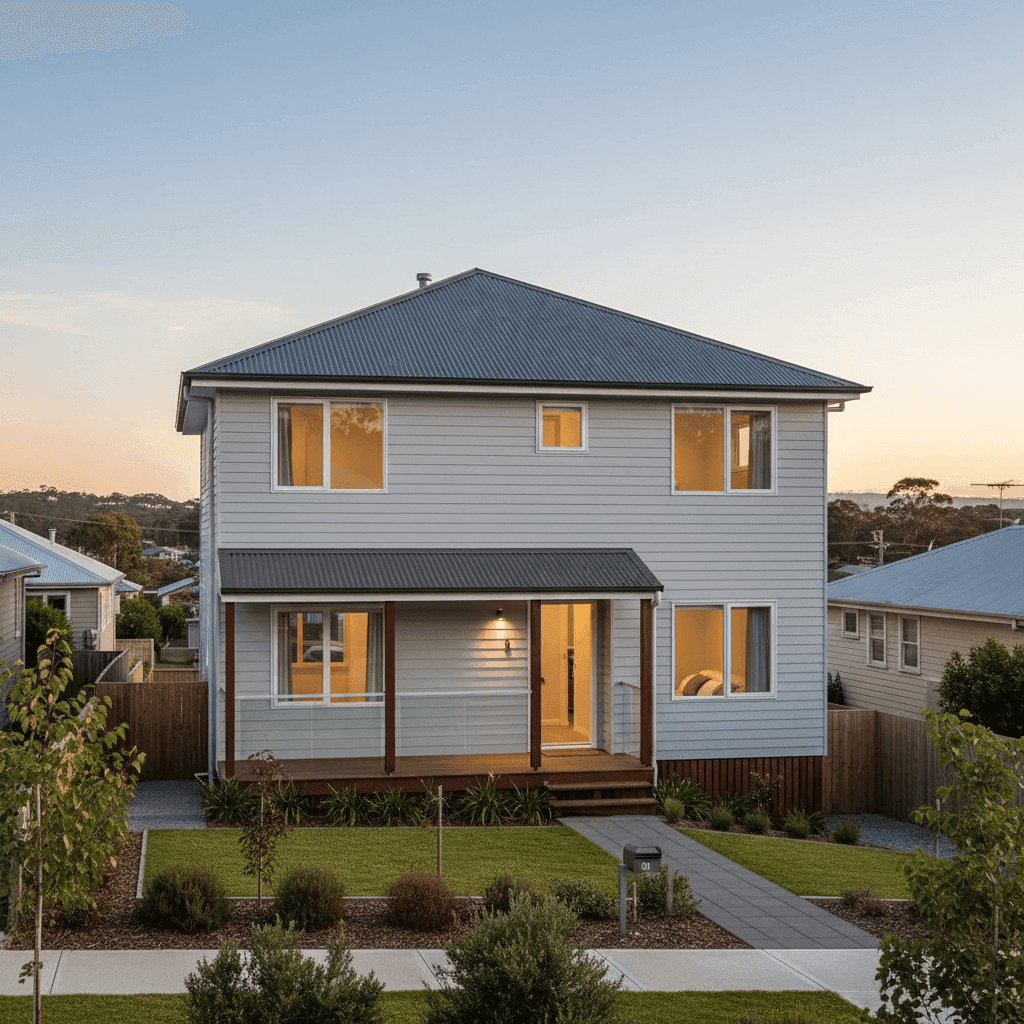
Sandy Bay is one of Hobart's most sought-after suburbs — a leafy, riverside enclave that combines heritage charm with modern living. If you own a free standing home here, you're likely sitting on a significant asset, and making sure it's properly protected is essential. This article breaks down a real home and contents insurance quote for a 3-bedroom, 2-bathroom free standing home in Sandy Bay (TAS 7005), helping you understand whether the price stacks up and what factors are shaping the premium.
---
Is This Quote Fair?
The short answer: yes — and then some. This quote came in at $1,426 per year (or approximately $137 per month), covering both building ($600,000 sum insured) and contents ($40,000). Our price rating for this quote is CHEAP, meaning it sits well below average for the area.
To put that in perspective, the average home and contents premium in Sandy Bay currently sits at $2,734 per year, with a median of $2,746. That means this quote is saving the homeowner roughly $1,300 annually compared to what most people in the suburb are paying — a substantial difference.
Even at the 25th percentile of Sandy Bay quotes (meaning 75% of quotes are more expensive), the figure is $2,039 per year — still significantly higher than this $1,426 quote. In other words, this is among the most competitively priced policies we've seen for this postcode.
It's worth noting that both a $5,000 building excess and a $5,000 contents excess apply. Higher excesses are one of the most common levers insurers use to reduce premiums, so this trade-off is worth factoring in. If you ever need to make a claim, you'll be covering the first $5,000 out of pocket — so make sure your budget can accommodate that before locking in.
---
How Sandy Bay Compares
Understanding your quote in a broader context helps you make smarter decisions. Here's how Sandy Bay stacks up:
| Benchmark | Annual Premium |
|---|---|
| This quote | $1,426 |
| Sandy Bay suburb average | $2,734 |
| Sandy Bay suburb median | $2,746 |
| Hobart LGA average | $2,275 |
| Tasmania state average | $2,814 |
| Tasmania state median | $2,326 |
| National average | $5,347 |
| National median | $2,764 |
Sandy Bay premiums are broadly in line with the Tasmanian average, which itself sits well below the national average of $5,347 per year. Much of that national figure is driven up by high-risk areas in Queensland, Western Australia, and the Northern Territory — regions exposed to cyclones, flooding, and extreme weather events.
Tasmania, by contrast, is considered a relatively low-risk state for natural disasters. Sandy Bay specifically benefits from its sheltered position on the Derwent River estuary, away from major bushfire corridors and flood-prone zones. You can explore more suburb-level data at our Sandy Bay insurance stats page, or compare across the state on our Tasmania insurance stats page. For a broader picture, our national insurance stats page shows how premiums vary dramatically by region.
Note: Sandy Bay suburb data is based on a sample of 18 quotes, so averages should be treated as indicative rather than definitive.
---
Property Features That Affect Your Premium
Every property is different, and insurers assess dozens of characteristics when calculating your premium. Here's how the features of this particular home likely influence the cost:
Hardiplank/Hardiflex External Walls Fibre cement cladding like Hardiplank is generally viewed favourably by insurers. It's non-combustible, resistant to rot and termites, and holds up well in wet climates — all of which reduce the likelihood of a claim. Compared to weatherboard or older timber cladding, this is a positive factor for the premium.
Steel/Colorbond Roof A Colorbond steel roof is one of the most insurer-friendly roofing materials available in Australia. It's durable, fire-resistant, and performs well in heavy rain and wind. Homes with Colorbond roofs typically attract lower premiums than those with terracotta tiles or ageing corrugated iron.
Stump Foundation Stumps (or stump-and-bearer construction) are common in older Tasmanian homes, but this property was built in 2003, suggesting a more modern interpretation. Stump foundations can raise concerns around subsidence, pest access, and underfloor moisture — factors some insurers weigh carefully. However, a well-maintained modern stump home should not attract a significant loading.
Timber/Laminate Flooring Flooring type is relevant primarily for contents and water damage claims. Timber and laminate floors can be costly to repair or replace if water ingress occurs, which may subtly influence contents or accidental damage pricing.
Ducted Climate Control The presence of ducted climate control adds to the overall replacement cost of the home. At $600,000 sum insured, this system is presumably captured in the building value — but it's worth confirming with your insurer that the full cost of reinstating ducted systems is included in your policy.
No Pool, No Solar Panels The absence of a pool and solar panels simplifies the risk profile. Pools add liability exposure and maintenance risk; solar panel systems can complicate roof claims. Not having either keeps things straightforward.
Standard Fittings Quality Standard fittings (as opposed to premium or high-end) mean the cost to rebuild or repair is more predictable and generally lower. This is reflected in the relatively modest building sum insured for a 235 sqm home.
---
Tips for Homeowners in Sandy Bay
1. Review your sum insured regularly Construction costs have risen sharply across Australia over the past few years. A $600,000 sum insured may be appropriate today, but it's worth reassessing annually to ensure it still reflects the true cost of rebuilding your home from scratch — not just its market value.
2. Understand your excess before you claim A $5,000 excess on both building and contents is on the higher end. This is a deliberate trade-off for a lower premium, and it works well if you rarely claim. However, make sure you have that amount readily accessible — claiming for anything under $5,000 would cost you more than it's worth.
3. Don't underinsure your contents $40,000 in contents cover is modest for a 3-bedroom, 2-bathroom home. Take a room-by-room inventory of your belongings — furniture, appliances, clothing, electronics, tools, and valuables — to make sure you're not left short after a major loss event.
4. Shop around at renewal time Even if you're happy with your current insurer, premiums can shift significantly year to year. Use CoverClub to benchmark your renewal quote against the market — it only takes a few minutes and could save you hundreds.
---
Compare Your Own Quote
Whether you're a Sandy Bay local or just researching home insurance in Tasmania, CoverClub makes it easy to see how your premium stacks up. We aggregate real quote data from across Australia so you can make an informed decision — not just accept the first number that lands in your inbox.
Get a home insurance quote and compare your options today — it's free, fast, and could save you a significant amount at your next renewal.