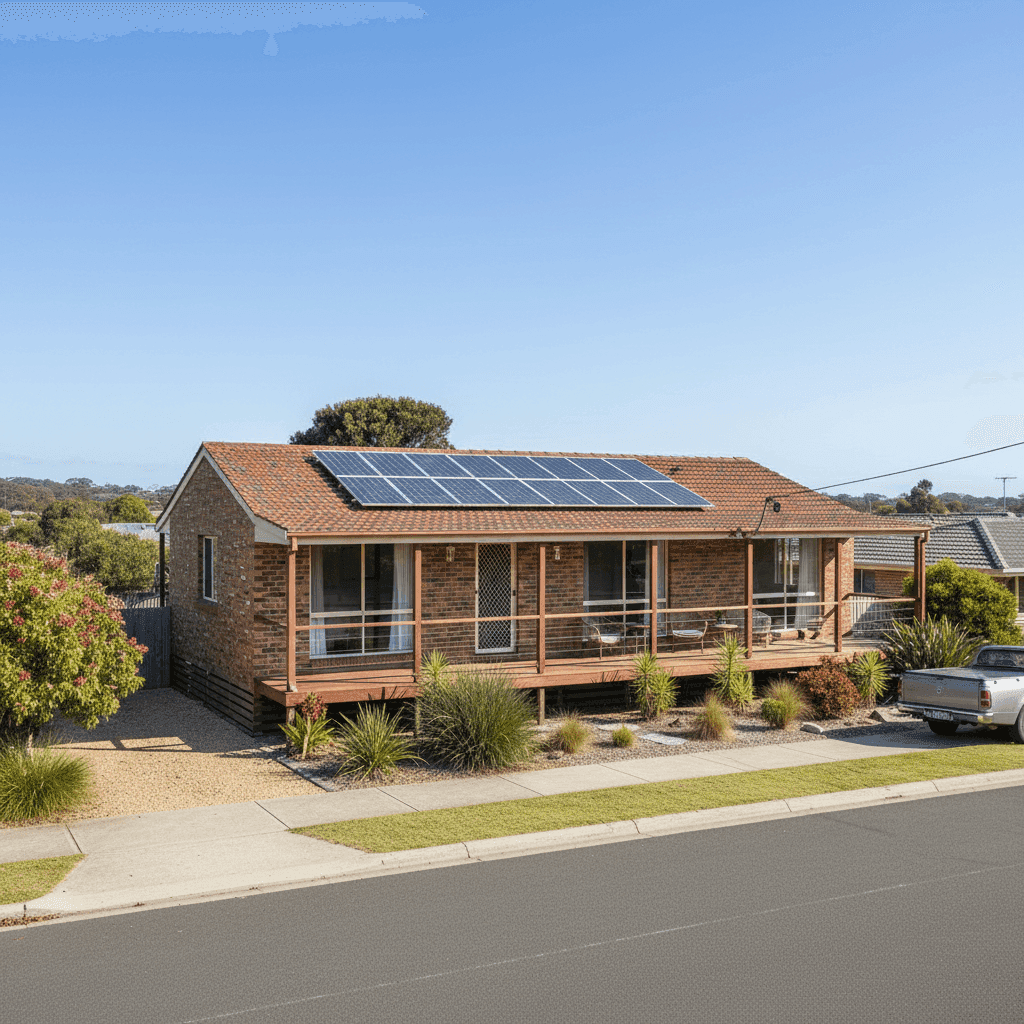
Sandy Beach is a relaxed coastal suburb on the Coffs Coast in northern New South Wales, sitting within the Clarence Valley local government area. It's the kind of place where the pace of life slows down — but that doesn't mean your home insurance premiums do. This article breaks down a real home and contents insurance quote for a three-bedroom free standing home in Sandy Beach (NSW 2456), compares it against local, state, and national benchmarks, and offers practical advice for homeowners looking to get better value on their cover.
---
Is This Quote Fair?
The quote in question comes in at $2,269 per year (or $217 per month) for combined home and contents insurance, covering a building sum insured of $439,000 and $50,000 worth of contents. Both the building and contents excess are set at $1,000.
Our price rating for this quote is Expensive — above average for the Sandy Beach area.
To put that in context: the suburb average premium sits at $1,835 per year, and the median is even lower at $1,478 per year. That means this quote is roughly 24% above the local average and a substantial 54% above the suburb median. If you're paying this much, it's well worth shopping around — there's a meaningful gap between what this policy costs and what other Sandy Beach homeowners are typically paying.
That said, premiums are never one-size-fits-all. Factors like the specific insurer, the level of cover, optional extras, and the property's individual risk profile all play a role. A higher sum insured or broader policy inclusions can legitimately push a premium above the average. The key is making sure you're getting value for what you're paying — not just paying more for the same thing.
---
How Sandy Beach Compares
Understanding where Sandy Beach sits in the broader insurance landscape helps put this quote in perspective. Here's how the suburb stacks up against NSW state averages and national figures:
| Benchmark | Average Premium | Median Premium |
|---|---|---|
| Sandy Beach (NSW 2456) | $1,835/yr | $1,478/yr |
| New South Wales | $9,528/yr | $3,770/yr |
| Australia (National) | $5,347/yr | $2,764/yr |
| Clarence Valley LGA | $31,244/yr | — |
A few things stand out here. Sandy Beach's average and median premiums are actually well below both state and national averages — which is a positive sign for the suburb overall. NSW's state average of $9,528 is heavily skewed by high-risk areas (think flood-prone regions and cyclone corridors in northern NSW), which pulls the mean up considerably. The median of $3,770 is a more realistic benchmark for typical NSW homeowners.
The Clarence Valley LGA average of $31,244 is extraordinarily high and almost certainly reflects a small number of properties with extreme risk profiles — flood-exposed homes, for instance — that distort the LGA-wide figure. Sandy Beach itself appears to be a comparatively lower-risk pocket within the broader LGA.
At the national level, the median of $2,764 suggests that while this particular quote is above the Sandy Beach norm, it's not dramatically out of step with what Australians pay across the country.
---
Property Features That Affect Your Premium
Every property has its own risk profile, and insurers price accordingly. Here's how the key features of this home are likely influencing the premium:
- Brick veneer construction and tiled roof — These are generally viewed favourably by insurers. Brick veneer is durable and fire-resistant, while tiled roofs have a long lifespan and perform well in most weather conditions. Both tend to attract lower premiums compared to timber-framed or iron-roofed homes.
- Stump foundation — Homes on stumps are common in coastal and semi-rural NSW, but they can attract slightly higher premiums than slab foundations. Stumps can be vulnerable to subsidence, pest damage, and movement over time, which insurers factor into their risk assessments.
- Built in 1991 — At around 33 years old, this home is past its peak but not ancient. Older homes can carry higher premiums due to the cost of replacing period-specific fittings or addressing wear-and-tear in plumbing and electrical systems. Standard fittings quality, as noted here, keeps replacement costs more predictable.
- Solar panels — Solar systems add value to a property but also add complexity to an insurance claim. Panels need to be covered for storm damage, hail, and fire. Insurers vary in how they handle solar — some include it automatically under building cover, others require it to be specified. It's worth confirming your panels are adequately covered.
- Ducted climate control — Ducted air conditioning is a significant fixed asset and is typically covered under building insurance. It adds to the overall replacement cost, which is reflected in the sum insured and, consequently, the premium.
- 130 sqm building size with a $439,000 sum insured — This works out to roughly $3,377 per square metre in building cover, which is broadly in line with current construction costs in regional NSW. Getting the sum insured right is critical — underinsurance is a common and costly mistake.
---
Tips for Homeowners in Sandy Beach
If your premium is sitting above the local average, here are four practical steps worth taking:
- Compare multiple quotes. The single most effective way to reduce your premium is to shop around. Insurers use different pricing models, and the difference between the cheapest and most expensive quote for the same property can be hundreds of dollars. Use CoverClub to compare quotes quickly and without the hassle.
- Review your sum insured carefully. Overinsuring your building pushes up your premium unnecessarily. Use a building cost calculator or speak with a quantity surveyor to confirm your sum insured reflects actual rebuild costs — not the market value of your property, which is a different figure entirely.
- Ask about bundling discounts. Many insurers offer a discount when you combine home and contents cover under a single policy. If you're currently insuring them separately, consolidating could save you money.
- Consider your excess level. Opting for a higher voluntary excess (say, $2,000 instead of $1,000) can meaningfully reduce your annual premium. This makes sense if you have a cash buffer and are unlikely to make small claims — which can also affect your premium history over time.
---
Compare Your Home Insurance with CoverClub
Whether you're renewing your policy or shopping around for the first time, CoverClub makes it easy to see how your quote stacks up. We track real insurance data across Australian suburbs so you can make informed decisions — not just take the first price you're offered. Get a home insurance quote today and find out if you're paying a fair price for your Sandy Beach home.