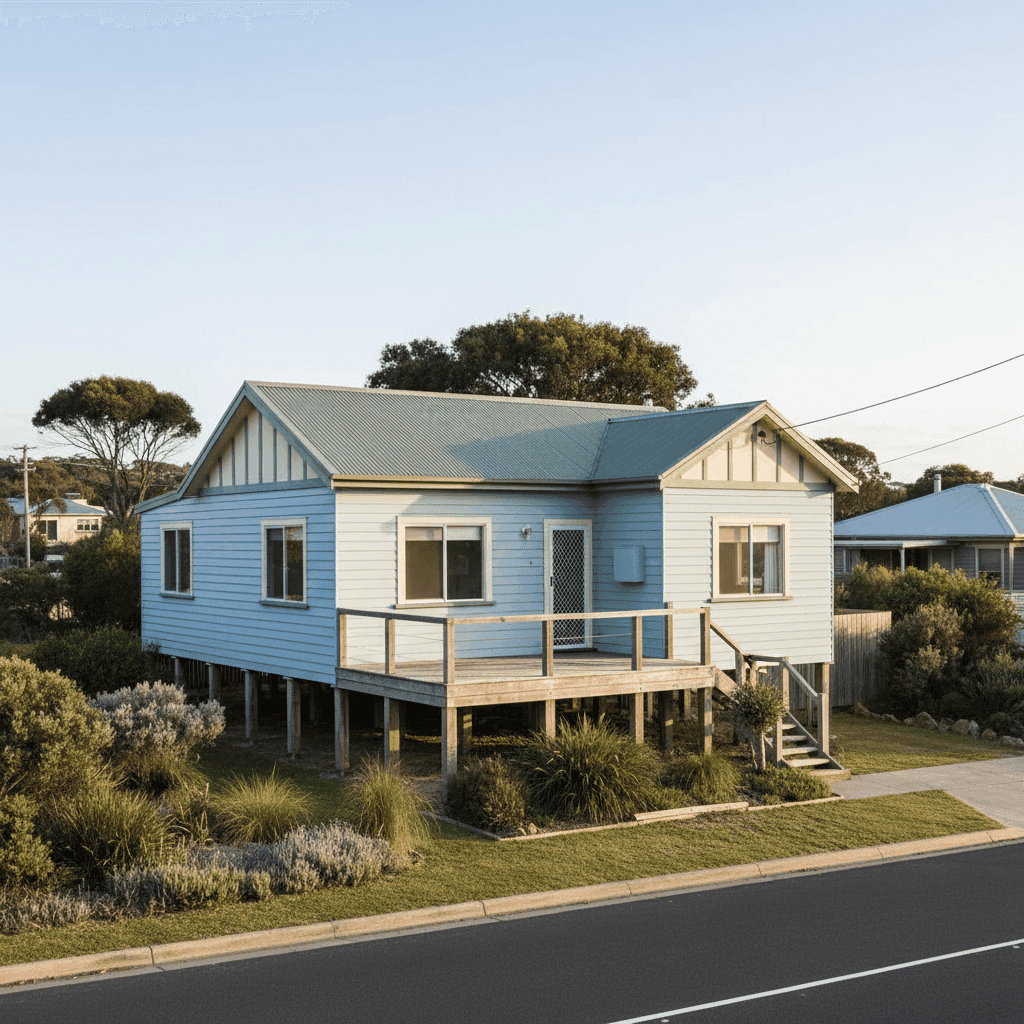
Sandy Point is a quiet coastal village tucked into the South Gippsland coastline of Victoria — a place where weatherboard homes on stumps are part of the local character, and the relaxed lifestyle comes with its own set of insurance considerations. If you own or are insuring a free standing home in this area, understanding what drives your premium is the first step to making sure you're getting value for money.
This article breaks down a real home and contents insurance quote for a three-bedroom, two-bathroom free standing home in Sandy Point (postcode 3959), built in 1995 with weatherboard timber walls and a steel Colorbond roof. We'll look at how the quoted annual premium of $2,113 compares to local, state and national benchmarks — and what you can do about it.
---
Is This Quote Fair?
The short answer: yes, broadly speaking — but there's room to shop around.
This quote has been rated Fair (Around Average), which means it sits comfortably within the typical range for the area without being a standout bargain or an obvious overpayment. The annual premium of $2,113 (or $209/month) covers building sum insured of $698,000 and contents valued at $75,000, with a building excess of $3,000 and a contents excess of $600.
One thing worth noting is the relatively high building excess of $3,000. While a higher excess generally helps reduce your premium, it also means a more significant out-of-pocket cost if you need to make a building claim. For a property of this age and construction type, that's a trade-off worth thinking carefully about.
The contents cover of $75,000 is modest but may be appropriate depending on what's inside the home. Underinsurance on contents is a common issue — it's worth doing a proper stocktake before settling on a figure.
---
How Sandy Point Compares
To put the $2,113 premium in context, here's how it stacks up against available data from Sandy Point suburb stats, Victoria-wide figures, and the national picture:
| Benchmark | Average | Median |
|---|---|---|
| Sandy Point (3959) | $1,826/yr | $1,757/yr |
| South Gippsland LGA | $2,188/yr | — |
| Victoria | $2,921/yr | $2,694/yr |
| Australia | $2,965/yr | $2,716/yr |
A few things stand out here. The quoted premium of $2,113 is above the Sandy Point suburb average of $1,826 and above the suburb median of $1,757 — meaning more than half of the 71 quotes sampled in this area came in cheaper. However, it sits well below the Victorian average of $2,921 and is even further below the national average of $2,965.
The suburb's 75th percentile is $2,203, and this quote falls just below that threshold — so while it's not the cheapest option available locally, it's not in outlier territory either. The South Gippsland LGA average of $2,188 is also a useful reference point, and this quote lands just below that figure too.
The takeaway? Sandy Point is actually a relatively affordable postcode to insure compared to the broader Victorian and national landscape. That said, the local data suggests there may be cheaper options worth exploring.
---
Property Features That Affect Your Premium
Several characteristics of this property have a meaningful influence on the premium:
Weatherboard timber walls are one of the most significant rating factors. Timber is more susceptible to fire and general wear than brick veneer or full brick construction, which typically results in a higher premium. Insurers price this risk accordingly.
Steel/Colorbond roofing is generally viewed favourably by insurers. Colorbond is durable, low-maintenance and performs well in a range of weather conditions — it's a better outcome than, say, an ageing tile roof that might be prone to cracking or leaking.
Stumped foundation means the home is elevated slightly off the ground (less than 1 metre in this case). This can actually be beneficial in areas where surface water or minor flooding is a concern, as it reduces the risk of water ingress at floor level. However, stumped homes can also be more exposed to wind uplift, which is a factor insurers consider.
Timber/laminate flooring is noted as a contents or internal fittings consideration. It can be more susceptible to water damage than tiled floors, which may subtly influence contents risk assessments.
Construction year of 1995 puts this home in a reasonable vintage — not brand new, but not ageing infrastructure either. Homes from the mid-1990s generally have modern-enough wiring and plumbing to avoid the surcharges sometimes applied to older properties.
The absence of a pool, solar panels and ducted climate control keeps the risk profile relatively straightforward, and the property is not in a cyclone risk zone — all of which help moderate the premium.
---
Tips for Homeowners in Sandy Point
1. Compare quotes before renewing The local data shows a 25th percentile of just $1,454/year — meaning some Sandy Point homeowners are paying significantly less for comparable cover. Don't let your policy auto-renew without checking what else is on the market. Run a comparison at CoverClub to see what's available for your specific property.
2. Review your building sum insured regularly At $698,000, the building sum insured needs to reflect the actual cost of rebuilding your home from scratch — not its market value. Construction costs have risen sharply in regional Victoria over recent years, so it's worth getting a current rebuild estimate to make sure you're not underinsured.
3. Consider your excess settings carefully The $3,000 building excess on this policy is on the higher end. While it reduces the premium, it's worth asking whether you could comfortably cover that cost in the event of a claim. If not, a lower excess (even if it costs slightly more in premium) might be a safer position.
4. Protect your weatherboard home proactively Timber-clad homes benefit from regular maintenance — repainting, checking for rot, and keeping gutters clear. Some insurers reward well-maintained properties, and staying on top of upkeep can also prevent claims that might push your premium up at renewal.
---
Ready to Find a Better Rate?
Whether this quote is your current policy or one you've just received, it's always worth seeing what else is out there. CoverClub makes it easy to compare home and contents insurance quotes for properties across Australia, including coastal and regional Victoria.
Get a quote for your Sandy Point home at CoverClub and see how your premium stacks up — you might be surprised at what's available.