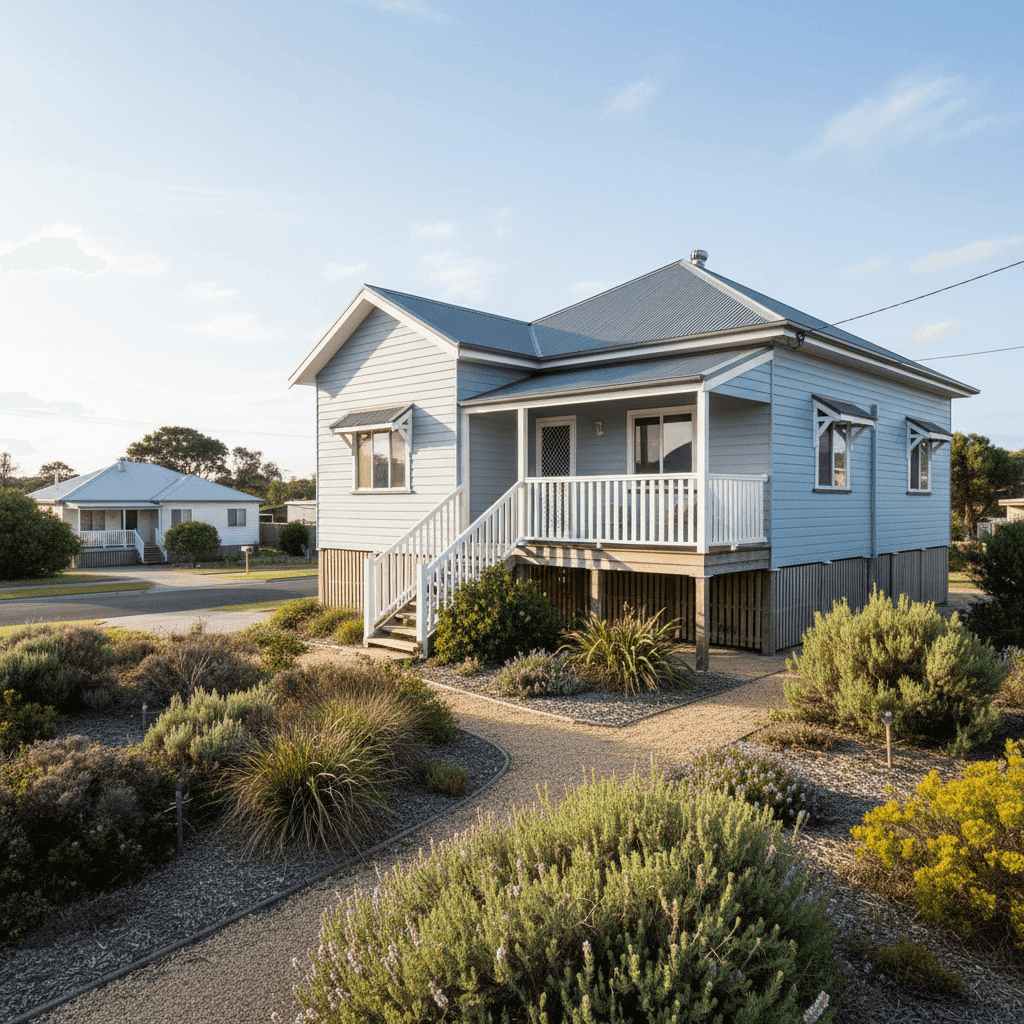
Sandy Point is a peaceful coastal village on the western shore of Corner Inlet in South Gippsland — known for its shack-style holiday homes, untouched beaches, and relaxed pace of life. But even in this quiet corner of Victoria, home insurance is a serious financial consideration. This article breaks down a real home and contents insurance quote for a three-bedroom free standing home in Sandy Point (postcode 3959), comparing it against local, state, and national benchmarks to help you understand what's driving the price — and whether you're getting a fair deal.
---
Is This Quote Fair?
The quote in question comes in at $2,226 per year (or $218/month) for combined home and contents cover, with a building sum insured of $755,000 and contents valued at $151,000. The building excess is set at $3,000 and the contents excess at $1,000.
Based on our pricing data, this quote is rated Expensive — above the suburb average. That said, context matters enormously when assessing whether a premium is reasonable.
The suburb average for Sandy Point sits at $1,826/year, with a median of $1,757/year across 71 quotes collected. This quote lands above the 75th percentile for the suburb (which sits at $2,203/year), meaning it's pricier than roughly three-quarters of comparable quotes in the area. That's a meaningful gap — around $400 above the suburb average annually.
However, it's worth noting that this quote is well below both the Victorian state average of $2,921/year and the national average of $2,965/year. So while the quote looks expensive relative to Sandy Point specifically, it's actually sitting comfortably below what many Australians pay for equivalent cover.
The takeaway? This premium isn't outrageous in absolute terms, but there may be room to find a more competitive rate locally — particularly if you shop around.
---
How Sandy Point Compares
To put the numbers in perspective, here's a snapshot of where Sandy Point sits in the broader insurance landscape:
| Benchmark | Annual Premium |
|---|---|
| This Quote | $2,226 |
| Sandy Point Suburb Average | $1,826 |
| Sandy Point Suburb Median | $1,757 |
| Sandy Point 25th Percentile | $1,454 |
| Sandy Point 75th Percentile | $2,203 |
| South Gippsland LGA Average | $2,188 |
| VIC State Average | $2,921 |
| VIC State Median | $2,694 |
| National Average | $2,965 |
| National Median | $2,716 |
What stands out here is that Sandy Point is actually a relatively affordable suburb to insure compared to the rest of Victoria and Australia. The suburb median of $1,757/year is significantly lower than the state median of $2,694/year — a difference of nearly $940. This suggests Sandy Point doesn't carry the same level of risk loading seen in many other Victorian postcodes, such as those prone to bushfire, flooding, or cyclone activity.
The South Gippsland LGA average of $2,188/year sits between the suburb average and this particular quote, which is consistent with the variation you'd expect across a large regional area with diverse risk profiles.
You can explore more local data on the Sandy Point suburb stats page or browse Victoria-wide insurance trends for broader context.
---
Property Features That Affect Your Premium
Several characteristics of this property are likely influencing the premium — some pushing it higher, others keeping it in check.
Weatherboard Timber Construction
Weatherboard wood external walls are one of the most significant premium drivers for this property. Timber homes are considered higher risk than brick veneer or full brick construction because they're more susceptible to fire damage and can be more costly to repair or replace. Insurers typically apply a loading to weatherboard homes, which is reflected in the building sum insured of $755,000 — a substantial figure for a 153 sqm home, but not unusual given the material and rebuild costs.
Stump Foundation (Elevated)
This home sits on stumps and is elevated by less than one metre. Elevated homes on stumps are common in coastal and semi-rural Victoria, and while this style adds character, it also introduces specific risk considerations. Stumped homes can be vulnerable to subfloor moisture, pest damage, and movement over time, all of which can factor into insurer risk assessments. On the positive side, slight elevation can offer some protection against minor surface flooding.
Steel/Colorbond Roof
The Colorbond steel roof is a positive from an insurance perspective. It's durable, fire-resistant, and low-maintenance compared to older materials like terracotta tiles or fibrous cement sheeting. Many insurers view Colorbond favourably, and it's unlikely to be adding a loading to this premium.
Timber and Laminate Flooring
Flooring type can affect contents and internal damage claims. Timber and laminate floors are susceptible to water damage, which may influence how insurers price water-related risk for the contents portion of the policy.
Standard Fittings, No Pool, No Solar
The standard fittings quality keeps the replacement cost estimate conservative. The absence of a pool and solar panels removes two common sources of additional premium loading, which is a small but meaningful saving.
No Cyclone Risk
Sandy Point falls outside designated cyclone risk zones, which is a notable advantage. Cyclone-rated premiums in northern Australia can be dramatically higher, so this property benefits from being in a lower-risk climate region.
---
Tips for Homeowners in Sandy Point
If you're looking to get better value on your home and contents insurance, here are four practical steps worth considering:
- Increase your excess to reduce your premium. This quote carries a $3,000 building excess and $1,000 contents excess. If you can comfortably afford a higher out-of-pocket cost in the event of a claim, raising your excess — particularly on the contents side — can meaningfully reduce your annual premium.
- Shop around and compare multiple quotes. The gap between the 25th percentile ($1,454/year) and this quote ($2,226/year) in Sandy Point is over $770. That's a significant range, and it suggests there are cheaper options available in this postcode. Different insurers assess risk very differently, so the same property can attract wildly different premiums depending on who you ask.
- Review your sum insured carefully. At $755,000 for a 153 sqm weatherboard home, the building sum insured is substantial. Make sure this figure reflects a genuine rebuild cost estimate (not the market value of the land and property), as over-insuring can unnecessarily inflate your premium. Consider using a building cost calculator to verify the figure.
- Bundle your home and contents policies. This quote already combines both covers, which is a smart move — most insurers offer a discount for bundling. If you currently hold separate policies with different providers, consolidating them could save you money.
---
Ready to Compare?
Whether you're renewing your current policy or insuring a Sandy Point property for the first time, it pays to see what else is out there. CoverClub makes it easy to compare home insurance quotes side by side, so you can find the right level of cover at a price that makes sense for your situation.
Get a home insurance quote today and see how your premium stacks up against the Sandy Point average.