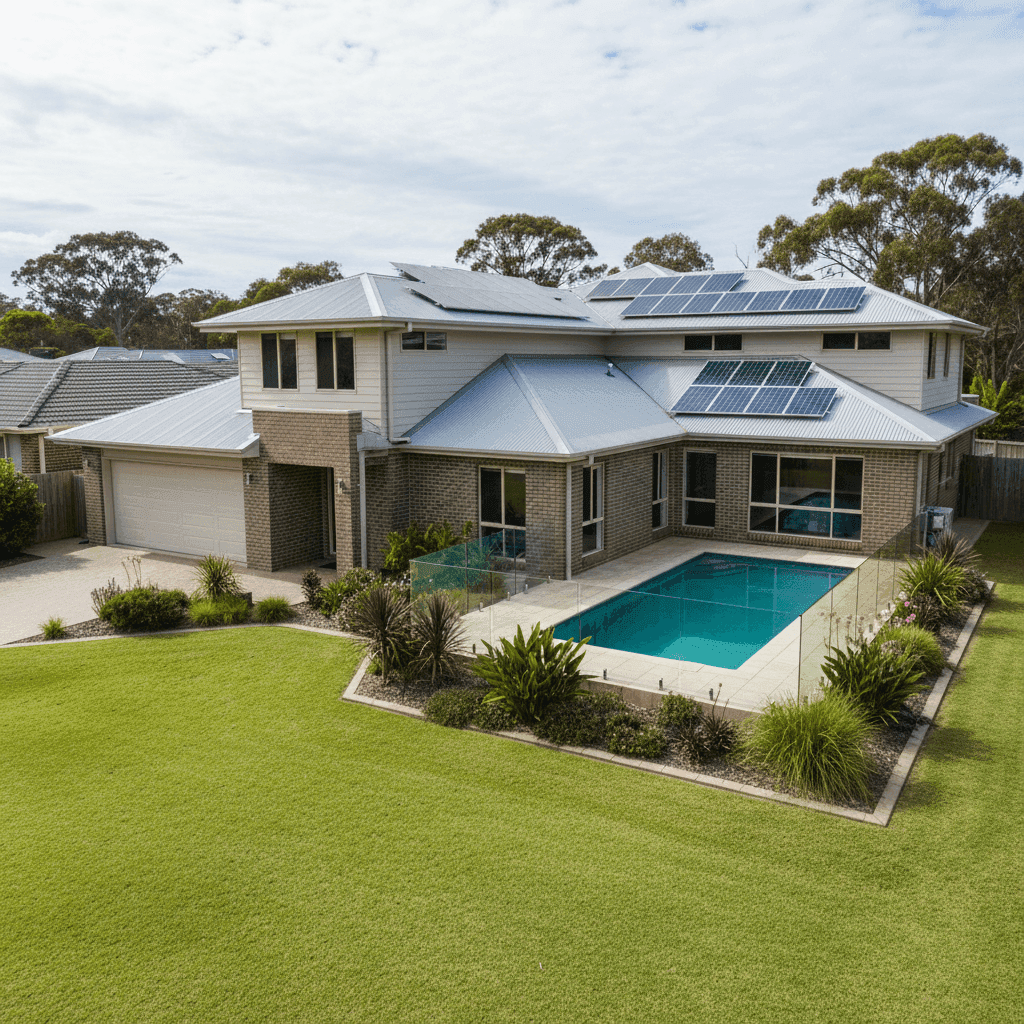
Sapphire Beach is one of the Mid North Coast's most sought-after coastal communities, sitting just north of Coffs Harbour in postcode 2450. With its relaxed lifestyle, proximity to the beach, and steady population growth, it's no surprise that more families are putting down roots here — and with that comes the very real need for solid home insurance. This article breaks down a recent home and contents insurance quote for a four-bedroom, two-bathroom free-standing home in the area, and helps you understand whether you're paying a fair price.
---
Is This Quote Fair?
The quote in question comes in at $5,640 per year (or $540 per month), covering a building sum insured of $750,000 and contents valued at $140,000, each with a $1,000 excess. Our analysis rates this quote as FAIR — around average for the area.
That "fair" rating isn't a red flag, but it's also not a green light to stop shopping. It means you're in the ballpark of what most homeowners in Sapphire Beach are paying, but there's a reasonable chance you could find a more competitive premium if you took the time to compare. Given that the annual difference between the cheapest and most expensive quotes in the suburb can stretch into the thousands, even a modest saving is worth pursuing.
The $750,000 building sum insured is a significant coverage amount, and for a modern 214 sqm brick veneer home built in 2017, that figure needs to reflect full replacement cost — not market value. Getting this number right is one of the most important things you can do to avoid being underinsured in the event of a total loss.
---
How Sapphire Beach Compares
Understanding where your quote sits relative to local and broader benchmarks gives you a much clearer picture of value. Here's how the numbers stack up:
| Benchmark | Premium |
|---|---|
| This Quote | $5,640/yr |
| Sapphire Beach Average | $6,622/yr |
| Sapphire Beach Median | $4,752/yr |
| Sapphire Beach 25th Percentile | $2,849/yr |
| Sapphire Beach 75th Percentile | $5,869/yr |
| NSW Average | $9,528/yr |
| NSW Median | $3,770/yr |
| National Average | $5,347/yr |
| National Median | $2,764/yr |
(Based on [28 quotes collected for Sapphire Beach](https://coverclub.com.au/stats/NSW/2450/sapphire-beach). Suburb sample sizes can vary — always compare multiple quotes for your specific property.)
A few things stand out here. The quote sits below the Sapphire Beach suburb average of $6,622, which is a positive sign. However, it's above the suburb median of $4,752, meaning roughly half of the quotes collected for this area came in cheaper. It also sits just below the 75th percentile ($5,869), so while it's not the most expensive on the market, there's clearly room to explore lower-cost options.
Zooming out to the NSW state level, the average premium of $9,528 is dramatically higher — largely skewed by high-risk flood and bushfire zones across regional New South Wales. The state median of $3,770 is a more useful reference point and suggests that for many NSW properties, premiums are considerably lower. At the national level, the average of $5,347 is actually slightly below this quote, though again, national averages are pulled upward by high-risk postcodes in Queensland and Northern Australia.
One figure worth noting: the Clarence Valley LGA average sits at a striking $31,244 per year. This is almost certainly driven by a small number of extremely high-risk properties within the LGA — likely those in flood-prone areas — and shouldn't be taken as representative of Sapphire Beach specifically. It does, however, serve as a reminder of just how dramatically risk factors can influence pricing within the same local government area.
---
Property Features That Affect Your Premium
The characteristics of this particular home play a meaningful role in how insurers price the risk. Here's what's relevant:
Construction (Brick Veneer + Colorbond Roof + Slab Foundation) This is a relatively insurer-friendly combination. Brick veneer walls offer good fire resistance and structural durability. A steel Colorbond roof is lightweight, durable, and performs well in coastal conditions — resisting corrosion better than many alternatives. A concrete slab foundation is stable and reduces the risk of subsidence or pest-related damage. Together, these features generally attract more favourable premiums than older or timber-framed construction.
Year Built: 2017 A home built in 2017 was constructed under modern Australian Building Codes, which include stricter requirements for structural integrity, fire safety, and wind resistance. Newer homes tend to attract lower premiums because they're less likely to have ageing infrastructure issues like outdated wiring or plumbing.
Swimming Pool The presence of a pool adds some complexity to a home insurance policy. Pools can increase liability exposure and may add to the cost of rebuilding in the event of a total loss. It's worth confirming your policy covers pool-related liability and that the pool structure itself is included in your building sum insured.
Solar Panels Solar panels are increasingly common on Australian homes, but not all policies treat them the same way. Some insurers include panels under building cover automatically; others require them to be specified. Make sure your policy is explicit about this — panels can be costly to replace and are vulnerable to storm and hail damage.
Ducted Climate Control Ducted air conditioning systems are a significant fixed asset and should be factored into your building sum insured. If your system needed to be replaced as part of a rebuild, the cost could easily run into tens of thousands of dollars.
Coastal Location Sapphire Beach's proximity to the ocean means salt air exposure, which can accelerate corrosion on metal components. Insurers may factor this into their risk assessment, particularly for roofing and external fittings.
---
Tips for Homeowners in Sapphire Beach
1. Review your building sum insured annually Construction costs have risen significantly in recent years. A sum insured that was accurate two or three years ago may no longer reflect what it would actually cost to rebuild your home today. Use a building cost calculator or speak with a quantity surveyor to make sure you're not underinsured.
2. Confirm solar panels and pool are explicitly covered Don't assume these are automatically included. Read your Product Disclosure Statement (PDS) carefully and ask your insurer directly whether solar panels are covered under building insurance and whether pool liability is included in your policy.
3. Compare quotes before renewal Loyalty doesn't always pay in the insurance market. Insurers often offer better rates to new customers, so it's worth getting fresh quotes each year rather than simply accepting your renewal notice. Even a small saving compounds significantly over time.
4. Consider your excess strategically This quote carries a $1,000 excess on both building and contents. Opting for a higher excess can reduce your annual premium, which makes sense if you have the financial buffer to cover it in the event of a claim. Conversely, a lower excess provides more comfort if you're likely to make smaller claims.
---
Ready to Compare?
Whether this quote is the best available for your home in Sapphire Beach is something only the market can answer. The smartest move is to put it to the test. At CoverClub, we make it easy to compare home and contents insurance quotes side by side, so you can see exactly where your current premium sits — and whether there's a better deal waiting. Get a quote today and find out what you could be saving.