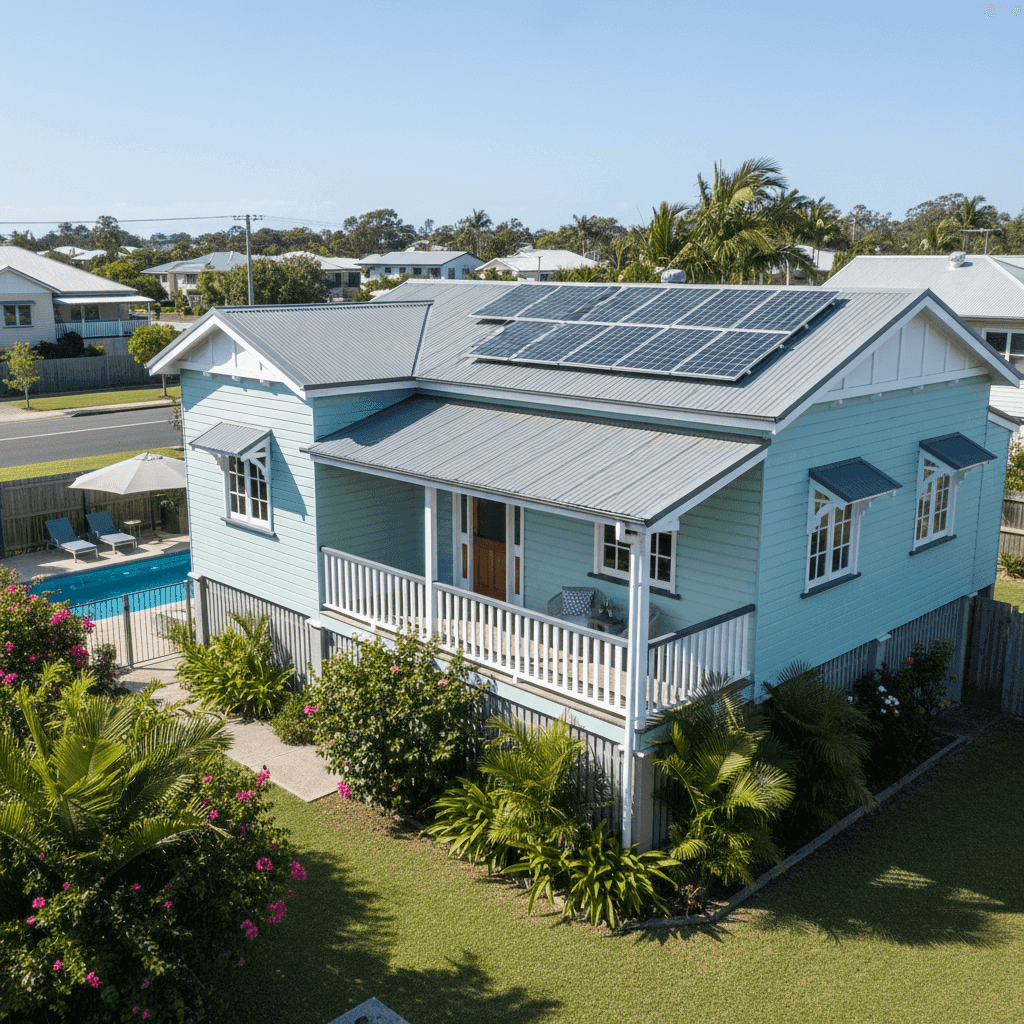
Scarborough is a laid-back coastal suburb on the Redcliffe Peninsula in South East Queensland, known for its marina, beachside lifestyle, and a mix of older character homes and newer builds. For owners of a free standing home in this area, understanding what drives your insurance premium — and whether you're getting a fair deal — can make a real difference to your household budget.
This article breaks down a recent home and contents insurance quote for a 3-bedroom, 3-bathroom free standing home in Scarborough (postcode 4020), comparing it against local, state, and national benchmarks to help you make a more informed decision.
---
Is This Quote Fair?
The annual premium for this property came in at $3,083 per year (or approximately $304 per month), covering a building sum insured of $1,000,000 and contents valued at $50,000. The building excess is $2,000 and the contents excess is $1,000.
Our pricing tool has rated this quote as FAIR — Around Average, which is a reasonable outcome given the property's characteristics and location. It's not a bargain, but it's not an outlier either.
To put that in context:
- The suburb average for Scarborough (4020) is $3,749/yr, and the median sits at $3,246/yr
- This quote of $3,083 sits below both the suburb average and median, which is a positive sign
- It also falls comfortably within the middle band of the market — the 25th to 75th percentile range for Scarborough runs from $2,000 to $5,258 per year
So while there may be cheaper options available, this premium is well within what most Scarborough homeowners are paying. You can explore more local pricing data on the Scarborough suburb stats page.
---
How Scarborough Compares
One of the most useful ways to assess a quote is to zoom out and look at the broader picture. Here's how Scarborough stacks up against Queensland and the rest of Australia:
| Benchmark | Average Premium | Median Premium |
|---|---|---|
| Scarborough (4020) | $3,749/yr | $3,246/yr |
| Moreton Bay LGA | $3,145/yr | — |
| Queensland | $4,547/yr | $3,931/yr |
| National | $2,965/yr | $2,716/yr |
A few things stand out here. Queensland as a whole is a notably expensive state for home insurance — the state average of $4,547 is significantly higher than the national average of $2,965. This reflects the elevated risk profile across much of Queensland, including exposure to severe storms, flooding, and cyclones in various regions.
Scarborough's suburb average of $3,749 sits below the Queensland state average, which is a relative positive for homeowners in the area. The Moreton Bay LGA average of $3,145 is even lower, suggesting that parts of the broader region attract more competitive pricing.
Compared to the national average, Scarborough is more expensive — but that's broadly true of coastal Queensland as a whole. You can dig deeper into Queensland-wide insurance pricing trends to understand how different postcodes and regions compare across the state.
---
Property Features That Affect Your Premium
Every property is different, and insurers weigh up a range of factors when calculating your premium. Here's how the specific features of this home are likely influencing the price:
Weatherboard Timber Walls Weatherboard construction is common in older Queensland homes and is generally considered a higher risk than brick or rendered masonry. Timber is more susceptible to fire, termite damage, and moisture-related deterioration. Insurers typically apply a loading for weatherboard homes, which can push premiums higher than comparable brick properties.
Age of Construction (1959) A home built in 1959 is now over 65 years old. While older homes can be full of character, they also come with higher risk of ageing infrastructure — including plumbing, electrical wiring, and structural components. Insurers factor in the age of a property when assessing the likelihood of a claim.
Steel/Colorbond Roof On the positive side, a Colorbond steel roof is a strong performer from an insurance perspective. It's durable, fire-resistant, and handles Queensland's extreme weather well. This is likely a moderating factor on the premium compared to tile or older roofing materials.
Slab Foundation A concrete slab foundation is generally considered low-risk by insurers. It provides stability and is less prone to subsidence or pest-related damage compared to older timber stumped foundations — another factor that may be keeping this premium in check.
Swimming Pool Pools add value to a property but also introduce liability and maintenance considerations. Most insurers include pool coverage within the building sum insured, but it's worth confirming exactly what's covered — including the pool structure, pump, and any associated fencing.
Solar Panels Solar panels are increasingly common in Queensland and are typically covered under building insurance. However, it's important to check your policy's specific provisions — particularly around storm damage, hail, and inverter failure — as coverage can vary between insurers.
High Building Sum Insured ($1,000,000) The $1,000,000 building sum insured is on the higher end for a 153 sqm home, and this will naturally contribute to a higher premium. It's worth reviewing whether this figure accurately reflects the rebuild cost (not market value) of your home, as over-insuring can mean you're paying more than necessary.
---
Tips for Homeowners in Scarborough
1. Review your building sum insured carefully The most common mistake homeowners make is confusing market value with rebuild cost. Your sum insured should reflect what it would actually cost to demolish and rebuild your home from scratch — including materials, labour, and professional fees. A 153 sqm weatherboard home built to modern standards may not require a $1,000,000 sum insured. Consider using a building cost calculator or speaking with a quantity surveyor to get an accurate figure.
2. Compare quotes annually Insurance premiums can shift significantly from year to year, and loyalty doesn't always pay. With a suburb median of $3,246 and a 25th percentile of just $2,000, there's a meaningful spread of pricing in Scarborough. Shopping around at renewal time — or using a comparison tool like CoverClub — could uncover a more competitive rate without sacrificing cover quality.
3. Check your pool and solar panel coverage Given that this property has both a pool and solar panels, it's worth reading the fine print on your policy. Confirm that your pool structure and equipment are included in the building sum insured, and check whether your solar panels are covered for storm damage, accidental breakage, and power surge. If they're not explicitly covered, you may need to request an endorsement or consider a different policy.
4. Consider your excess levels strategically This policy carries a $2,000 building excess and a $1,000 contents excess. Opting for a higher excess is one of the most straightforward ways to reduce your annual premium — but only if you're financially comfortable covering that amount out of pocket in the event of a claim. Review your excess levels each year to make sure the trade-off still makes sense for your situation.
---
Ready to Compare?
Whether you're reviewing your current policy or shopping for cover on a new property, it pays to see what the market has to offer. CoverClub makes it easy to compare home and contents insurance quotes from a range of Australian insurers in one place.
Get a quote for your Scarborough home today and see how your premium stacks up against the suburb, state, and national benchmarks.