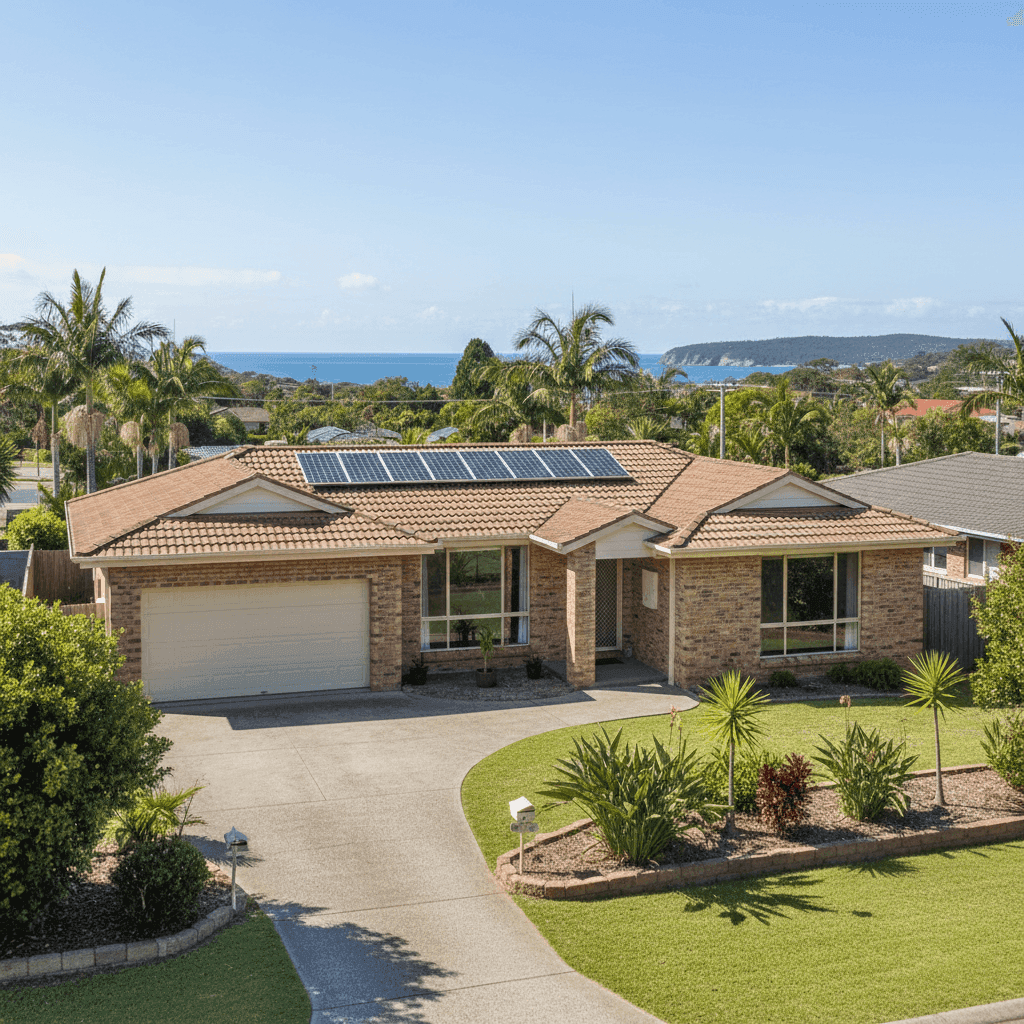
If you own a free standing home in Scotts Head, NSW 2447, you'll know this coastal Mid North Coast village offers a relaxed lifestyle — but like anywhere in Australia, protecting your property with the right home insurance is essential. This article breaks down a real home and contents insurance quote for a four-bedroom, brick veneer home in the area, comparing it against local, state, and national benchmarks so you can understand exactly what you're paying for — and whether there's room to do better.
---
Is This Quote Fair?
The annual premium for this property comes in at $1,631 per year (or $174 per month), covering both building and contents with a building sum insured of $468,000 and contents valued at $50,000. Our price rating for this quote is CHEAP — below average for the Scotts Head area.
To put that in context, the suburb average premium sits at $2,125 per year, with a median of $2,139. This quote lands well below the 25th percentile of $1,801, meaning it's cheaper than at least three-quarters of comparable quotes in the area. That's a strong result by any measure.
It's worth noting that the building excess is $4,000 and the contents excess is $1,000. A higher excess is one of the most common ways insurers reduce your upfront premium — so while the annual cost looks attractive, you'd need to cover more out of pocket in the event of a claim. Whether that trade-off suits your financial situation is a personal decision, but for homeowners with a solid emergency fund, it can be a smart way to keep premiums manageable.
Overall, this quote represents genuine value for a well-specified home and contents policy in Scotts Head.
---
How Scotts Head Compares
Understanding your premium in isolation only tells half the story. Here's how Scotts Head stacks up against broader benchmarks:
| Benchmark | Average Premium | Median Premium |
|---|---|---|
| Scotts Head (2447) | $2,125/yr | $2,139/yr |
| Nambucca Valley LGA | $5,223/yr | — |
| NSW | $9,528/yr (avg) | $3,770/yr |
| National | $5,347/yr (avg) | $2,764/yr |
A few things stand out here. The NSW state average of $9,528 is dramatically higher than the median of $3,770 — a clear sign that a small number of very high-risk or high-value properties are pulling the average upward. The same effect is visible at the national level. For most homeowners, the median is the more meaningful comparison point.
Against the NSW median of $3,770, Scotts Head's median of $2,139 looks quite reasonable — suggesting the suburb carries a relatively moderate risk profile compared to many parts of the state. Interestingly, the Nambucca Valley LGA average of $5,223 is notably higher than the Scotts Head suburb figures, which may reflect a broader mix of property types and risk profiles across the LGA.
You can explore more detailed local data on the Scotts Head suburb stats page, compare against NSW state averages, or check out national home insurance benchmarks.
---
Property Features That Affect Your Premium
Every home is different, and insurers weigh up a range of property characteristics when calculating your premium. Here's how the features of this particular property are likely influencing the quote:
Brick Veneer Walls & Tiled Roof Brick veneer construction with a tiled roof is one of the most common and well-regarded combinations in Australian residential building. Both materials are considered durable and relatively fire-resistant, which insurers generally view favourably. This construction profile tends to attract more competitive premiums compared to, say, weatherboard cladding or a metal roof in a high-wind area.
Slab Foundation A concrete slab foundation is straightforward for insurers to assess — there's no subfloor cavity, which reduces the risk of certain types of damage (such as subfloor moisture issues or pest ingress). It's a neutral-to-positive factor in most premium calculations.
Built in 1981 Homes from this era are well past the experimental building phases of earlier decades but predate some of the more stringent modern building codes introduced in the 1990s and 2000s. Electrical systems, plumbing, and roofing may be ageing, which can influence both the sum insured and how insurers assess risk. It's worth ensuring your building sum insured reflects the true cost of rebuilding to current standards.
Solar Panels This property has solar panels installed on the roof. Many insurers include solar panels under building cover, but it's important to confirm this with your specific policy. Solar systems can be costly to replace — panels, inverters, and installation — so ensuring they're adequately covered under your building sum insured is a smart move.
Standard Fittings & 139 sqm Building Size Standard-quality fittings and a modest building footprint of 139 sqm both point toward a straightforward risk profile. High-end or custom fittings can significantly increase rebuild costs, so standard fittings help keep the sum insured — and therefore the premium — at a reasonable level.
No Pool, No Ducted Climate Control The absence of a pool removes a common source of liability and maintenance risk. Similarly, no ducted climate control system means fewer complex mechanical systems that could fail or require costly replacement.
---
Tips for Homeowners in Scotts Head
1. Review your building sum insured regularly With a 1981-built home, construction costs and compliance requirements have changed significantly. Make sure your $468,000 sum insured reflects what it would actually cost to rebuild your home today — not just its market value. Underinsurance is one of the most common and costly mistakes Australian homeowners make.
2. Confirm solar panel coverage in your policy Solar panels are a meaningful asset. Before renewing or switching policies, check exactly how your insurer treats them — are they covered under building, contents, or as a separate item? Some policies have sub-limits that may not fully cover a modern solar system.
3. Consider whether your excess levels suit your situation This quote carries a $4,000 building excess. If you're comfortable covering that amount in an emergency, the lower premium is a genuine saving. But if a $4,000 outlay would be a stretch, it may be worth requesting a quote with a lower excess to compare the difference in premium.
4. Don't overlook contents coverage A $50,000 contents sum may be sufficient for some households, but it's easy to underestimate the cumulative value of furniture, appliances, clothing, and electronics. Do a quick room-by-room audit to make sure your contents cover reflects what you actually own — especially if you've made purchases since your last policy renewal.
---
Compare Quotes for Your Scotts Head Home
Whether you're renewing your existing policy or shopping around for the first time, it pays to compare. CoverClub makes it easy to see how your premium stacks up and find competitive options for your property. Get a home insurance quote today and make sure your Scotts Head home is properly protected — at a price that makes sense.