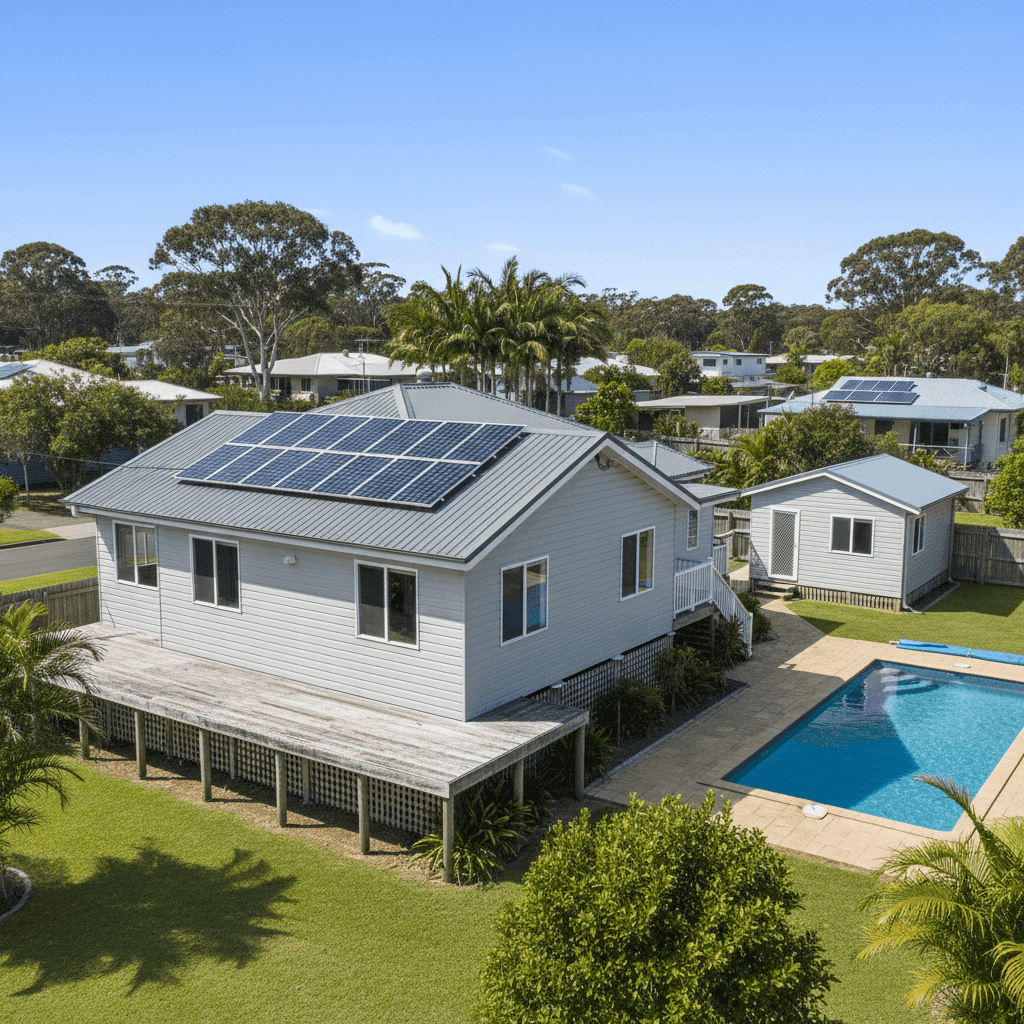
Scotts Head is a small coastal village on the Mid North Coast of New South Wales — known for its surf beach, relaxed lifestyle, and tightly held real estate. But owning a free standing home in this idyllic pocket of NSW 2447 comes with insurance considerations that are worth understanding before you renew or switch policies. This article breaks down a real home and contents insurance quote for a four-bedroom property in Scotts Head, compares it against local, state, and national benchmarks, and offers practical guidance for homeowners in the area.
---
Is This Quote Fair?
The quote in question sits at $4,483 per year (or $430/month) for combined home and contents cover, with a building sum insured of $870,000 and contents valued at $100,000. Both the building and contents excess are set at $5,000.
Our pricing analysis rates this quote as Expensive — above average for the suburb.
To put that in perspective, the suburb average for Scotts Head sits at just $2,125/yr, with a median of $2,139/yr. The quote we're analysing is more than double the local average. Even accounting for the upper end of the suburb range (the 75th percentile sits at $2,423/yr), this premium is well above what most Scotts Head homeowners are paying.
That said, context matters. The building sum insured of $870,000 is likely higher than many properties in the suburb sample, and the property has several features — a pool, solar panels, ducted climate control, and a granny flat — that each add to the insurer's risk exposure and replacement cost calculations. A like-for-like comparison would need to account for these variables.
Still, if you're paying close to $4,500 a year, it's well worth shopping around.
---
How Scotts Head Compares
Understanding where your premium sits relative to broader benchmarks helps frame whether you're being overcharged or simply paying for a more complex risk profile.
| Benchmark | Average Premium | Median Premium |
|---|---|---|
| Scotts Head (suburb) | $2,125/yr | $2,139/yr |
| NSW (state) | $9,528/yr | $3,770/yr |
| National | $5,347/yr | $2,764/yr |
| Nambucca Valley (LGA) | $5,223/yr | — |
A few things stand out here. The NSW state average of $9,528/yr is heavily skewed by high-value and high-risk properties — the median of $3,770/yr is a more reliable indicator of what a typical NSW homeowner pays. Similarly, the national average of $5,347/yr is pulled upward by outliers, while the national median of $2,764/yr reflects a more common experience.
Interestingly, the Nambucca Valley LGA average of $5,223/yr is actually higher than the quote being analysed — suggesting that across the broader local government area, some properties carry significantly elevated premiums, potentially due to flood risk, bushfire exposure, or high-value homes in the mix.
For Scotts Head specifically, the suburb sample size is relatively small (8 quotes), so averages should be interpreted with some caution. As more data flows in, these benchmarks will sharpen.
---
Property Features That Affect Your Premium
Several characteristics of this property are likely contributing to a higher-than-average premium. Here's what insurers are likely factoring in:
Age of construction (1970): A home built over 50 years ago may have outdated wiring, plumbing, or structural elements that increase the cost to repair or rebuild. Insurers often apply loadings to older homes, particularly if renovations haven't been declared.
Vinyl cladding external walls: Vinyl cladding is generally considered a moderate-risk wall material. It's less fire-resistant than brick veneer and can be more susceptible to impact damage, which may influence the premium slightly.
Stumps foundation: Homes on stumps (also called pier or post foundations) are common in coastal and older Queensland-style homes. They can be more vulnerable to subsidence, termite activity, and storm-related movement — all of which insurers weigh up.
Timber and laminate flooring: These materials are more susceptible to water damage than tiles, which can increase the cost of water-related claims.
Swimming pool: Pools add liability exposure and increase the overall replacement cost of the property. Most insurers factor pool infrastructure into the building sum insured.
Solar panels: Solar systems are increasingly common, but they add to the rebuild cost and can be damaged by storms or hail. They're typically covered under building insurance but do contribute to a higher sum insured.
Granny flat: A secondary dwelling on the property significantly increases the insurable value of the building. It also adds complexity to the risk profile — more living space, more electrical infrastructure, and potentially more occupants.
Ducted climate control: Ducted HVAC systems are expensive to replace and can be damaged by power surges, storms, or general wear. Their inclusion in the building adds to the replacement cost estimate.
Taken together, these features help explain why the building sum insured is set at $870,000 — and why the premium is higher than the suburb average for a more modest property.
---
Tips for Homeowners in Scotts Head
1. Review your sum insured carefully The building sum insured should reflect the cost to rebuild your home from the ground up — not its market value. For a 235 sqm home with a granny flat, pool, solar, and ducted air conditioning, $870,000 may be appropriate, but it's worth getting an independent building replacement cost estimate to make sure you're not over- or under-insured.
2. Consider raising your excess to reduce your premium Both the building and contents excess are set at $5,000 — already on the higher side. However, if you're comfortable self-insuring smaller claims, some insurers allow you to push the excess higher in exchange for a lower annual premium. Just make sure you have accessible savings to cover that excess if you need to claim.
3. Shop around — especially at renewal Insurers rarely reward loyalty with their best pricing. With a premium this far above the suburb average, comparing quotes from multiple providers could yield meaningful savings. Use CoverClub's quote comparison tool to see what other insurers would charge for the same property.
4. Declare all features accurately — but don't over-insure contents $100,000 in contents cover is a reasonable starting point for a four-bedroom home, but it's worth doing a proper contents inventory. Over-insuring contents means you're paying for coverage you may never use, while under-insuring could leave you short after a major event. Many insurers offer online calculators to help you arrive at the right figure.
---
Compare Your Home Insurance Quote Today
Whether you're reviewing an existing policy or shopping for cover on a new property, CoverClub makes it easy to see how your premium stacks up. We aggregate real quote data from across Australia so you can make an informed decision — not just accept the first number an insurer gives you.
Get a home insurance quote and compare your options at CoverClub →