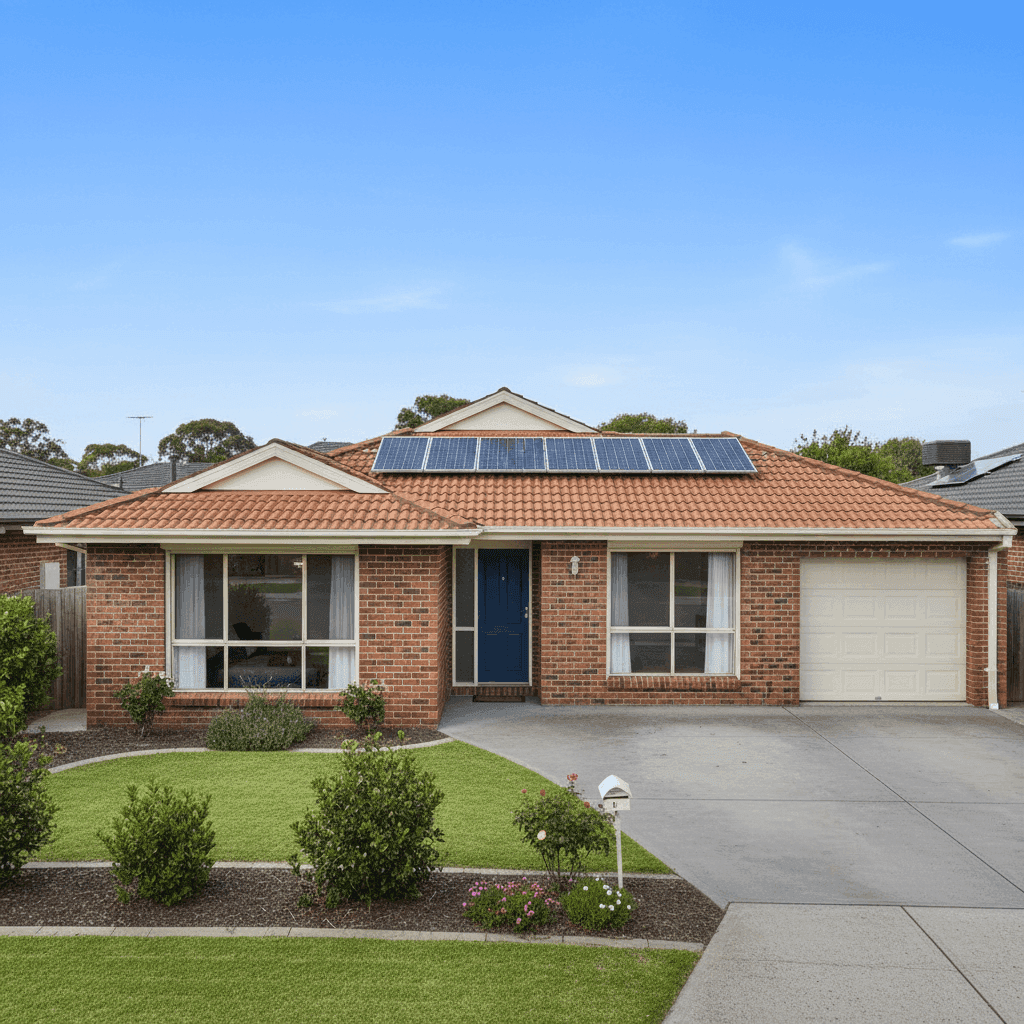
Seabrook is a well-established residential suburb in Melbourne's west, sitting within the City of Wyndham and roughly 20 kilometres from the CBD. It's home to a mix of brick veneer family homes built predominantly during the 1990s — making it a fairly typical pocket of suburban Victoria when it comes to home insurance risk and pricing. This article breaks down a recent home and contents insurance quote for a four-bedroom, two-bathroom free standing home in Seabrook, examining whether the premium represents fair value and what factors are likely driving the cost.
---
Is This Quote Fair?
The quote in question comes in at $1,677 per year (or $161/month) for a combined home and contents policy, covering a building sum insured of $621,000 and contents valued at $94,000. Both the building and contents excess are set at $1,000.
Our analysis rates this quote as Fair — Around Average. That's a reasonable outcome for a property of this size and specification, though it does sit slightly above the suburb average, which we'll unpack below.
It's worth noting that "fair" doesn't necessarily mean you can't do better. Insurance premiums vary significantly between providers, and even for identical properties, quotes can differ by hundreds of dollars depending on the insurer's risk appetite, underwriting model, and current book of business. Shopping around is always worthwhile.
---
How Seabrook Compares
To put this quote in context, here's how it stacks up against local, state, and national benchmarks:
| Benchmark | Premium |
|---|---|
| This quote | $1,677/yr |
| Seabrook suburb average | $1,447/yr |
| Seabrook suburb median | $1,254/yr |
| Seabrook 25th percentile | $967/yr |
| Seabrook 75th percentile | $1,690/yr |
| Wyndham LGA average | $1,591/yr |
| Victoria average | $3,000/yr |
| Victoria median | $2,718/yr |
| National average | $5,347/yr |
| National median | $2,764/yr |
(Suburb data based on a sample of 23 quotes. View full [Seabrook insurance stats](https://coverclub.com.au/stats/VIC/3028/seabrook), [Victoria stats](https://coverclub.com.au/stats/VIC), or [national stats](https://coverclub.com.au/stats/national).)
At $1,677, this quote sits just below the suburb's 75th percentile ($1,690), meaning roughly three-quarters of comparable quotes in Seabrook came in cheaper. However, it's still dramatically lower than the Victorian average ($3,000) and the national average ($5,347) — a reflection of the relatively benign risk profile of Melbourne's western suburbs compared to coastal, bushfire-prone, or cyclone-affected regions across the country.
The Wyndham LGA average of $1,591 is also a useful reference point — this quote is about $86 above that figure, suggesting there may be some room to negotiate or find a more competitive offer elsewhere.
---
Property Features That Affect Your Premium
Several characteristics of this property will be influencing the quoted premium, both positively and negatively.
Brick Veneer Construction
Brick veneer is one of the most common external wall materials in Australian suburban homes, and insurers generally view it favourably. It offers solid fire resistance and durability, which can help keep premiums in check compared to timber-framed or weatherboard homes.
Tiled Roof
A tiled roof is similarly well-regarded by underwriters. Tiles are durable, fire-resistant, and long-lasting — particularly on a home built in 1995, which means the roof is now around 30 years old. While tiles themselves are resilient, older roofs can attract scrutiny around maintenance and the potential for storm or hail damage. Keeping the roof in good repair is important both for your safety and your insurance coverage.
Slab Foundation
A concrete slab foundation is standard for this era of Victorian construction and doesn't typically attract any premium loading. It performs well in most soil conditions and is generally straightforward for insurers to assess.
Solar Panels
This property has solar panels installed, which adds a modest level of complexity to a building insurance policy. Solar panels are typically covered as part of the building sum insured, but it's worth confirming with your insurer that the panels and associated inverter equipment are explicitly included — and that the building sum insured ($621,000 in this case) adequately accounts for their replacement cost.
Ducted Climate Control
Ducted heating and cooling systems are a significant fixed asset within the home. Like solar panels, these are generally covered under building insurance, but they contribute to the overall replacement cost of the dwelling. Ensuring your building sum insured is sufficient to cover all fixed systems is essential to avoid being underinsured.
Building Size and Sum Insured
At 214 square metres, this is a generously sized family home. The building sum insured of $621,000 equates to roughly $2,902 per square metre — a reasonable figure for a brick veneer home with standard fittings in metropolitan Melbourne, though it's always worth getting a professional building replacement cost assessment to make sure you're not underinsured.
---
Tips for Homeowners in Seabrook
1. Compare Multiple Quotes Annually
Insurance loyalty rarely pays off. Premiums can shift significantly from year to year, and different insurers price the same risk very differently. With this quote sitting above the suburb median, it's worth running a fresh comparison at renewal time to see if a better rate is available.
2. Review Your Building Sum Insured
Construction costs have risen sharply in recent years across Victoria. If your sum insured hasn't been updated to reflect current rebuild costs — including labour, materials, and any fixed assets like solar panels and ducted systems — you could be significantly underinsured. Consider using a quantity surveyor or an online building cost calculator to validate your figure.
3. Check What's Included for Solar and Ducted Systems
Not all policies treat solar panels and ducted climate control the same way. Some insurers include them automatically under building cover; others require them to be specifically listed. Review your Product Disclosure Statement (PDS) carefully and contact your insurer if anything is unclear.
4. Consider Your Excess Level
Both the building and contents excess on this policy are set at $1,000. Opting for a higher excess — say, $2,000 — can meaningfully reduce your annual premium. This strategy works well if you're unlikely to make smaller claims and prefer to self-insure for minor incidents while maintaining protection against major losses.
---
Ready to Find a Better Rate?
Whether you're renewing your existing policy or taking out cover for the first time, comparing quotes is the single most effective way to make sure you're not overpaying. CoverClub makes it easy to see real quotes from multiple insurers side by side, tailored to your property in Seabrook.
Get a home insurance quote today and find out if you can do better than the suburb average.