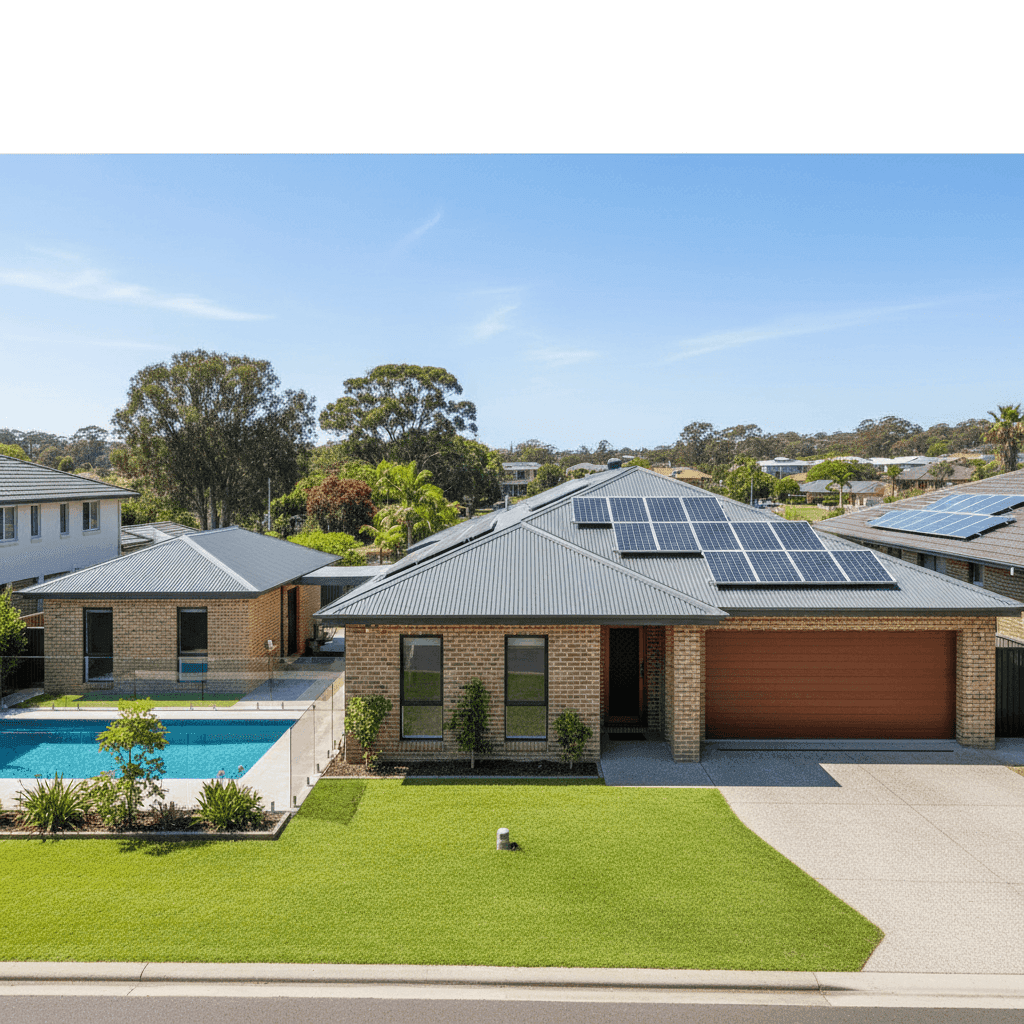
If you own a large free standing home in Seaforth, NSW 2092, you already know this Northern Beaches suburb commands premium real estate. But does a premium address mean a premium insurance bill? Not necessarily — and this analysis of a real building insurance quote for an 8-bedroom, 3-bathroom home in Seaforth shows just how much variation there can be in the market.
Let's unpack the numbers, explore what's driving the cost, and help you decide whether your own policy is working as hard as it should be.
---
Is This Quote Fair?
The quote in question comes in at $3,801 per year (or $397/month) for building-only cover, with a $3,000 building excess and a sum insured of $1,507,000.
Our price rating for this quote? Cheap — below average. That's a strong result for a property of this size and specification.
To put it in context: the average home insurance premium across Seaforth sits at $7,095 per year, with a median of $5,788. This quote comes in at roughly 46% below the suburb average — a significant saving on what is already an expensive home to insure.
Even measured against the suburb's 25th percentile (the cheapest quarter of quotes), which sits at $4,243/yr, this premium still undercuts the field. For a home with a pool, solar panels, ducted climate control, and a granny flat — all features that can push premiums higher — landing below $4,000 annually is a genuinely competitive outcome.
That said, it's worth remembering that a lower premium doesn't automatically mean better value. The $3,000 excess is on the higher side, which does shift some financial risk back to the homeowner in the event of a claim. Make sure that trade-off suits your situation before committing.
---
How Seaforth Compares
Understanding where Seaforth sits in the broader insurance landscape helps frame whether any individual quote is reasonable.
| Benchmark | Premium |
|---|---|
| This Quote | $3,801/yr |
| Seaforth Suburb Average | $7,095/yr |
| Seaforth Suburb Median | $5,788/yr |
| NSW Average | $9,528/yr |
| NSW Median | $3,770/yr |
| National Average | $5,347/yr |
| National Median | $2,764/yr |
| Northern Beaches LGA Average | $3,266/yr |
A few things stand out here. First, NSW's average premium of $9,528 is dramatically higher than the state median of $3,770 — a sign that a handful of very high-risk or high-value properties are pulling the average upward. This is common in a state that spans everything from flood-prone inland towns to coastal bushfire zones.
Second, the national average of $5,347 versus a national median of $2,764 tells a similar story — averages in home insurance are easily skewed by outliers.
This quote sits comfortably between the NSW median and the suburb average, which is a reasonable position for a large, well-appointed home in a low-risk coastal suburb. The Northern Beaches LGA average of $3,266 is actually below this quote, though it's worth noting that LGA-wide averages include a wide range of property types and sizes — smaller homes will naturally pull that figure down.
---
Property Features That Affect Your Premium
Several characteristics of this property are worth examining through an insurance lens.
Size and bedrooms: At 462 sqm with 8 bedrooms, this is a substantial home. Larger homes cost more to rebuild, which is directly reflected in the $1,507,000 sum insured. Accurate sum insured calculations are critical — underinsuring a home of this size could leave you significantly out of pocket after a major claim.
Construction: Brick veneer walls and a steel/Colorbond roof are generally viewed favourably by insurers. Colorbond roofing in particular is durable, fire-resistant, and low-maintenance — factors that reduce risk and can contribute to more competitive premiums. The concrete slab foundation is also a stable, well-regarded construction type.
Pool: Swimming pools add liability exposure and can increase premiums slightly, though the impact varies by insurer. Ensuring your pool meets NSW safety barrier requirements is not only a legal obligation but may also be a policy condition.
Solar panels: Rooftop solar systems add to the rebuild cost and can be a source of claims if damaged by storms or hail. Some insurers include solar panels under building cover automatically; others require them to be specified. It's worth confirming exactly what your policy covers here.
Granny flat: A secondary dwelling on the property adds complexity to building cover. Confirm with your insurer that the granny flat is explicitly included in the sum insured — it's a common oversight that can lead to disputes at claim time.
Ducted climate control: Ducted systems are expensive to repair or replace and should be factored into your sum insured calculation. At standard quality fittings, they're unlikely to dramatically inflate your premium, but they do need to be accounted for.
No cyclone risk: Seaforth falls outside designated cyclone risk zones, which removes one of the more significant premium loading factors seen in northern parts of Australia.
---
Tips for Homeowners in Seaforth
1. Review your sum insured regularly With construction costs rising across Australia, the cost to rebuild a home like this can shift significantly year to year. A sum insured that was accurate in 2022 may no longer reflect today's rebuild costs. Use a quantity surveyor or your insurer's online calculator to check your figure annually.
2. Confirm your granny flat and solar panels are covered Don't assume — ask your insurer directly whether the granny flat and solar panels are included in your building cover and at what value. These are two of the most commonly underspecified items in large residential policies.
3. Understand your excess before you claim A $3,000 building excess is manageable for a major event like storm or fire damage, but it may make smaller claims not worth pursuing. Factor this into how you think about your policy — and consider whether a lower excess (at a slightly higher premium) would suit your risk appetite better.
4. Compare at renewal, not just at inception The insurance market in Seaforth shows significant spread — from below $4,243 at the 25th percentile to above $7,747 at the 75th. That's a wide range, and the insurer who was cheapest last year may not be this year. Make a habit of comparing quotes at every renewal.
---
Ready to See What You Could Be Paying?
Whether you're renewing an existing policy or insuring a new home, the difference between the cheapest and most expensive quotes in Seaforth can be thousands of dollars a year. CoverClub makes it easy to compare real quotes side by side, so you can see exactly where your premium sits — and whether there's a better deal waiting.
Get a home insurance quote at CoverClub and find out how your property compares. You can also explore detailed Seaforth insurance data to benchmark your own premium against the suburb.