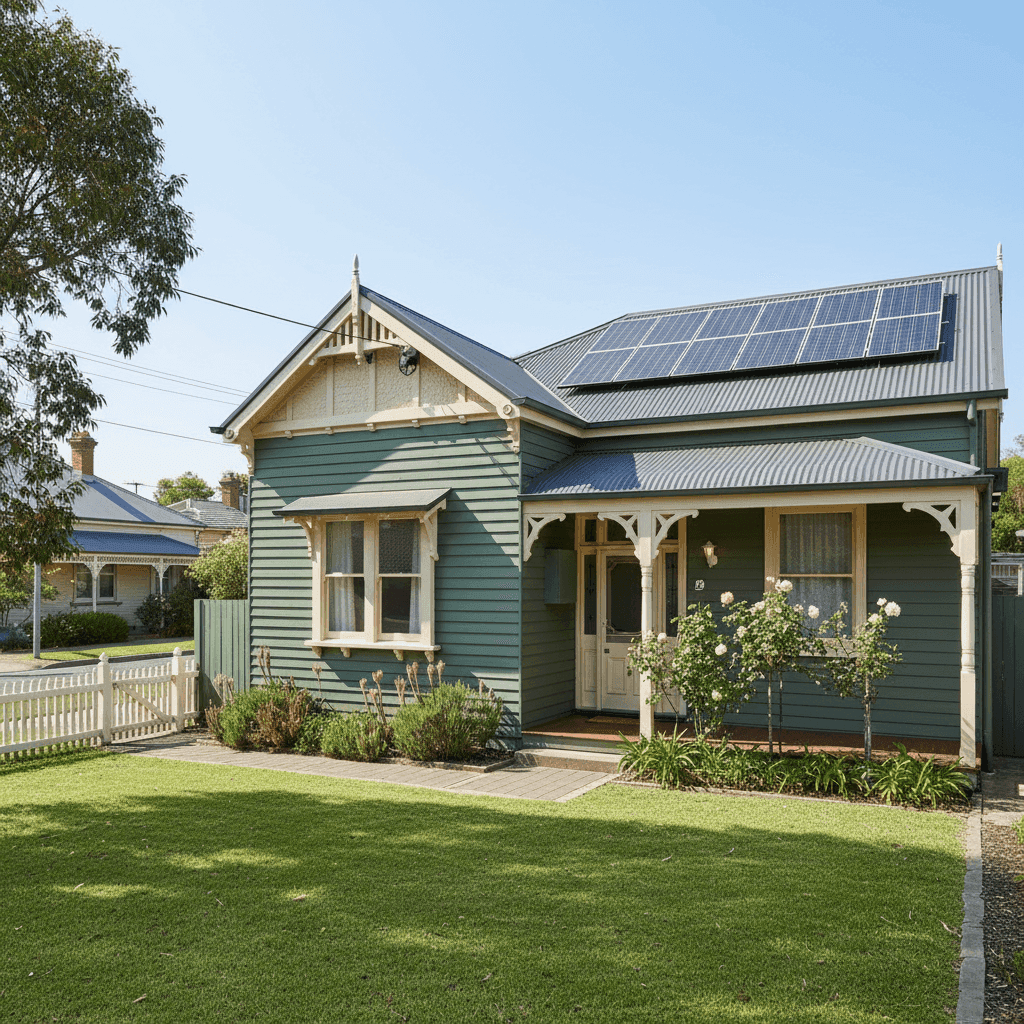
Seddon is one of Melbourne's most charming inner-west suburbs — a tight-knit community of period homes, leafy streets, and a village-like atmosphere that keeps demand high. If you own a free standing home here, you're sitting on a genuinely valuable asset, and making sure it's properly protected matters. This article breaks down a real building insurance quote for a 3-bedroom, 1-bathroom free standing home in Seddon (VIC 3011), and puts the numbers in context so you can judge whether you're getting a fair deal.
---
Is This Quote Fair?
The annual premium on this quote comes in at $1,147 per year (or around $110 per month), with a building excess of $2,000 and a sum insured of $447,000 for building-only cover.
Our pricing engine rates this quote as CHEAP — below average for the area. That's genuinely good news for the homeowner. To understand why, it helps to look at what other properties in the same suburb are paying.
Based on 32 quotes collected for Seddon (3011):
- The suburb average sits at $1,382/yr
- The suburb median is $1,425/yr
- The 25th percentile (the cheapest quarter of quotes) starts at $1,152/yr
- The 75th percentile reaches $1,617/yr
At $1,147/yr, this quote actually sits below the 25th percentile — meaning it's cheaper than at least 75% of quotes we've seen for this suburb. That's a strong result. The higher $2,000 building excess does play a role in keeping the premium down, so it's worth being comfortable with that out-of-pocket cost in the event of a claim before locking this policy in.
---
How Seddon Compares to VIC and Australia
Zooming out gives even more perspective on just how competitive this quote is.
| Benchmark | Average Premium | Median Premium |
|---|---|---|
| Seddon (3011) | $1,382/yr | $1,425/yr |
| Maribyrnong LGA | $1,816/yr | — |
| Victoria (VIC) | $3,000/yr | $2,718/yr |
| National | $5,347/yr | $2,764/yr |
A few things stand out here. First, Seddon — and the inner west of Melbourne more broadly — is significantly cheaper to insure than the Victorian state average. At $3,000/yr on average across VIC, many homeowners in regional and coastal areas are paying more than double what Seddon residents typically pay.
The national average of $5,347/yr is heavily skewed by high-risk areas, particularly in Queensland and Northern Australia where cyclone, flood, and storm exposure drives premiums sky-high. Seddon's location well inland, away from cyclone-prone zones and with relatively low flood risk, makes it a far more affordable market.
Even within the Maribyrnong LGA, Seddon comes in below the local government area average of $1,816/yr — suggesting the suburb itself carries a lower risk profile than some of its neighbours.
---
Property Features That Affect Your Premium
Several characteristics of this particular property have a meaningful influence on what insurers charge. Here's how they stack up:
Weatherboard timber walls are one of the most significant factors. Timber is more susceptible to fire and general wear than brick veneer or double brick construction, which typically pushes premiums upward. Many insurers apply a loading to weatherboard homes, so it's worth comparing across providers to find one that prices this material competitively.
Heritage Overlay is a notable consideration for Seddon, where many homes from the early 20th century carry heritage protections. This property, built in 1925, falls under a heritage overlay — which can increase rebuild costs significantly. Restoring or replacing heritage-compliant materials, period-accurate joinery, and traditional detailing costs considerably more than standard construction. The $447,000 sum insured should account for this; underinsurance is a real risk for heritage properties.
Stumped foundation (timber or concrete stumps) is common in pre-war Melbourne homes and adds some complexity to claims involving subsidence or structural movement. Some insurers exclude or limit cover for gradual movement, so it's worth reading the PDS carefully.
Solar panels are increasingly common and most modern policies include them under building cover — but it's always worth confirming this explicitly with your insurer, particularly around storm damage and panel replacement costs.
Ducted climate control adds to the replacement value of the home and is a positive sign that the property has been modernised. Insurers generally factor this into the sum insured calculation rather than applying a separate loading.
Steel/Colorbond roof is a positive risk factor. Colorbond is durable, fire-resistant, and holds up well in storms compared to terracotta tiles or older corrugated iron. This likely contributes to the competitive premium on this quote.
Timber and laminate flooring throughout is standard for homes of this era and doesn't typically attract a significant loading, though it's worth noting that timber floors can be costly to replace or repair after water damage events.
---
Tips for Homeowners in Seddon
1. Review your sum insured carefully — especially with a heritage property. The cost to rebuild a 1925 weatherboard home to heritage standards is almost always higher than people expect. Use a building cost calculator or get a quantity surveyor's assessment to make sure $447,000 is genuinely sufficient. Underinsurance can leave you significantly out of pocket at claim time.
2. Confirm solar panel cover is included. Ask your insurer directly whether solar panels are covered under your building policy, what events are included (storm, fire, accidental damage), and whether there are any sub-limits. Don't assume — get it in writing or check the Product Disclosure Statement.
3. Consider whether the $2,000 building excess suits your budget. A higher excess is one of the easiest ways to lower a premium, but it means paying more out of pocket when you claim. If a $2,000 excess would be a financial stretch, it may be worth requesting a lower excess option — even if the annual premium increases slightly.
4. Shop around at renewal time. Insurance loyalty rarely pays off in Australia. Insurers often reserve their sharpest pricing for new customers. Set a reminder to compare quotes before your renewal date each year — even if you're happy with your current cover. CoverClub makes it easy to benchmark your premium against the market without committing to anything.
---
Compare Your Own Quote
Whether you're buying, renewing, or just curious whether you're overpaying, CoverClub gives you real market data to make a smarter decision. See how Seddon premiums compare, explore Victoria-wide insurance trends, or get a quote today to see where your property sits in the market. It takes minutes — and the savings can be significant.