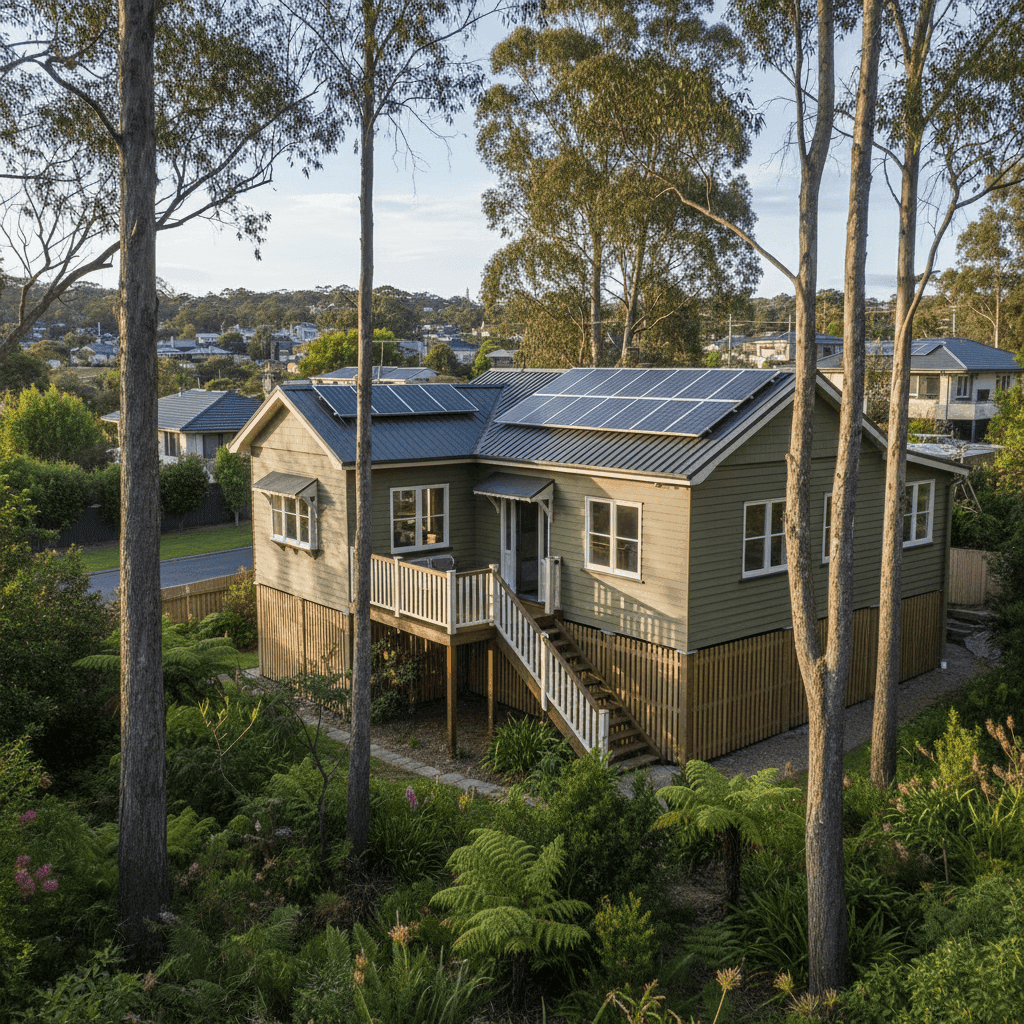
Nestled in the Dandenong Ranges on the outskirts of Melbourne, Selby is a leafy, semi-rural suburb that offers a peaceful lifestyle — but one that comes with its own set of home insurance considerations. This article takes a close look at a real home and contents insurance quote for a four-bedroom, free-standing weatherboard home in Selby (VIC 3159), rated at an annual premium of $3,444, and examines how it stacks up against local, state, and national benchmarks.
---
Is This Quote Fair?
The short answer: yes, broadly speaking. This quote has been rated Fair (Around Average), which means it sits in a reasonable range relative to what other homeowners in the area are paying — but there's still room to explore whether a better deal exists.
At $3,444 per year (or $330 per month), the premium is above the suburb average of $3,181 and the suburb median of $3,161, but it falls comfortably below the 75th percentile of $3,696. In practical terms, this homeowner is paying more than the typical Selby resident, but is nowhere near the most expensive end of the local market.
It's worth noting that the quote covers a $597,000 building sum insured alongside $33,000 in contents, with a $2,000 excess applying to both building and contents claims. The relatively high building sum insured — reflective of construction costs in this region — is one of the key drivers pushing the premium above the suburb midpoint.
---
How Selby Compares
To put this quote in proper context, it helps to look at the broader pricing landscape. You can explore detailed suburb-level data on the Selby insurance stats page, or compare it against Victoria-wide figures and national averages.
| Benchmark | Average Premium | Median Premium |
|---|---|---|
| Selby (3159) | $3,181/yr | $3,161/yr |
| LGA (Cardinia) | $3,491/yr | — |
| Victoria | $2,921/yr | $2,694/yr |
| National | $2,965/yr | $2,716/yr |
A few things stand out here. First, Selby premiums are meaningfully higher than both the Victorian and national averages — by roughly $260–$465 per year on average. This reflects the elevated risk profile of properties in the Dandenong Ranges, where bushfire exposure, steep terrain, and older housing stock all contribute to higher insurer pricing.
Second, the Cardinia LGA average of $3,491 is actually higher than this particular quote, suggesting that, within the broader local government area, this homeowner is doing relatively well. Properties across Cardinia Shire span a wide range of risk environments, and Selby's specific characteristics appear to price it near — but not at the top of — the local range.
The suburb sample size of five quotes is relatively small, so these averages should be treated as directional rather than definitive. As more data accumulates, the picture will sharpen.
---
Property Features That Affect Your Premium
Several characteristics of this property have a direct bearing on what insurers charge. Understanding them helps make sense of the quote.
Weatherboard Timber Construction
Weatherboard homes are among the most common dwelling types in older Melbourne suburbs and regional Victoria, but they present a higher fire risk than brick or rendered masonry. Timber walls are more susceptible to ember attack and flame spread, which is a significant factor in a bushfire-prone area like the Dandenong Ranges. This construction type typically attracts a loading compared to brick veneer equivalents.
Steel/Colorbond Roof
On the positive side, a Colorbond steel roof is considered relatively resilient. It performs well in fire conditions compared to older tile or timber-shingled roofing, and it's durable against the heavy rainfall and wind events that can affect elevated areas like Selby. Insurers generally view this favourably.
Stump Foundation & Elevated Structure
The home sits on stumps and is elevated by at least one metre. Elevated homes can be more vulnerable to underfloor fire spread in bushfire scenarios, which insurers factor into their pricing. On the flip side, elevation can reduce flood risk — though this is less of a concern in Selby's hilly terrain.
Timber/Laminate Flooring
Timber and laminate flooring contributes to the overall combustibility of the home's interior, which can influence building reinstatement costs and, by extension, the sum insured required.
Solar Panels
The presence of solar panels adds a modest complexity to the insurance picture. Panels represent an additional asset that may need to be covered, and their installation can affect roof integrity assessments. Homeowners should confirm whether their policy explicitly covers solar panels under the building sum insured or as a separate item.
Construction Year: 1985
A home built in 1985 is now over 40 years old. Older homes can have ageing electrical wiring, plumbing, and structural elements that increase the likelihood of certain claims. Insurers often price older dwellings with a slight loading, and it's important to ensure the sum insured reflects current rebuild costs rather than the original construction value.
No Pool, No Ducted Climate Control
The absence of a pool and ducted climate control system keeps the risk profile simpler and likely helps moderate the premium relative to more complex properties.
---
Tips for Homeowners in Selby
1. Review Your Building Sum Insured Annually
Construction costs have risen sharply in recent years across Victoria. A sum insured of $597,000 for a 235 sqm home works out to roughly $2,540 per square metre — which is in the right ballpark for a quality rebuild, but worth verifying against current builder rates. Being underinsured can leave you significantly out of pocket after a major claim.
2. Invest in Bushfire Preparation
Given Selby's location in a high bushfire risk zone, proactive property maintenance can make a real difference — both to your safety and, potentially, to your premium. Clearing gutters, maintaining defensible space around the home, and installing ember guards on vents are all steps that some insurers recognise with discounts or reduced loadings.
3. Confirm Solar Panel Coverage
Check your policy documents carefully to confirm how your solar panels are treated. Some policies include them automatically as part of the building; others may require them to be separately listed or may apply sub-limits. If in doubt, call your insurer directly.
4. Consider a Higher Excess to Lower Your Premium
With both building and contents excesses set at $2,000, there may be room to explore whether increasing the excess further could meaningfully reduce the annual premium. This strategy works best for homeowners who have sufficient savings to cover a larger out-of-pocket cost in the event of a claim.
---
Compare and Save with CoverClub
Whether you're renewing your policy or shopping around for the first time, it pays to compare. CoverClub makes it easy to see how your current premium stacks up and to get quotes from multiple insurers in one place. Enter your address and get started today — you might be surprised at what's available.