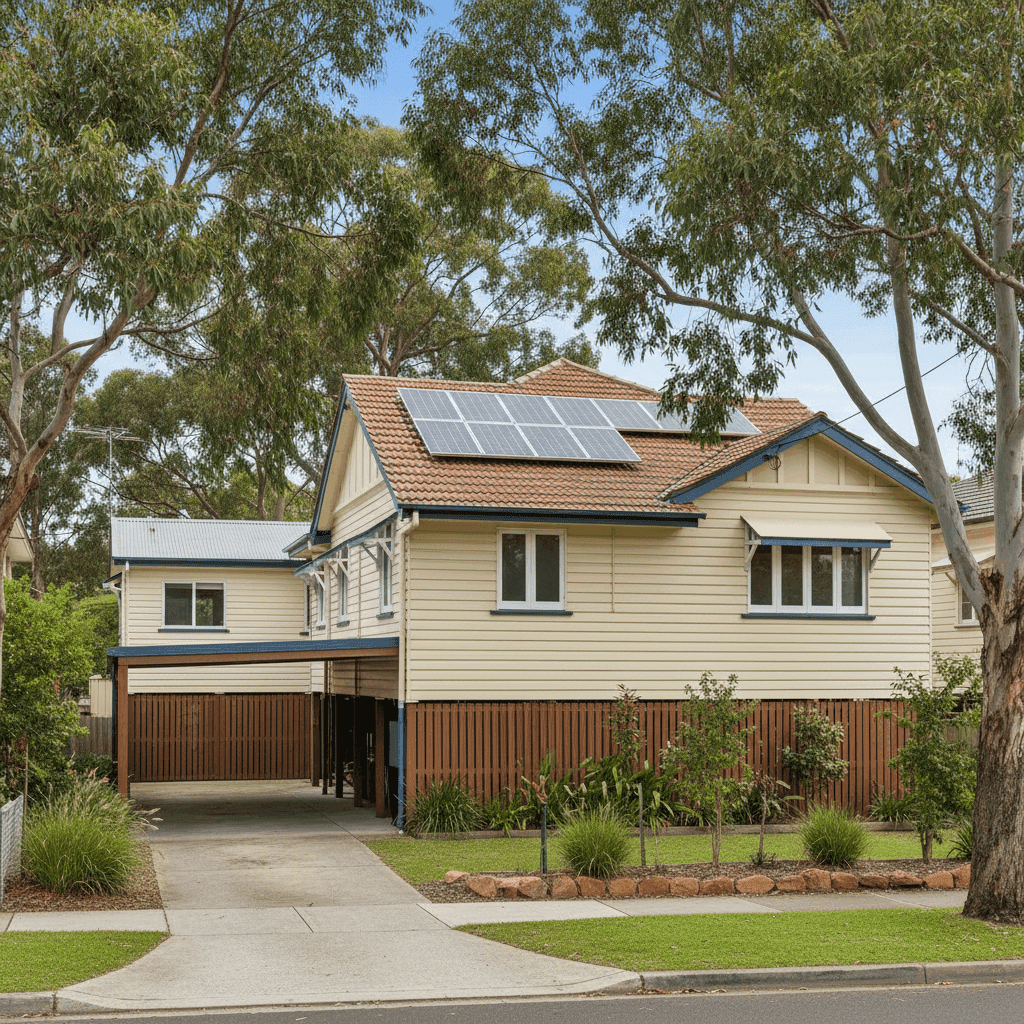
Seven Hills is a well-established suburb in Sydney's western corridor, sitting within the City of Parramatta local government area. Known for its mix of post-war homes, convenient train access, and family-friendly streets, it's the kind of suburb where a solid brick or weatherboard home has been part of the streetscape for decades. This article breaks down a real home insurance quote for a three-bedroom free standing home in Seven Hills (NSW 2147), comparing it against local, state, and national benchmarks — so you can judge whether your own premium stacks up.
---
Is This Quote Fair?
The annual premium for this property came in at $1,157 per year (or roughly $107 per month), and it has been rated CHEAP — below the suburb average. That's a meaningful finding.
With a building sum insured of $843,000, this is a substantial level of cover for a 130 sqm home — reflecting the true cost of rebuilding in Sydney's west, where labour and materials remain elevated. Despite that high insured value, the premium is tracking well below what most comparable properties in the area are paying.
To put it plainly: if you're a Seven Hills homeowner paying significantly more than $1,157 for building-only cover on a similar property, it's worth questioning whether you're getting fair value from your current insurer.
---
How Seven Hills Compares
Understanding where your premium sits relative to the broader market is one of the most useful things you can do as a homeowner. Here's how this quote measures up across three levels of comparison:
| Benchmark | Average Premium | Median Premium |
|---|---|---|
| Seven Hills (2147) | $1,520/yr | $1,402/yr |
| Parramatta LGA | $2,048/yr | — |
| NSW | $3,801/yr | $3,410/yr |
| National | $2,965/yr | $2,716/yr |
This quote of $1,157/yr sits below the suburb's 25th percentile of $1,340/yr — meaning it's cheaper than at least three-quarters of quotes collected in the area. That's an impressive result.
Zooming out further, the contrast with state and national figures is striking. The NSW average of $3,801/yr is more than three times this premium, and the national average of $2,965/yr tells a similar story. Much of that difference is driven by high-risk regions — cyclone-prone areas in Queensland and the Northern Territory, flood-affected river towns, and bushfire corridors — which pull state and national averages upward considerably.
Seven Hills itself benefits from its urban location: it's not in a declared cyclone risk zone, and while parts of western Sydney can be affected by storm and localised flooding, the suburb doesn't carry the extreme risk loading you'd find in more exposed areas. You can explore suburb-level data for Seven Hills to see how premiums trend over time.
It's worth noting the sample size for the suburb is currently five quotes — a modest dataset. As more data comes in, the averages will sharpen, but the directional picture is clear: this is a competitively priced quote.
---
Property Features That Affect Your Premium
Several characteristics of this property directly influence the cost of cover. Understanding them helps you anticipate how insurers assess risk.
Weatherboard timber construction is one of the most significant factors. Weatherboard homes — common in Sydney's older suburbs — are generally considered higher risk than brick veneer or double brick, primarily due to fire susceptibility and the cost of like-for-like replacement. Some insurers apply a loading for timber-clad homes, which makes this below-average premium even more noteworthy.
Stump foundations (the home is elevated by less than one metre) add a layer of complexity. Homes on stumps can be more vulnerable to subfloor moisture, termite ingress, and movement over time. Insurers factor in the additional rebuild complexity that comes with elevated timber-framed structures.
A tiled roof is generally viewed favourably — terracotta or concrete tiles are durable and perform well in storms compared to older corrugated iron. This likely works in the homeowner's favour at premium time.
Solar panels are an increasingly common feature, and most insurers now include them under building cover — but it's worth confirming this explicitly in your Product Disclosure Statement (PDS). Panels add to the replacement cost of the building, which may subtly influence the sum insured calculation.
Ducted climate control is another feature that contributes to the overall rebuild value. Ducted systems are expensive to replace and are typically covered under building insurance, so having one installed supports the higher sum insured figure of $843,000.
The granny flat is a particularly important consideration. A secondary dwelling on the same property adds significant rebuild cost and insurability complexity. Homeowners with a granny flat should ensure their policy explicitly covers the secondary structure — not all standard building policies do so automatically.
Timber and laminate flooring throughout the home is generally straightforward to insure but can be costly to replace after water damage events, which are among the most common claims in suburban Sydney.
---
Tips for Homeowners in Seven Hills
1. Confirm your granny flat is covered This is the single most important action item for this property. Contact your insurer and ask directly: does your policy cover the secondary dwelling? Some policies treat it as a separate structure requiring separate cover, while others include it under the main building policy up to a certain value. Don't assume — get it in writing.
2. Review your sum insured annually Building costs in Sydney have risen sharply over recent years. The $843,000 sum insured on this property reflects a careful assessment of rebuild costs, but it's worth revisiting this figure each year — particularly if you've done renovations, added a structure, or if local construction costs have shifted. Underinsurance is one of the most common and costly mistakes homeowners make.
3. Understand your excess before you claim This policy carries a $5,000 building excess, which is on the higher end. A higher excess typically reduces your premium, but it means you'll need to cover the first $5,000 of any claim yourself. Make sure you have that amount accessible, and consider whether a lower excess (at a slightly higher premium) might suit your financial situation better.
4. Don't skip the PDS for solar panels and ducted systems Both solar panels and ducted air conditioning are high-value items. Read your Product Disclosure Statement carefully to confirm how they're covered — particularly whether storm damage to panels or a compressor failure is included, and whether there are any sub-limits that apply.
---
Ready to Compare?
Whether you're renewing your policy or shopping for the first time, the best way to know if you're getting a fair deal is to compare. CoverClub makes it easy to see real quotes side by side, so you're not left guessing. Get a home insurance quote today and find out where your premium sits relative to your neighbours.