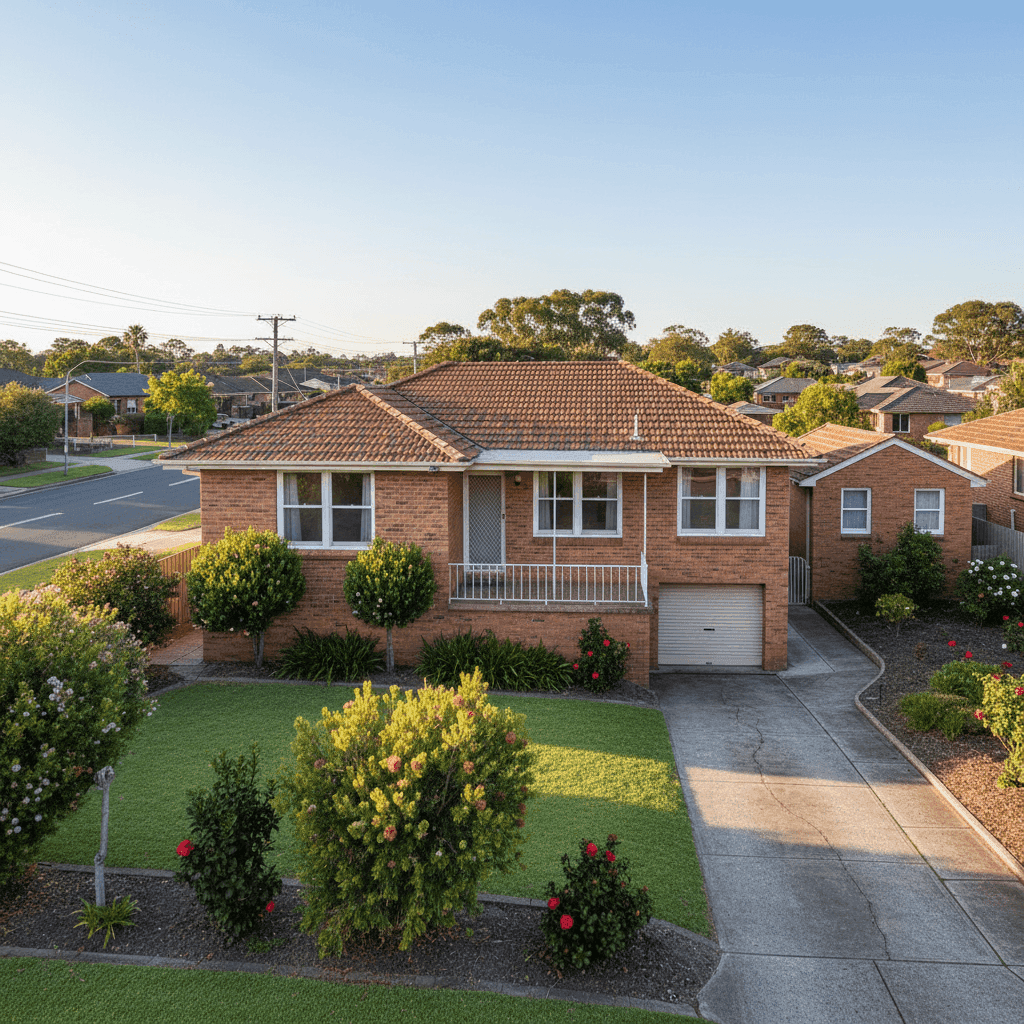
Seven Hills, a well-established suburb in Sydney's western corridor, is home to thousands of brick-veneer properties built during Australia's post-war housing boom. This analysis looks at a building-only insurance quote for a three-bedroom, one-bathroom free-standing home in the area — and whether the premium on offer represents fair value.
---
Is This Quote Fair?
The quote in question comes in at $2,074 per year (or $199/month) for building-only cover, with a $1,000 building excess and a sum insured of $499,000.
Our price rating for this quote is EXPENSIVE — Above Average.
To put that in perspective, the suburb average for Seven Hills (NSW 2147) sits at $1,635/yr, with a median of $1,720/yr. This quote lands above the 75th percentile for the suburb, meaning it's more expensive than at least three-quarters of comparable quotes we've seen in the area. That's a meaningful gap — roughly $354 above the suburb average, or about 22% more than what many Seven Hills homeowners are paying.
That said, "expensive" doesn't automatically mean "wrong." Premiums are influenced by a wide range of property-specific factors, and some of the features on this home — including its age, foundation type, and the presence of a granny flat — can legitimately push costs higher. We'll explore those in detail below.
---
How Seven Hills Compares
It's worth zooming out to understand where Seven Hills sits in the broader insurance landscape.
| Benchmark | Premium |
|---|---|
| This quote | $2,074/yr |
| Seven Hills suburb average | $1,635/yr |
| Seven Hills suburb median | $1,720/yr |
| Seven Hills 75th percentile | $1,974/yr |
| LGA (Parramatta) average | $2,031/yr |
| NSW average | $9,528/yr |
| NSW median | $3,770/yr |
| National average | $5,347/yr |
| National median | $2,764/yr |
(Based on a sample of 15 quotes for similar properties in the Seven Hills postcode.)
At first glance, the NSW and national averages look alarming — but those figures are heavily skewed by high-risk regions, including flood-prone inland areas and cyclone-exposed coastal zones in Queensland and the Northern Territory. The median figures are far more representative for a suburban Sydney property: the NSW median is $3,770/yr and the national median is $2,764/yr.
Compared to those medians, this quote is actually quite reasonable for a Sydney property. It's also broadly in line with the Parramatta LGA average of $2,031/yr, which covers the local government area this suburb falls within.
For a deeper dive into how premiums stack up across the state, visit our NSW home insurance statistics page, or explore national home insurance benchmarks for a wider view.
---
Property Features That Affect Your Premium
Several characteristics of this home are worth examining when it comes to understanding why the premium sits where it does.
Age and Construction (Built 1971)
Homes built in the early 1970s are now over 50 years old. While brick-veneer construction is generally regarded as durable, ageing properties can carry higher rebuild risks due to outdated electrical wiring, plumbing systems, and materials that no longer meet modern building codes. Insurers factor this in.
Brick Veneer Walls and Tiled Roof
Brick veneer with a tiled roof is one of the most common construction combinations in suburban Sydney — and generally attracts moderate premiums. It's considered more fire-resistant than timber weatherboard but can be costlier to repair than, say, a colorbond roof. On balance, this construction type shouldn't be pushing the premium significantly higher.
Stump Foundation
A home on stumps (also called timber or concrete piers) introduces some additional risk compared to a slab-on-ground foundation. Stumps can deteriorate over time, and properties on raised foundations may be more susceptible to certain types of movement or water ingress. This can be a contributing factor to a slightly elevated premium.
Timber and Laminate Flooring
Timber flooring, particularly in older homes, can be expensive to repair or replace following water damage or fire. Insurers assess flooring as part of the overall rebuild cost, and quality timber floors can add to the sum insured.
Granny Flat
The presence of a granny flat is a notable factor. Additional structures on the property increase the total rebuild cost and therefore the appropriate sum insured. At $499,000, the building sum insured needs to account for both the main dwelling and the secondary structure — which is likely contributing to both the higher insured value and the elevated premium.
Ducted Climate Control
Ducted air conditioning systems are relatively expensive to repair or replace. Their inclusion in the building's fixtures and fittings adds to the overall replacement cost, which flows through to the premium calculation.
Fittings Quality: Standard
Standard fittings are a neutral factor — neither inflating nor deflating the premium significantly. This suggests the premium isn't being driven by luxury finishes.
---
Tips for Homeowners in Seven Hills
If you're looking to get better value on your home insurance, here are some practical steps worth considering:
- Compare multiple quotes before renewing. The gap between the cheapest and most expensive quotes in Seven Hills can be substantial. Using a comparison tool like CoverClub takes the legwork out of shopping around and lets you see where your current premium sits relative to the market.
- Review your sum insured carefully. With a granny flat on the property, it's important that your sum insured reflects the true cost of rebuilding both structures. Underinsurance is a common issue — but overinsurance can mean you're paying more than necessary. A quantity surveyor or online rebuild cost calculator can help you land on the right figure.
- Consider your excess level. A $1,000 excess is fairly standard, but opting for a higher voluntary excess can reduce your annual premium meaningfully. If you have savings to cover a larger out-of-pocket cost in a claim, this can be a smart trade-off.
- Ask about loyalty discounts — or leave. Many insurers quietly offer new-customer discounts that existing policyholders miss out on. If your insurer won't match a better quote, it may be time to switch. Loyalty doesn't always pay in the insurance market.
---
Ready to Find a Better Deal?
If this quote doesn't feel right for your situation, you don't have to accept it. CoverClub makes it easy to compare building and contents insurance quotes for homes across Seven Hills and the wider Parramatta region. Head to coverclub.com.au to enter your property details and see how your current premium stacks up — it only takes a couple of minutes and could save you hundreds.
You can also explore detailed premium data for your postcode on our Seven Hills suburb stats page.