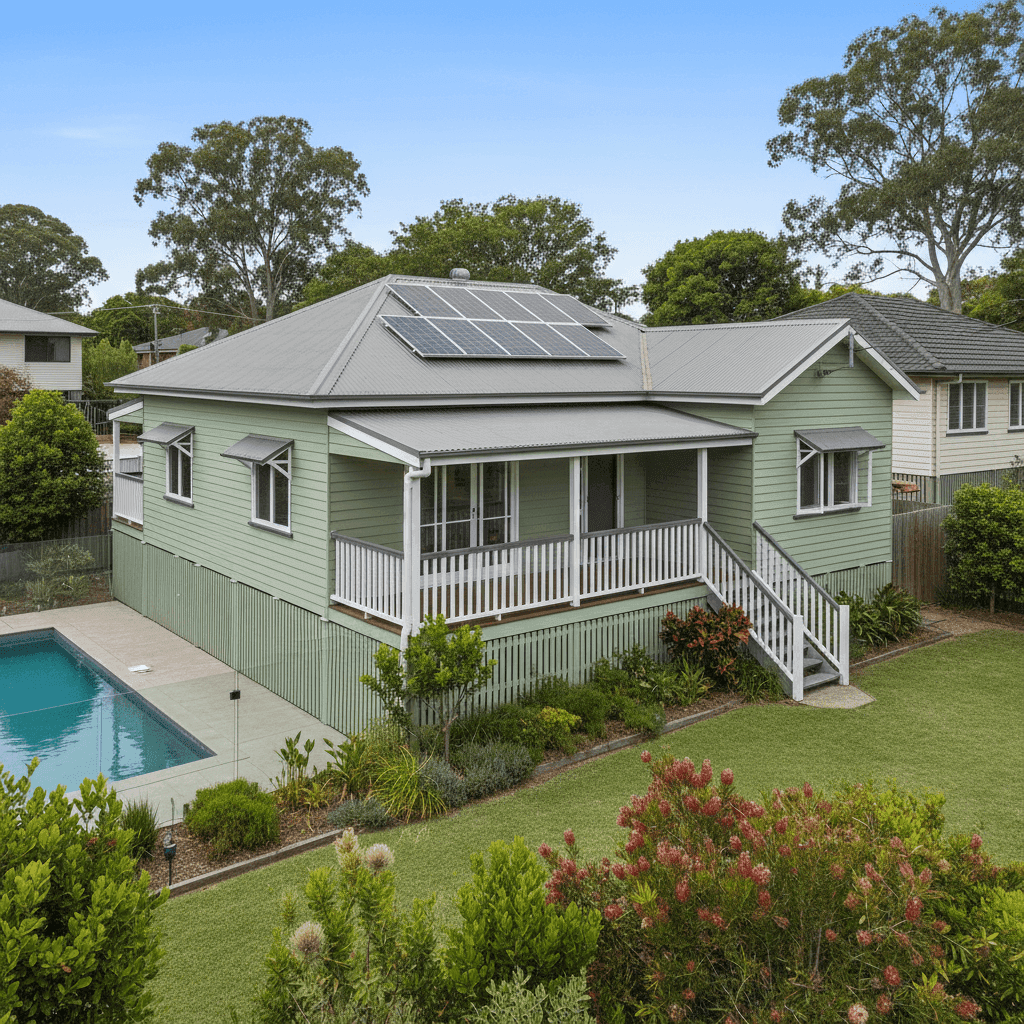
If you own a free standing home in Seven Hills, QLD 4170, you've probably wondered whether your home insurance premium is reasonable — or whether you're leaving money on the table. This article breaks down a real home and contents insurance quote for a four-bedroom, three-bathroom weatherboard property in the suburb, and puts it in context against local, state, and national benchmarks.
---
Is This Quote Fair?
The quote in question comes in at $2,351 per year (or $230/month) for combined home and contents cover, with a building sum insured of $877,000 and contents valued at $124,000. The building excess is set at $3,000, and the contents excess at $1,000.
Our price rating for this quote is FAIR — Around Average, which is a solid outcome for a property of this size and age. It's not the cheapest quote you'll find in the suburb, but it's comfortably below both the state and national averages, which means this homeowner is in a reasonably good position compared to many Australians paying for similar cover.
That said, "fair" doesn't mean you can't do better. With the right information, there's often room to negotiate or find a more competitive policy without sacrificing coverage quality.
---
How Seven Hills Compares
To properly assess this quote, it helps to zoom out and look at the broader pricing landscape. Here's how the $2,351 annual premium stacks up:
| Benchmark | Premium |
|---|---|
| This Quote | $2,351/yr |
| Seven Hills Suburb Average | $2,555/yr |
| Seven Hills Suburb Median | $2,462/yr |
| Seven Hills 25th Percentile | $1,446/yr |
| Seven Hills 75th Percentile | $3,574/yr |
| Brisbane LGA Average | $4,485/yr |
| QLD State Average | $4,547/yr |
| QLD State Median | $3,931/yr |
| National Average | $2,965/yr |
| National Median | $2,716/yr |
A few things stand out here. First, this quote sits below the suburb average ($2,555) and below the suburb median ($2,462) — meaning more than half of comparable quotes in Seven Hills are actually higher. That's a positive sign.
Second, and perhaps more strikingly, this premium is significantly below the Queensland state average of $4,547/yr — nearly half the price. This reflects the fact that Seven Hills (postcode 4170, part of the inner-east Brisbane area) sits in a relatively favourable risk zone compared to many Queensland postcodes that are exposed to cyclone, flood, or storm surge risk. You can explore the full Seven Hills suburb insurance stats or the broader Queensland pricing data to dig deeper into these comparisons.
It also beats the national average of $2,965/yr, which is a meaningful benchmark given that Australian home insurance premiums have been climbing steadily in recent years due to increased weather events and rising rebuild costs.
The 25th percentile of $1,446 does indicate that some homeowners in the suburb are finding cheaper quotes — though these may reflect lower sums insured, higher excesses, or more limited cover. It's worth comparing apples with apples.
---
Property Features That Affect Your Premium
Several characteristics of this property directly influence the cost of insuring it. Understanding these factors can help you make sense of your quote and identify potential levers for adjusting your premium.
Age of the property (built 1950): Older homes — particularly those built before modern building codes — can attract higher premiums due to the increased likelihood of outdated wiring, plumbing, and structural elements. A 1950s build in Queensland may have asbestos-containing materials in some areas, which can significantly increase repair and rebuild costs.
Weatherboard timber walls: Timber-clad homes are generally considered a higher fire risk than brick or rendered masonry. They can also be more susceptible to termite damage and moisture ingress over time. Insurers typically factor this in when pricing premiums, so it's worth ensuring your sum insured accurately reflects the true cost of rebuilding with equivalent materials.
Steel/Colorbond roof: On the positive side, a Colorbond steel roof is durable, low-maintenance, and performs well in Australian weather conditions. It's generally viewed favourably by insurers compared to older tile or corrugated iron roofing.
Slab foundation: A concrete slab is a stable and widely used foundation type in Queensland. It doesn't carry the same underfloor risk profile as a high-set or timber-stumped home, which can be a premium advantage.
Swimming pool: Pools add liability risk and can increase your contents or liability component. They also require specific inclusions in your policy to cover things like pool equipment and accidental damage.
Solar panels: Solar systems represent a meaningful asset — often worth $10,000–$20,000 or more. It's important to confirm whether your policy covers solar panels as part of the building, and whether damage from storms or hail is explicitly included.
Building size (235 sqm): At 235 square metres, this is a substantial home. The $877,000 sum insured translates to roughly $3,732 per square metre — a reasonable rebuild rate for a four-bedroom home with quality fittings in Brisbane's inner east.
---
Tips for Homeowners in Seven Hills
Whether you're reviewing an existing policy or shopping for a new one, here are four practical steps to make sure you're getting the best value.
1. Review your sum insured annually. Construction costs in Australia have risen sharply over the past few years. A sum insured that was accurate two years ago may now leave you underinsured. Use a building cost calculator or speak with a quantity surveyor to get an up-to-date rebuild estimate.
2. Check your pool and solar are properly covered. These are two features that are sometimes excluded or under-covered in standard policies. Ask your insurer specifically whether pool equipment, solar panels, and inverters are included — and whether storm or hail damage applies.
3. Consider your excess trade-off. This quote carries a $3,000 building excess, which is on the higher end. A higher excess typically reduces your premium, but make sure you're comfortable covering that amount out of pocket in the event of a claim. If cash flow is a concern, a lower excess (with a slightly higher premium) may be worth it.
4. Compare quotes at renewal time. The insurance market is competitive, and loyalty doesn't always pay. Even if your current insurer has treated you well, running a comparison at renewal can reveal meaningful savings — or at least confirm you're already on a good deal.
---
Find a Better Deal with CoverClub
Whether this quote is your current policy or one you're considering, it's always worth seeing what else is out there. CoverClub makes it easy to compare home and contents insurance quotes across multiple providers in minutes. Get a quote today and see how much you could save — or simply gain the confidence of knowing you're already on a fair deal.