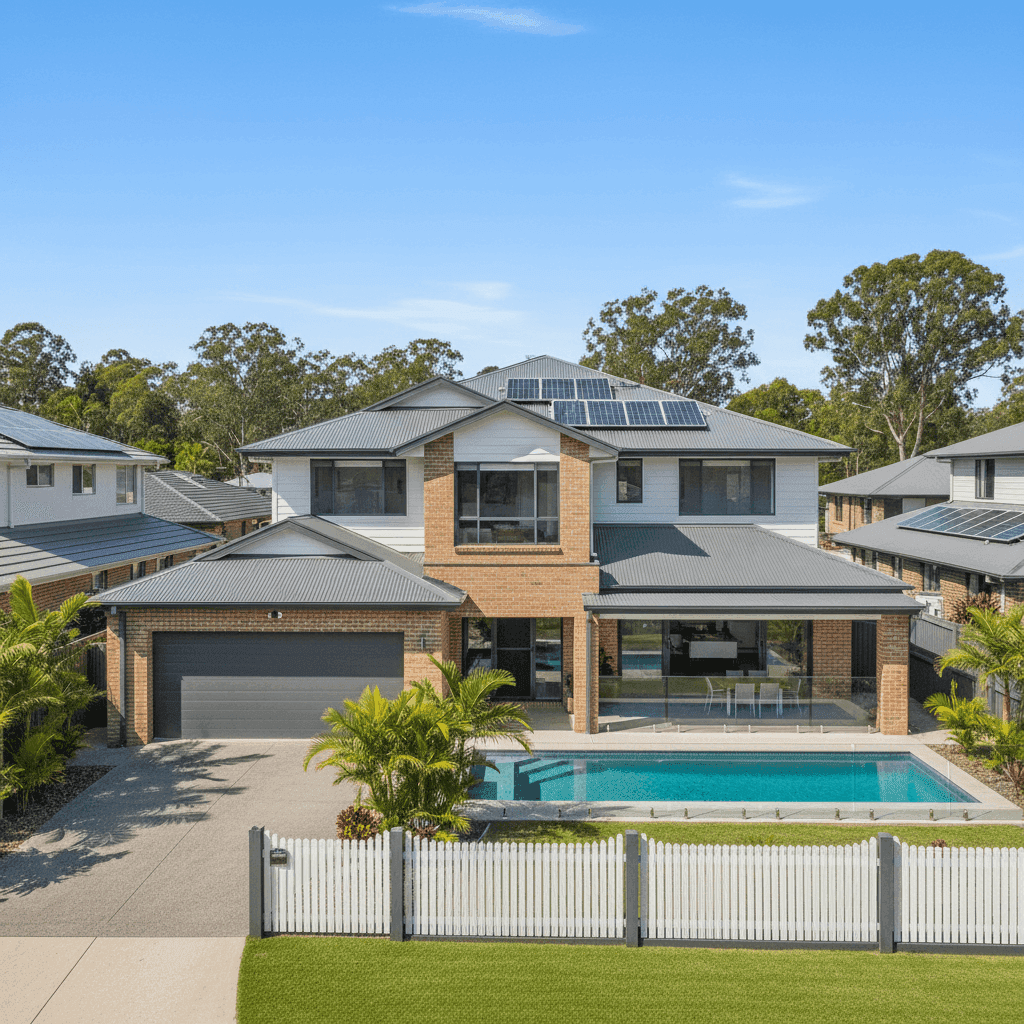
If you own a free standing home in Seventeen Mile Rocks, QLD 4073, you already know the suburb offers a relaxed, family-friendly lifestyle on Brisbane's western fringe — leafy streets, good schools, and easy access to the city. But when it comes to insuring a large, well-appointed property here, understanding whether you're paying a fair price can be tricky without the right data to hand. This article breaks down a real home and contents insurance quote for a six-bedroom, three-bathroom home in the suburb, and puts it into context against local, state, and national benchmarks.
---
Is This Quote Fair?
The quote in question comes in at $2,779 per year (or $259/month) for combined home and contents cover, with a building sum insured of $787,000 and contents valued at $231,000. Both the building and contents excess are set at $2,000.
Our pricing engine rates this quote as Fair — Around Average, and the data backs that up. At $2,779, this premium sits comfortably below the suburb average of $3,317/yr and also beneath the suburb median of $2,920/yr. In practical terms, this homeowner is paying less than what most of their neighbours are quoted, which is a solid outcome for a property of this size and specification.
That said, "fair" doesn't necessarily mean "the best available." The suburb's 25th percentile sits at $2,173/yr, meaning roughly a quarter of comparable quotes in Seventeen Mile Rocks come in even lower. There is room to explore whether a more competitive premium is achievable — particularly by adjusting excess levels, reviewing the contents sum insured, or comparing across multiple insurers.
---
How Seventeen Mile Rocks Compares
To appreciate how well this quote performs, it helps to zoom out and look at the broader picture. You can explore the full data on the Seventeen Mile Rocks insurance stats page.
| Benchmark | Premium |
|---|---|
| This quote | $2,779/yr |
| Suburb average (4073) | $3,317/yr |
| Suburb median (4073) | $2,920/yr |
| Brisbane LGA average | $16,277/yr |
| QLD state average | $9,129/yr |
| QLD state median | $3,903/yr |
| National average | $5,347/yr |
| National median | $2,764/yr |
The contrast between averages and medians here is telling. Queensland's state average of $9,129/yr is dramatically higher than its median of $3,903/yr — a sign that a relatively small number of very high-risk properties (think flood-prone or cyclone-exposed areas in regional QLD) are pulling the average upward significantly. The same dynamic plays out at the Brisbane LGA level, where the average of $16,277/yr reflects the enormous variability in risk and property values across the city.
For homeowners in Seventeen Mile Rocks, this is actually good news. The suburb's premiums are well below both the Queensland state average and the national average, reflecting its relatively benign risk profile — no cyclone designation, generally stable soils, and a suburban setting without the extreme flood exposure that affects parts of Brisbane closer to the river.
The sample of 25 quotes used for the suburb comparison is a reasonable dataset, though it's worth noting that individual premiums can vary considerably based on the specific insurer, policy inclusions, and property characteristics.
---
Property Features That Affect Your Premium
This particular property has a number of characteristics that insurers weigh carefully when calculating risk and replacement cost.
Size and bedrooms: At 315 sqm with six bedrooms and three bathrooms, this is a large home by any measure. Larger floor areas translate directly to higher building replacement costs, which is reflected in the $787,000 sum insured. Getting this figure right is critical — underinsurance is one of the most common and costly mistakes homeowners make.
Brick veneer construction with Colorbond roof: Brick veneer walls are generally viewed favourably by insurers — they're durable, fire-resistant, and widely used in Australian suburban construction. A steel/Colorbond roof is similarly well-regarded: it's lightweight, low-maintenance, and performs well in storms. Together, these materials typically attract more competitive premiums than, say, weatherboard or tile.
Slab foundation: A concrete slab foundation is standard for homes of this era and generally presents low risk from a structural standpoint, particularly in a non-cyclone area.
Timber and laminate flooring: While attractive, timber and laminate floors can be more expensive to repair or replace after water damage than ceramic tiles. This is worth keeping in mind when setting your contents and building sums insured.
Above-average fittings: The property's above-average fittings quality — think quality appliances, premium fixtures, and higher-end finishes — is a factor that pushes both building and contents values upward. Insurers will want these accurately reflected in your sum insured to avoid shortfalls at claim time.
Pool, solar panels, and ducted climate control: Each of these adds value to the property and introduces specific coverage considerations. Swimming pools can be a source of liability claims and may require specific inclusions in your policy. Solar panel systems — particularly inverters and panels themselves — should be explicitly covered, as not all standard policies include them automatically. Ducted air conditioning systems are expensive to repair or replace and should be factored into your building sum insured.
No cyclone risk: Being outside a designated cyclone risk area is a meaningful premium advantage in Queensland, where cyclone cover can add substantially to costs for properties in the north of the state.
---
Tips for Homeowners in Seventeen Mile Rocks
1. Review your sum insured regularly With a 315 sqm home featuring above-average fittings, construction costs matter enormously. Building costs in Queensland have risen sharply in recent years, and a sum insured set even two or three years ago may no longer reflect true replacement cost. Use a building cost calculator or speak to a quantity surveyor to sanity-check your $787,000 figure annually.
2. Check your solar and pool coverage explicitly Don't assume your solar panel system and pool are automatically covered under a standard policy. Ask your insurer specifically what is and isn't included — and get it in writing. Some policies cover solar panels as part of the building, others require an endorsement, and some exclude them entirely.
3. Consider your excess strategically Both the building and contents excess on this quote are set at $2,000. A higher excess generally lowers your premium, but it also means more out-of-pocket costs at claim time. With a large, well-appointed home, consider whether you have the financial buffer to absorb a higher excess in exchange for a lower annual premium — or whether the current level gives you the right balance of protection and cost.
4. Compare at renewal, not just at inception Many homeowners set and forget their home insurance. Given that this quote is rated as fair — but not at the cheapest end of the market — it's worth comparing quotes at each renewal. Insurers regularly adjust their pricing models, and loyalty doesn't always pay. A quick comparison could potentially save hundreds of dollars per year.
---
Ready to Compare?
Whether you're reviewing your current policy or shopping for cover for the first time, CoverClub makes it easy to see how your premium stacks up. Get a home insurance quote at CoverClub and compare your options in minutes — so you can be confident you're getting the right cover at a price that makes sense for your home in Seventeen Mile Rocks.