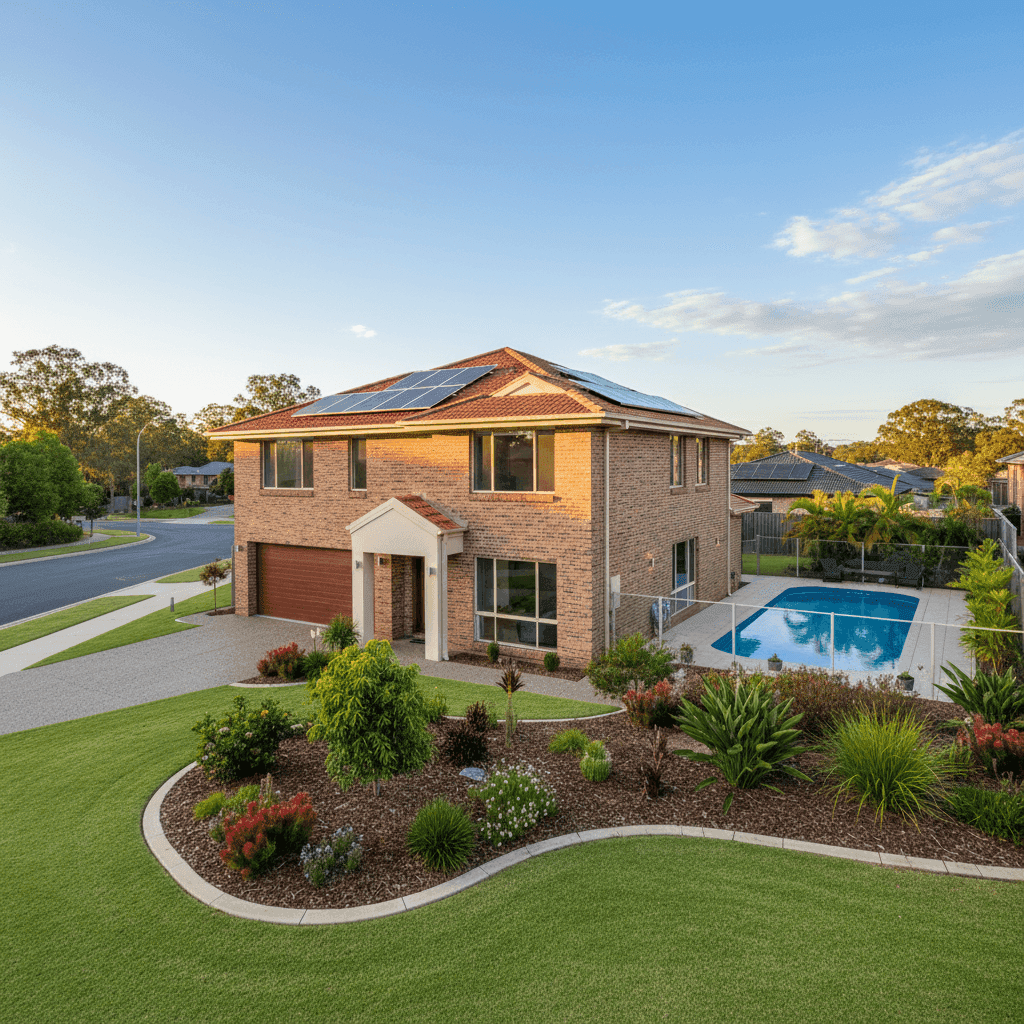
Shailer Park, nestled in Logan City in south-east Queensland, is a well-established suburban pocket popular with families thanks to its leafy streets, good schools, and proximity to both Brisbane and the Gold Coast. If you own a free standing home here, you'll know that protecting it with the right building insurance is essential — but how do you know whether the premium you're being quoted is actually reasonable? This article breaks down a recent building-only insurance quote for a four-bedroom, three-bathroom brick veneer home in Shailer Park (postcode 4128), and puts it in context against local, state, and national benchmarks.
---
Is This Quote Fair?
The quote in question comes in at $3,699 per year (or $362/month) for building-only cover, with a sum insured of $1,500,000 and a building excess of $2,000. Our price rating for this quote is Expensive — Above Average.
To understand what that means in practice, it helps to look at the numbers around it. The suburb average premium for Shailer Park sits at $2,979/year, while the median — a more reliable indicator since it's less skewed by outliers — is just $2,349/year. This quote lands well above both figures, and even sits above the suburb's 75th percentile of $3,403/year. In other words, based on a sample of 57 quotes from this postcode, this premium is higher than at least three-quarters of comparable properties in the area.
That said, "expensive" doesn't automatically mean "wrong." A number of property-specific factors can legitimately push a premium above the local average, and it's worth understanding what those might be before shopping around or negotiating.
---
How Shailer Park Compares
One of the most useful things you can do when evaluating any insurance quote is to zoom out and look at the broader picture. Here's how this quote stacks up across different geographic levels:
| Benchmark | Average Premium | Median Premium |
|---|---|---|
| Shailer Park (4128) | $2,979/yr | $2,349/yr |
| LGA (Logan City) | $3,411/yr | — |
| Queensland | $4,547/yr | $3,931/yr |
| National | $2,965/yr | $2,716/yr |
A few things stand out here. First, Queensland premiums are significantly higher than the national average — the state average of $4,547/year is roughly 53% above the national average of $2,965/year. This reflects the elevated risk profile of Queensland properties, which are more exposed to severe weather events including storms, flooding, and hail than properties in most other states.
Interestingly, Shailer Park's average premium of $2,979/year is actually below both the Queensland state average and the Logan City LGA average of $3,411/year — suggesting that, as a suburb, Shailer Park is considered relatively lower risk within the broader Queensland context. This makes the above-average quote even more worth scrutinising.
You can explore the full data for this postcode at our Shailer Park insurance statistics page, compare it against Queensland-wide data, or view national home insurance benchmarks.
---
Property Features That Affect Your Premium
Every home is different, and insurers price risk based on a detailed combination of property characteristics. Here's how the features of this particular home are likely influencing the premium:
Brick Veneer Walls & Tiled Roof Brick veneer construction with a tiled roof is one of the more common and generally well-regarded combinations in Australian suburban homes. Both materials are considered durable and fire-resistant, which typically works in the homeowner's favour when it comes to pricing. However, tiles can be more expensive to repair or replace than Colorbond, which may add some cost.
Slab Foundation A concrete slab foundation is standard for homes of this era and is generally viewed neutrally by insurers. It offers good structural stability and doesn't carry the same subsidence or termite-entry risks associated with some other foundation types.
Timber and Laminate Flooring While attractive and popular, timber and laminate flooring can be more costly to repair or replace after a water or impact event compared to tiles. This is a factor that can nudge premiums upward slightly, particularly for a home of this size.
268 sqm Building Size At 268 square metres, this is a sizeable home. A larger footprint means more material and labour costs to rebuild in the event of a total loss — which directly justifies a higher sum insured and, consequently, a higher premium.
Sum Insured: $1,500,000 The $1,500,000 sum insured is notably high. While it's always important to ensure your home is adequately covered, it's worth verifying that this figure accurately reflects the current rebuild cost (not the market value) of your property. Overinsuring can lead to unnecessarily high premiums, while underinsuring carries its own serious risks.
Swimming Pool A pool adds both value and liability to a property. From an insurance perspective, pools can increase the cost of a claim (e.g., damage from a storm or structural issue) and may contribute to a higher premium.
Solar Panels Solar panels are an increasingly common feature on Australian rooftops, but they do add complexity to insurance. Damage to panels — whether from hail, storm, or falling debris — can be expensive to repair, and not all policies cover them as standard under building cover. It's worth confirming your policy explicitly covers the solar system.
Ducted Climate Control A ducted air conditioning system is a significant fixed asset within the home. As part of the building's structure, it would typically be covered under building insurance, but its replacement cost adds to the overall rebuild value.
---
Tips for Homeowners in Shailer Park
1. Review your sum insured carefully A $1,500,000 sum insured is on the higher end for a suburb like Shailer Park. Use a building cost calculator or consult a quantity surveyor to confirm the actual rebuild cost of your home. Adjusting your sum insured to an accurate figure — neither too high nor too low — could meaningfully reduce your premium.
2. Compare multiple quotes before renewing The data shows a wide spread of premiums in this postcode — from $1,373/year at the 25th percentile to $3,403/year at the 75th percentile. That's a difference of over $2,000/year for broadly similar properties. Shopping around at renewal time is one of the most effective ways to avoid overpaying.
3. Ask about discounts for security and safety features Many insurers offer discounts for homes with security alarms, deadbolts, or smoke detectors. If your home has these features, make sure they're declared when getting a quote — they can make a real difference.
4. Check what's included for solar panels and the pool Don't assume these features are automatically and fully covered. Ask your insurer specifically how solar panels and the pool are treated under the policy — including any sub-limits or exclusions — so there are no surprises at claim time.
---
Compare Your Options with CoverClub
Whether you're reviewing an existing policy or shopping for cover on a new property, it pays to have the full picture. CoverClub makes it easy to compare building insurance quotes from multiple providers, so you can see exactly how your premium stacks up and find the best value for your situation. Get a quote today and take the guesswork out of home insurance.