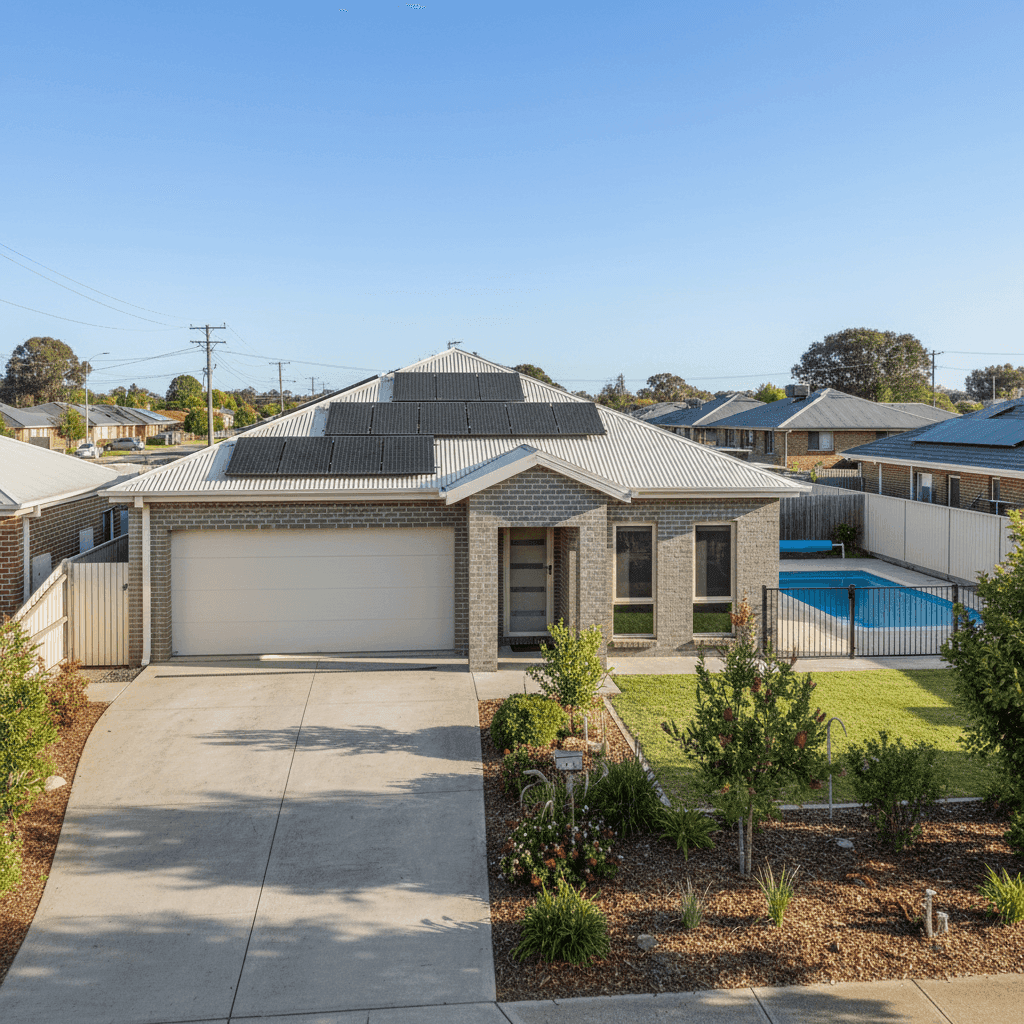
If you own a free standing home in Shepparton, VIC 3630, you've probably wondered whether you're paying a fair price for home insurance — or whether there's a better deal out there. Shepparton sits in the heart of the Goulburn Valley and, like many regional Victorian towns, comes with its own unique set of risk factors and property characteristics that insurers weigh up carefully. In this article, we analyse a real home and contents insurance quote for a 3-bedroom, 2-bathroom brick veneer home in the area, and put the numbers into context so you can make a more informed decision.
---
Is This Quote Fair?
The quote in question comes in at $3,355 per year (or around $322 per month) for a combined home and contents policy. The building is insured for $550,000 and contents are covered for $98,000, with a $2,000 excess applying to both building and contents claims.
Our price rating for this quote is FAIR — Around Average, which is a reasonable outcome for a property of this type and size. It's not the cheapest quote you'll find in Shepparton, but it's comfortably below what many homeowners in the suburb are paying. Given the property's features — including a swimming pool, solar panels, and ducted climate control — there are several factors that could push a premium higher, making this result genuinely competitive.
That said, "fair" doesn't necessarily mean you can't do better. It's always worth comparing multiple insurers before committing.
---
How Shepparton Compares
To put this quote in proper perspective, here's how it stacks up against broader market data:
| Benchmark | Premium |
|---|---|
| This Quote | $3,355/yr |
| Shepparton Suburb Average | $4,695/yr |
| Shepparton Suburb Median | $4,136/yr |
| Greater Shepparton LGA Average | $3,296/yr |
| VIC State Average | $3,000/yr |
| VIC State Median | $2,718/yr |
| National Average | $5,347/yr |
| National Median | $2,764/yr |
(Based on 130 quotes collected for the Shepparton 3630 postcode. View the full [Shepparton suburb stats](https://coverclub.com.au/stats/VIC/3630/shepparton) or explore [VIC state-wide data](https://coverclub.com.au/stats/VIC).)
A few things stand out here. First, the suburb average of $4,695 is notably higher than both the state average and this particular quote — meaning this homeowner is paying around $1,340 less per year than the typical Shepparton policyholder. That's a meaningful saving.
Second, the 25th percentile for the suburb sits at $2,555, which shows that roughly a quarter of Shepparton homeowners are paying less — so there is room to potentially go lower, particularly if the property's risk profile is favourable. The 75th percentile reaches $5,783, illustrating just how wide the range can be depending on the insurer and property specifics.
Compared to national figures, the national average of $5,347 is considerably higher — largely driven by high-risk areas in Queensland, Western Australia, and the Northern Territory. Victoria's relatively moderate climate risk keeps premiums more manageable for most homeowners.
---
Property Features That Affect Your Premium
Insurance premiums aren't plucked from thin air — they reflect a detailed assessment of the property's construction, age, location, and features. Here's how the characteristics of this Shepparton home come into play:
Brick Veneer Walls & Colorbond Roof Brick veneer is one of the most common wall types in Australian suburban homes and is generally well-regarded by insurers for its durability and fire resistance. A steel Colorbond roof is similarly viewed favourably — it's lightweight, long-lasting, and performs well in extreme weather conditions. Together, these materials typically attract more competitive premiums compared to, say, weatherboard or fibrous cement construction.
Slab Foundation A concrete slab foundation is standard for homes built in the 2000s and is considered low-risk by most insurers. It eliminates concerns around subfloor pests or moisture issues that can affect older homes with raised timber stumps.
Timber & Laminate Flooring Flooring type can influence contents and building cover assessments. Timber and laminate floors add value to a home but can be susceptible to water damage — something worth keeping in mind when reviewing your policy's water damage provisions.
Swimming Pool A pool increases both the replacement value of the property and the insurer's liability exposure. It's one of the features most likely to nudge a premium upward, so it's notable that this quote remains competitive despite its inclusion.
Solar Panels Solar panels are an increasingly common addition to Australian homes and are generally covered under building insurance. However, they do add to the overall sum insured and can complicate roof-related claims. Confirming that your policy explicitly covers solar panels — including inverters — is essential.
Ducted Climate Control Ducted heating and cooling systems are a significant fixed asset and are typically included in building cover. Their presence contributes to a higher sum insured, which in turn affects the premium.
Building Size: 139 sqm At 139 square metres, this is a modest but practical family home. The building sum insured of $550,000 equates to roughly $3,957 per sqm, which is broadly in line with current construction costs in regional Victoria — though it's always wise to review your sum insured annually as building costs fluctuate.
---
Tips for Homeowners in Shepparton
1. Review Your Sum Insured Every Year Construction costs have risen significantly in recent years, and being underinsured is one of the most common — and costly — mistakes homeowners make. Use a building cost calculator or speak with a local builder to check whether your current sum insured still reflects what it would actually cost to rebuild your home from scratch.
2. Ask About Bundling Discounts Many insurers offer a discount when you combine home and contents cover under a single policy, which this quote already does. However, if you also hold your car insurance with a different provider, it may be worth checking whether consolidating all your policies with one insurer unlocks further savings.
3. Consider Your Excess Carefully This policy carries a $2,000 excess on both building and contents. Opting for a higher excess is one of the most straightforward ways to reduce your annual premium — but make sure the excess amount is something you could comfortably pay in the event of a claim.
4. Check Your Pool and Solar Panel Cover Given this property has both a pool and solar panels, it's worth reading the Product Disclosure Statement (PDS) carefully to confirm exactly what's covered. Some policies have specific sub-limits or exclusions for these features, particularly around storm damage to solar systems or pool equipment failure.
---
Compare Your Options with CoverClub
Whether you're renewing your existing policy or shopping around for the first time, comparing quotes is the single most effective way to make sure you're not overpaying. CoverClub makes it easy to see how your premium stacks up against hundreds of real quotes from homeowners in your area. Get a quote today and find out if you could be paying less for the same level of cover.