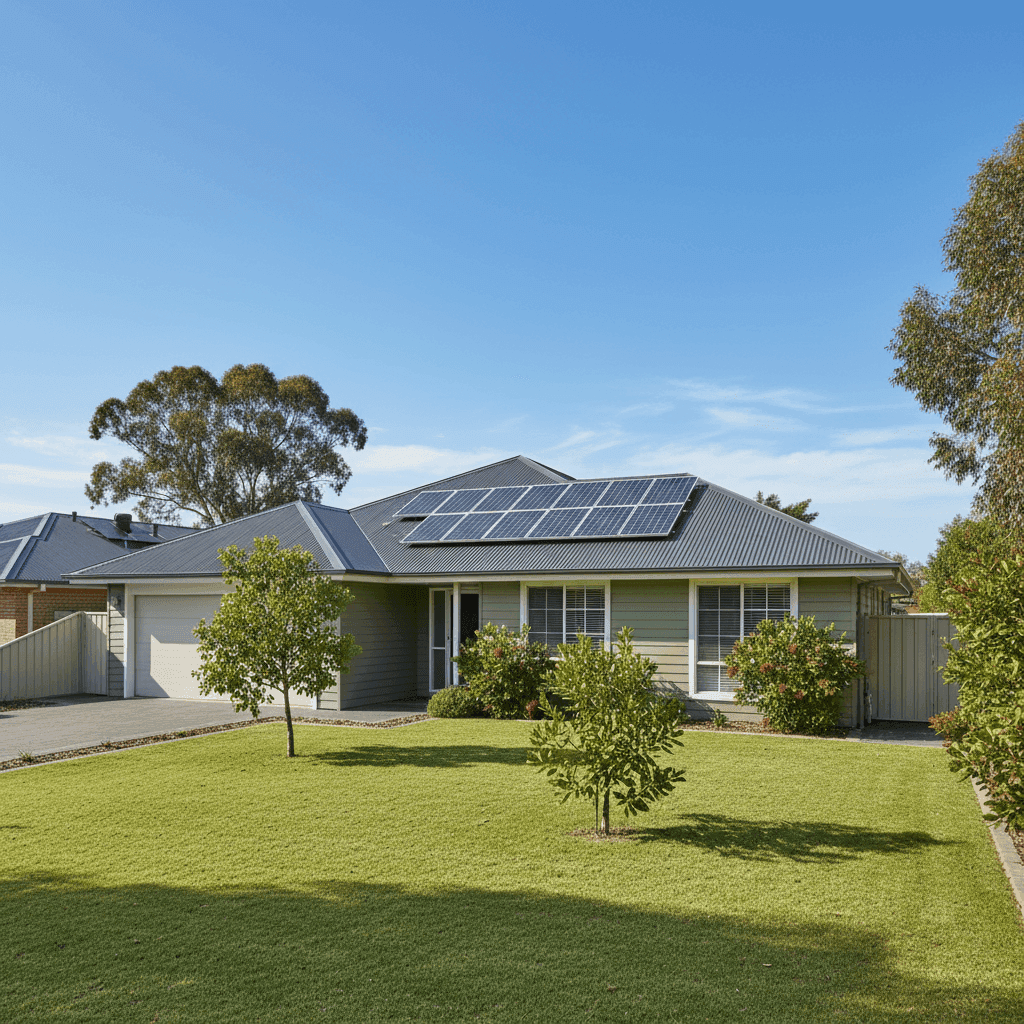
Shepparton is a thriving regional city in Victoria's Goulburn Valley, known for its agricultural heritage, multicultural community, and growing residential appeal. If you own a free standing home here, understanding what you should expect to pay for building insurance — and why — can make a real difference to your household budget. This article breaks down a recent building-only insurance quote for a 3-bedroom, 2-bathroom home in Shepparton (postcode 3630) and puts the numbers in context.
---
Is This Quote Fair?
The quote in question comes in at $6,886 per year (or $660/month), covering the building only with a $500 excess. Based on our analysis, this quote is rated Expensive — above average for the area.
To put that in perspective, the suburb average for Shepparton sits at $4,695/year, and the median is a notably lower $4,136/year. This quote lands well above the 75th percentile of $5,783/year, meaning it's pricier than at least three-quarters of comparable quotes collected in the area. That's a significant gap — roughly $2,191 more per year than the suburb average, and $2,750 more than the median.
That said, "expensive" doesn't automatically mean "wrong." The sum insured for this property is set at $908,000, which is on the higher end for a 139 sqm home and will naturally push the premium upward. Insurers calculate building cover based on the estimated cost to fully rebuild a property from scratch — including labour, materials, demolition, and compliance costs — so a high sum insured directly influences what you pay. It's worth reviewing whether that figure accurately reflects your rebuild cost, as both over-insuring and under-insuring carry their own risks.
---
How Shepparton Compares
When you zoom out beyond the suburb, the picture becomes even more interesting. Here's how this quote stacks up across different benchmarks:
| Benchmark | Average Premium | Median Premium |
|---|---|---|
| Shepparton (3630) | $4,695/yr | $4,136/yr |
| Greater Shepparton LGA | $3,296/yr | — |
| Victoria (VIC) | $3,000/yr | $2,718/yr |
| National | $5,347/yr | $2,764/yr |
You can explore the full data for Shepparton's suburb statistics, Victoria-wide home insurance trends, and national home insurance benchmarks on CoverClub.
A few things stand out here. Shepparton's suburb average of $4,695 is already higher than both the Victorian state average ($3,000) and the Greater Shepparton LGA average ($3,296), suggesting that certain properties within the postcode attract elevated premiums — likely driven by flood risk, older construction, or higher rebuild costs. Nationally, the average of $5,347 is skewed upward by high-risk coastal and cyclone-prone areas, so Shepparton's suburb average is broadly in line with that figure, even though it significantly exceeds the state norm.
This quote, at $6,886, exceeds all of these benchmarks — reinforcing that it warrants a closer look, even if some of the premium is justifiable based on property-specific factors.
---
Property Features That Affect Your Premium
Several characteristics of this particular property are likely contributing to a higher-than-average premium:
Weatherboard timber construction is one of the most significant factors. Timber-framed, weatherboard homes are considered higher risk by insurers due to their susceptibility to fire, rot, and pest damage compared to brick veneer or double-brick homes. Rebuilding a weatherboard home can also be more costly per square metre, which pushes up both the recommended sum insured and the premium.
Stump foundations are common in older Victorian homes — this one was built in 1960 — and can introduce additional risk around subsidence, pest access (particularly termites), and moisture-related damage. Insurers factor in foundation type when assessing structural risk.
Age of construction (1960) means the home is over 60 years old. Older homes may have outdated electrical wiring, plumbing, and roofing systems that increase the likelihood of a claim. Some insurers apply age-related loadings to premiums for homes built before a certain decade.
Solar panels are a positive feature in many respects, but they do add to the overall rebuild value of the home. Panels need to be included in the sum insured, and their presence on the roof can also introduce additional risk around installation quality and weather damage.
On the positive side, the Colorbond steel roof is a durable, low-maintenance option that performs well in Australian conditions and is generally viewed favourably by insurers. Tile flooring and standard-quality fittings are neutral factors that don't significantly inflate the premium either way. The property also has no pool and is not located in a cyclone risk zone, both of which help keep costs in check.
---
Tips for Homeowners in Shepparton
If you're a Shepparton homeowner looking to get better value from your building insurance, here are four practical steps worth considering:
- Review your sum insured carefully. At $908,000 for a 139 sqm home, it's worth using a professional building cost estimator or speaking with a quantity surveyor to confirm this figure is accurate. Over-insuring means you're paying more in premiums than necessary; under-insuring can leave you seriously out of pocket after a major claim.
- Shop around and compare multiple quotes. Insurers price risk very differently, especially for older weatherboard homes. A quote that seems standard from one provider could be significantly cheaper from another. Use a comparison platform like CoverClub to see a range of options side by side.
- Ask about discounts for home maintenance and security. Keeping your home well-maintained — particularly the stumps, roof, and electrical systems — can reduce your risk profile. Some insurers also offer discounts for monitored alarm systems or deadbolts on all external doors.
- Consider your excess strategically. This quote carries a $500 building excess, which is relatively low. Opting for a higher voluntary excess (say, $1,000 or $2,000) can meaningfully reduce your annual premium. If you rarely make small claims, this trade-off often makes financial sense.
---
Compare Your Options with CoverClub
Whether this quote reflects fair value for your specific situation or there's a better deal waiting to be found, the smartest move is to compare. CoverClub makes it easy for Australian homeowners to benchmark their premiums against real data and explore competitive quotes in minutes. Get started with a free quote today and make sure your home is protected at a price that actually makes sense.