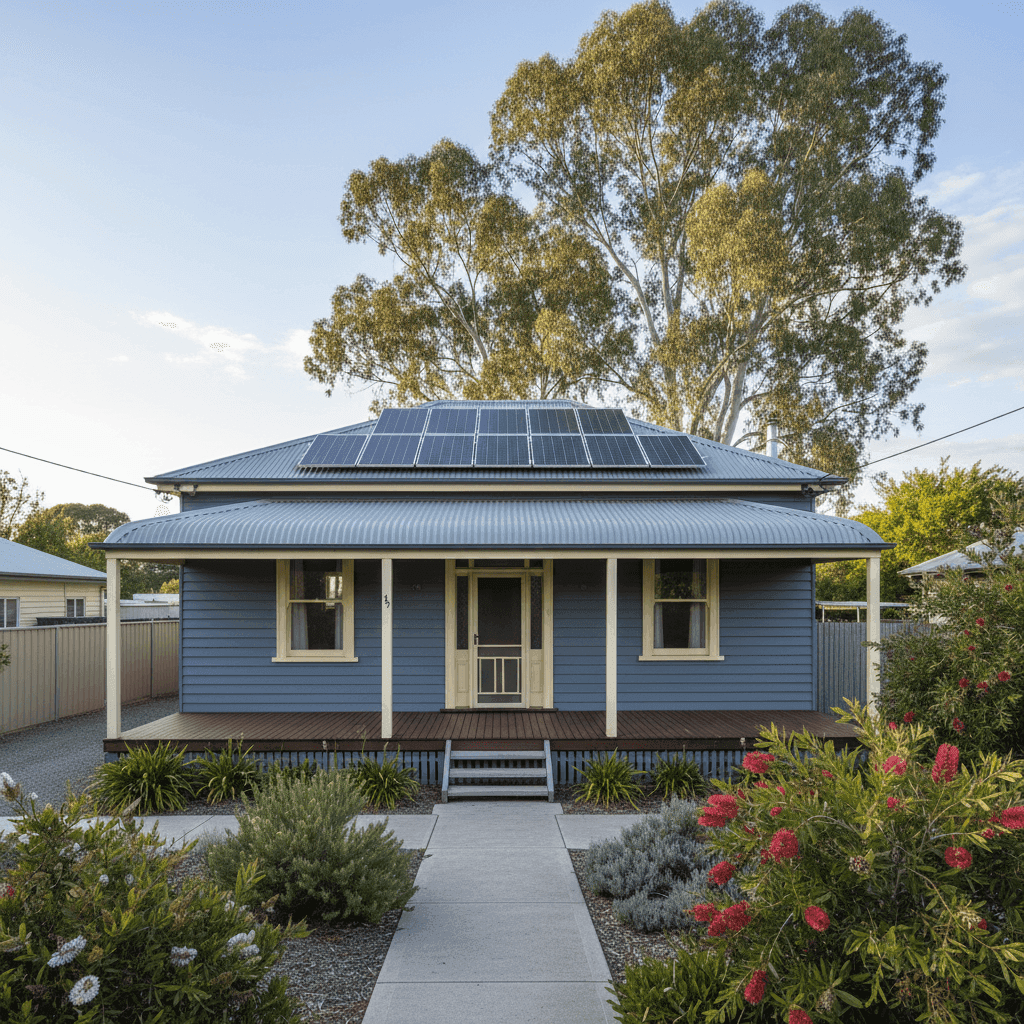
If you own a free standing home in Shepparton, VIC 3630, you've likely noticed that home insurance costs can vary dramatically depending on your property's age, construction, and location. This article breaks down a real home and contents insurance quote for a three-bedroom, two-bathroom weatherboard home in Shepparton — and puts the numbers in context so you can judge whether your own policy is competitively priced.
---
Is This Quote Fair?
The annual premium for this property came in at $5,570 per year (or $547/month), covering a building sum insured of $703,000 and contents valued at $245,000. Our price rating for this quote is Fair — Around Average.
That rating is well-earned. When you stack this figure against the suburb-level data for Shepparton, the quote sits noticeably below both the suburb average ($6,895/yr) and the suburb median ($6,485/yr). In other words, this homeowner is paying roughly $900–$1,300 less per year than what many of their neighbours are being quoted for similar cover — a meaningful saving that compounds over time.
That said, "fair" doesn't mean "cheap." Shepparton as a whole carries elevated premiums compared to broader benchmarks, and the 75th percentile for the suburb sits as high as $8,087/yr. So while this quote is solid relative to local comparisons, there's still room to explore whether a better deal exists elsewhere.
---
How Shepparton Compares
The pricing gap between Shepparton and the rest of Victoria — and the nation — is striking and worth understanding.
| Benchmark | Average Premium | Median Premium |
|---|---|---|
| Shepparton (3630) | $6,895/yr | $6,485/yr |
| Greater Shepparton LGA | $3,637/yr | — |
| Victoria (VIC) | $2,921/yr | $2,694/yr |
| National | $2,965/yr | $2,716/yr |
Shepparton's suburb-level averages are more than double the Victorian state average and the national average. Even compared to the broader Greater Shepparton LGA average of $3,637/yr, the 3630 postcode commands a significant premium loading.
Why the gap? The 3630 postcode encompasses central Shepparton, which has a well-documented history of flood risk — particularly from the Goulburn River and its surrounding floodplain. The catastrophic 2022 Shepparton floods put the area firmly on insurers' radar, and that event has had a lasting effect on premium pricing across the region. Insurers price risk prospectively, and flood-prone postcodes like 3630 will continue to attract higher base rates as climate-related weather events become more frequent.
You can explore the full breakdown of Victorian home insurance statistics to see how other postcodes across the state compare.
---
Property Features That Affect Your Premium
Several characteristics of this particular property have a direct bearing on what insurers charge — both positively and negatively.
Weatherboard Construction (Built 1937)
Weatherboard timber homes are among the most common dwelling types in regional Victoria, but they come with specific risk considerations. Timber walls are more susceptible to fire spread and can deteriorate with age, requiring more costly repairs or replacement. A home built in 1937 is now nearly 90 years old, which raises questions for insurers around the integrity of internal wiring, plumbing, and structural elements — all of which can increase the likelihood of a claim.
Stump Foundation & Elevated Position
This home sits on stumps and is elevated by less than one metre. Stump foundations are characteristic of older Victorian homes and, while they allow for ventilation and can offer some protection from minor surface water, they also introduce unique risks — stump rot, subsidence, and pest ingress among them. The slight elevation may offer marginal benefit in a flood scenario, but at under one metre, it's unlikely to provide meaningful protection against significant inundation.
Steel/Colorbond Roof
On the positive side, a Colorbond steel roof is generally viewed favourably by insurers. It's durable, fire-resistant, and low-maintenance compared to terracotta tiles or older corrugated iron. This is one feature that likely works in the homeowner's favour when it comes to premium pricing.
Solar Panels
The presence of solar panels adds to the replacement value of the home and is factored into the building sum insured. Panels can be damaged by hail, storm, or fire, and their replacement cost is non-trivial — so it's important to confirm they are explicitly covered under your policy.
Ducted Climate Control
Ducted heating and cooling systems are a significant fixed asset and should be included in your building sum insured. These systems can be expensive to repair or replace, and ensuring your coverage reflects their value is important when setting your insured amount.
Building Excess of $3,000
It's worth noting that the building excess on this policy is $3,000 — higher than many standard policies. A higher excess typically reduces the annual premium, so part of the reason this quote looks competitive may be that the policyholder is accepting more out-of-pocket cost in the event of a claim. Always weigh the premium saving against the financial impact of a large excess.
---
Tips for Homeowners in Shepparton
If you own a home in Shepparton or the surrounding region, here are some practical steps to help you manage your insurance costs without compromising on protection.
- Review your flood cover carefully. Given Shepparton's flood history, confirm that your policy explicitly includes flood cover — not just storm or rainwater damage. Many policies treat these perils differently, and exclusions can leave you significantly underinsured after a major event.
- Get your building sum insured right. With a 1937-era weatherboard home, rebuilding costs can be higher than you'd expect due to the need for heritage-compatible materials and specialised tradespeople. Underinsuring your building can leave a substantial gap at claim time, so consider a professional rebuild cost assessment.
- Compare quotes annually. The insurance market in flood-affected postcodes is active and competitive. Loyalty doesn't always pay — insurers frequently adjust their appetite for certain risk profiles, meaning a provider that was expensive last year might offer a sharp price this year. Use a comparison platform like CoverClub to benchmark your renewal quote.
- Ask about mitigation discounts. Some insurers offer reduced premiums if you've taken steps to reduce flood or fire risk — such as elevating electrical systems, installing storm shutters, or maintaining clear gutters and downpipes. It's always worth asking your insurer what discounts may be available.
---
Find a Better Deal with CoverClub
Whether you're renewing an existing policy or shopping for cover on a new purchase, comparing quotes is the single most effective way to ensure you're not overpaying. CoverClub aggregates real quote data from across Australia, giving you suburb-level insights and side-by-side comparisons in minutes. Get a home insurance quote today and see how your premium stacks up against your neighbours.