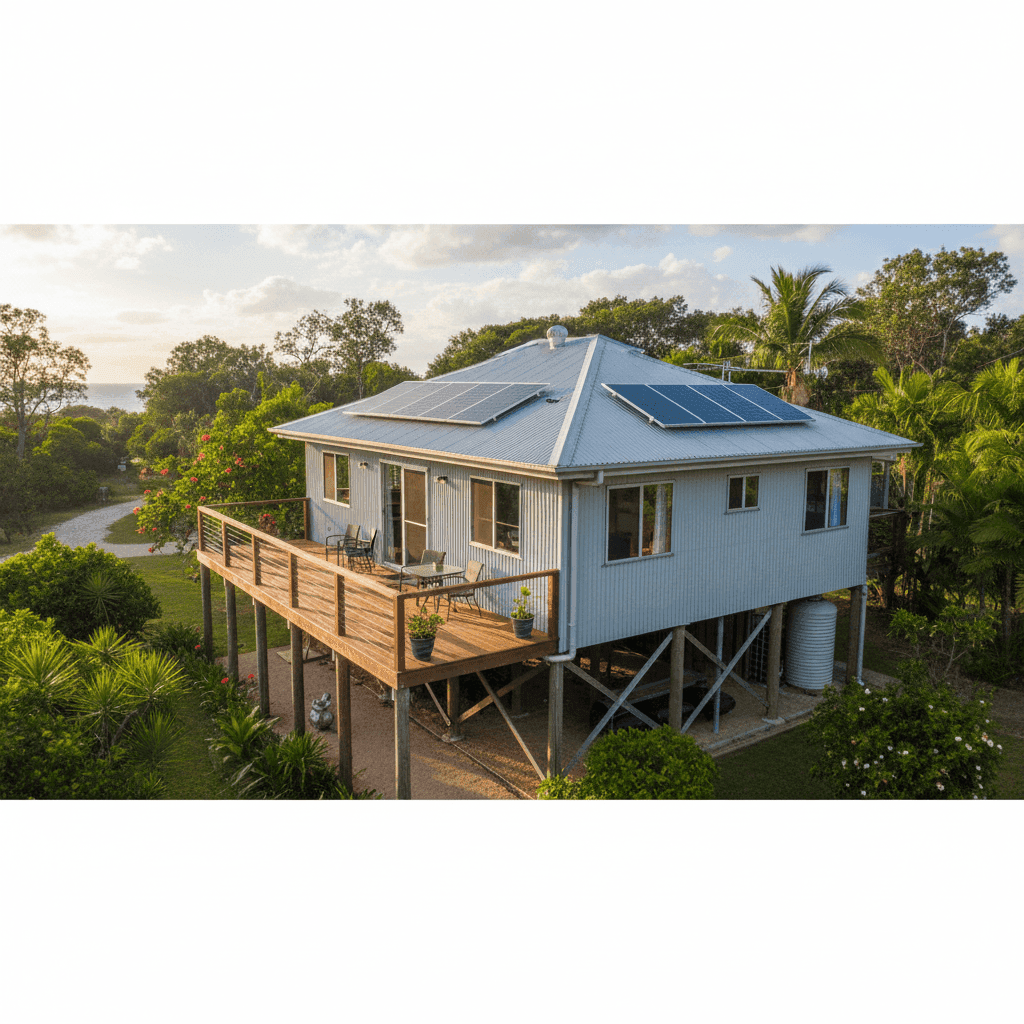
Home insurance in coastal Queensland is rarely straightforward — and Shoal Point, a quiet beachside suburb just north of Mackay, is no exception. This article breaks down a real home and contents insurance quote for a six-bedroom free standing home in Shoal Point (QLD 4750), examining whether the premium stacks up against local, state, and national benchmarks — and what property features are driving the cost.
---
Is This Quote Fair?
The annual premium for this property came in at $5,903 per year (or $566/month), covering a building sum insured of $600,000 and contents valued at $115,000. The building excess is $1,000 and the contents excess is $500.
Our price rating for this quote is FAIR — Around Average, which is a reasonable outcome for a property of this size and risk profile in coastal Queensland.
To put that in context, the suburb average for Shoal Point sits at $6,154 per year, meaning this quote comes in roughly $251 below what most homeowners in the area are paying. That's a modest but meaningful saving, and it suggests the insurer has priced the risk competitively without dramatically undervaluing the cover.
It's worth noting, however, that the suburb median premium is $4,957 — which means roughly half of Shoal Point homeowners are paying less than this quote. The spread between the 25th percentile ($3,373) and the 75th percentile ($7,692) is wide, reflecting just how much individual property features and insurer appetite can vary in this part of Queensland.
---
How Shoal Point Compares
Understanding where your premium sits relative to broader benchmarks helps you judge whether it's worth shopping around.
| Benchmark | Annual Premium |
|---|---|
| This Quote | $5,903 |
| Shoal Point Suburb Average | $6,154 |
| Shoal Point Suburb Median | $4,957 |
| Mackay LGA Average | $8,458 |
| QLD State Average | $9,129 |
| QLD State Median | $3,903 |
| National Average | $5,347 |
| National Median | $2,764 |
A few things stand out here. First, the QLD state average of $9,129 is dramatically higher than this quote — a gap of over $3,200. That figure is heavily skewed upward by high-risk cyclone and flood zones across Far North Queensland, which push averages well above what most individual homeowners actually pay.
The national average of $5,347 is actually lower than this quote by about $556, but again, national figures blend together vastly different risk environments — from low-risk suburban Melbourne to high-cyclone-risk Cairns. Comparing a Shoal Point property to a national average is a bit like comparing apples to mangoes.
More meaningfully, this quote sits above the Shoal Point suburb median but below the suburb average — landing it squarely in "around average" territory for the local market. Given the property's size (214 sqm, six bedrooms), elevated cyclone risk, and the relatively high sum insured, a "fair" rating is a solid outcome.
---
Property Features That Affect Your Premium
Several characteristics of this home have a direct bearing on what insurers charge. Understanding them can help you anticipate costs and potentially reduce them.
Cyclone Risk Zone
Shoal Point sits within a designated cyclone risk area, and this is almost certainly the single biggest driver of the premium. Insurers price cyclone exposure carefully in coastal Queensland, and properties in the Mackay region — which sits in the path of tropical systems tracking down the Queensland coast — attract meaningful loadings compared to properties further south or inland.
Elevated on Stumps
The home is elevated by at least one metre on stump foundations, which is actually a positive risk factor in many respects. Elevated homes are less susceptible to inundation from storm surge and localised flooding — both real concerns in coastal QLD. This construction style is common in Queensland and generally viewed favourably by underwriters assessing flood and water damage risk.
Aluminium Walls and Colorbond Roof
Aluminium cladding and steel (Colorbond) roofing are durable, low-maintenance materials that tend to perform well in cyclonic conditions compared to older weatherboard or fibre cement alternatives. Colorbond roofing in particular is widely used across tropical Queensland precisely because of its resilience. These materials may contribute to a more competitive premium than you'd see with less robust construction.
Timber and Laminate Flooring
Timber and laminate floors are standard in Queensland homes of this era (built 1994) but are worth noting because they can be more costly to repair or replace after water ingress events compared to tiles. This is a relatively minor factor but one that contents and building insurers do consider.
Solar Panels
Solar panels are listed as a feature of this property. It's important to confirm with your insurer whether the panels are included under your building sum insured, as they are a fixed fixture and can represent a significant replacement cost. Some policies cover them automatically; others require a specific endorsement.
Six Bedrooms, 214 sqm
The sheer size of this home — six bedrooms across 214 square metres — means a higher replacement cost, which justifies the $600,000 building sum insured. Underinsurance is a serious risk in Queensland, particularly given rising construction costs since 2020. A six-bedroom home of this size would be expensive to rebuild from scratch, especially with the logistics of coastal construction.
---
Tips for Homeowners in Shoal Point
1. Review your building sum insured regularly. Construction costs have risen sharply in recent years, and a sum insured set even two or three years ago may no longer reflect what it would actually cost to rebuild your home today. Use a building calculator or speak to a quantity surveyor to sense-check your coverage amount.
2. Confirm your solar panels are covered. Ask your insurer explicitly whether solar panels are included in your building cover and up to what value. If they're not — or if the limit is insufficient — request an endorsement. Replacing a full solar system can cost $8,000–$20,000 or more.
3. Shop around at renewal time. Even though this quote is rated "fair," the spread of premiums in Shoal Point is wide — from $3,373 at the 25th percentile to $7,692 at the 75th. That means there's genuine variation in the market, and a different insurer may price your specific property more favourably. Comparing at least two or three quotes each year is worthwhile.
4. Check your cyclone preparedness credits. Some insurers offer discounts for homes that meet certain cyclone-resilience standards — things like roof tie-downs, shutters, or compliance with post-1985 cyclone building codes. A home built in 1994 may already meet some of these standards. Ask your insurer whether any applicable discounts have been applied to your policy.
---
Compare Home Insurance Quotes for Shoal Point
Whether you're reviewing an existing policy or shopping for new cover, it pays to see what multiple insurers will offer for your specific property. CoverClub makes it easy to compare home and contents insurance quotes side by side, with real data from properties in your suburb to help you benchmark what you should be paying. Get a quote today and find out if you're getting the best deal available in Shoal Point.