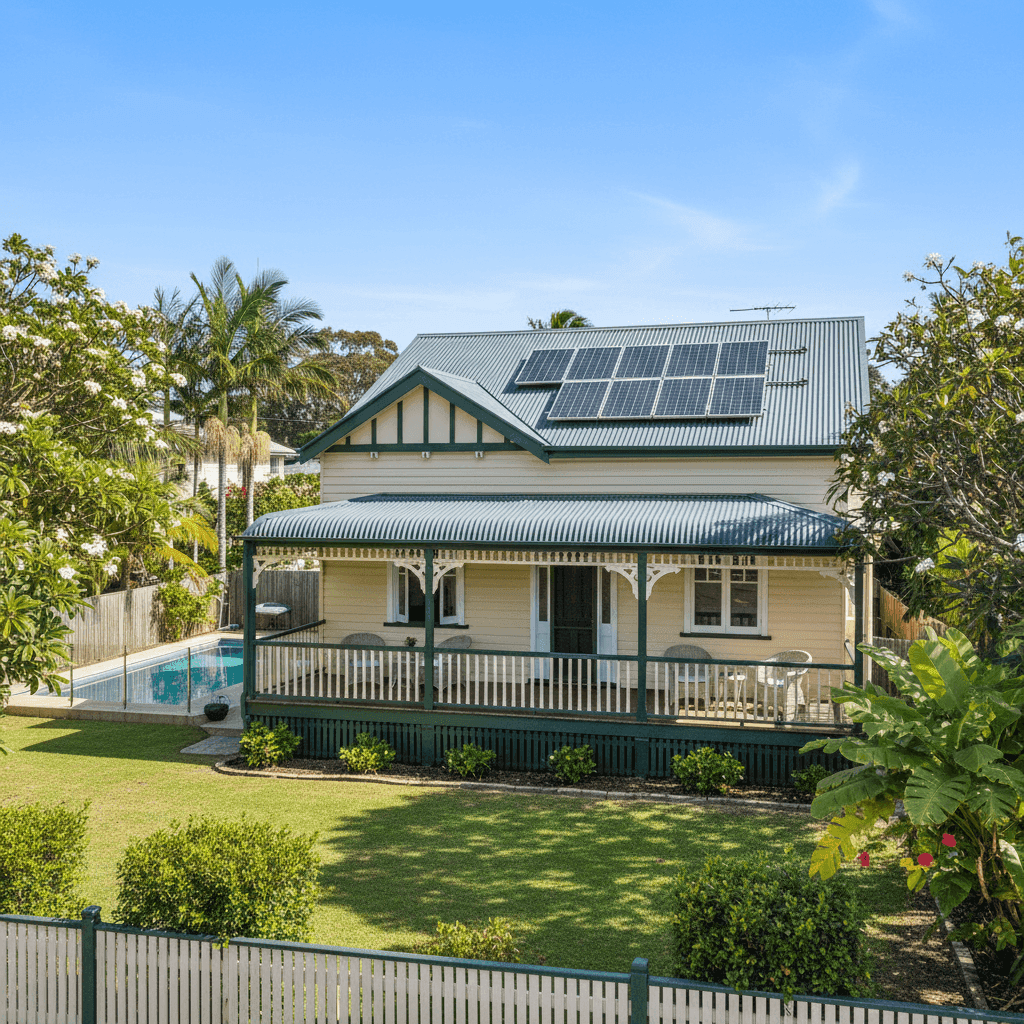
Shorncliffe is one of Brisbane's most charming bayside suburbs — a leafy, heritage-rich pocket of the Moreton Bay foreshore that attracts families and professionals alike. But owning a home here, particularly an older character property, comes with its own insurance considerations. This article breaks down a real home and contents insurance quote for a four-bedroom free-standing home in Shorncliffe (QLD 4017), rated Expensive (Above Average), and explores what's driving the cost — and what you can do about it.
---
Is This Quote Fair?
The quote in question sits at $5,735 per year (or $560/month) for combined home and contents cover, with a building sum insured of $1,016,000 and contents valued at $176,000. Both the building and contents excess are set at $1,000.
To put that in context: the suburb average for Shorncliffe sits at $3,415/year, with a median of $3,466. This quote is sitting roughly 68% above the suburb average — a meaningful gap that warrants a closer look.
That said, "expensive" doesn't automatically mean "wrong." A higher-than-average premium can be entirely justified when the property has a higher rebuild value, more features to insure, or characteristics that insurers consider higher risk. In this case, there are several factors at play that help explain the premium — which we'll unpack below.
---
How Shorncliffe Compares
Understanding where your premium sits relative to broader benchmarks is a useful sanity check. Here's how Shorncliffe stacks up:
| Benchmark | Premium |
|---|---|
| This Quote | $5,735/yr |
| Shorncliffe Suburb Average | $3,415/yr |
| Shorncliffe Suburb Median | $3,466/yr |
| Shorncliffe 25th Percentile | $2,960/yr |
| Shorncliffe 75th Percentile | $4,096/yr |
| QLD State Average | $9,129/yr |
| QLD State Median | $3,903/yr |
| National Average | $5,347/yr |
| National Median | $2,764/yr |
| Brisbane LGA Average | $16,277/yr |
(Based on a sample of 15 quotes in the Shorncliffe area. [View full suburb stats](https://coverclub.com.au/stats/QLD/4017/shorncliffe).)
A few things stand out here. First, while this quote is above the suburb average, it's actually below the Queensland state average of $9,129/year — largely because QLD averages are pulled upward by high-risk cyclone and flood zones in regional and northern parts of the state. You can explore QLD-wide insurance trends here.
Second, this quote is very close to the national average of $5,347/year, sitting only about 7% above it. From a national perspective, it's not an outlier at all — it's broadly in line with what Australians pay for comparable cover.
The Brisbane LGA average of $16,277/year is an important figure to note — it's dramatically higher than this quote, reflecting the significant flood and storm risk exposure across many Brisbane suburbs. Shorncliffe, sitting above the waterline on the northern bayside, fares considerably better than many parts of the LGA.
---
Property Features That Affect Your Premium
Several characteristics of this property have a direct bearing on what insurers charge. Here's a breakdown of the key factors:
Age and Construction (Built 1920, Weatherboard Walls)
This home was built in 1920, making it over 100 years old. Older homes — particularly those with weatherboard timber cladding — are generally considered higher risk by insurers. Weatherboard is more susceptible to fire, termite damage, and general weathering than brick or rendered masonry. Insurers factor in the cost and complexity of restoring or replacing period-style materials when calculating premiums.
High Building Sum Insured ($1,016,000)
A rebuild value of just over $1 million is significant, and it's one of the biggest drivers of premium cost. For a 235 sqm character home with period features, this figure is realistic — heritage-style joinery, high ceilings, VJ walls, and quality fittings all cost considerably more to replicate than standard modern construction. Underinsuring to reduce premiums is a false economy here.
Swimming Pool
A pool adds liability exposure and increases the overall replacement cost of the property. Most insurers will factor this into their pricing, both for structural cover and legal liability if someone is injured on the premises.
Solar Panels
Solar systems are now a standard inclusion on many Queensland homes, but they do add to the insured value of the property. Panels, inverters, and associated wiring can cost $10,000–$20,000+ to replace, and this is reflected in the premium.
Ducted Climate Control
Ducted air conditioning is a high-value fixed asset. Insurers include it as part of the building sum insured, and its replacement cost — particularly in an older home where retrofitting ductwork is complex — contributes to a higher premium.
Timber and Laminate Flooring
Timber floors are a premium feature in older Queensland homes, but they're also more expensive to replace than tiles or carpet. Combined with the weatherboard construction, the overall materials profile of this home sits at the higher end of the cost-to-reinstate scale.
Slab Foundation (Positive Factor)
One mitigating factor is the concrete slab foundation, which is generally viewed more favourably by insurers than older pier-and-beam or stump foundations common in pre-war Queensland homes. A slab reduces the risk of subsidence and limits pest entry points.
---
Tips for Homeowners in Shorncliffe
If you're looking to ensure you're getting fair value on your home insurance, here are some practical steps worth taking:
1. Review your sum insured annually Building costs change. With construction inflation still elevated across Queensland, your rebuild cost may have shifted since your policy was last updated. Use an independent building cost calculator or speak with a quantity surveyor to ensure your $1,016,000 sum insured is still accurate — neither over- nor under-insured.
2. Compare at least three quotes The 15-quote sample in Shorncliffe shows a wide spread — from around $2,960 at the 25th percentile to $4,096 at the 75th. That's a range of over $1,100/year for similar properties. Shopping around is one of the most effective ways to find a more competitive rate without reducing your cover.
3. Ask about discounts for security and safety features Many insurers offer premium reductions for homes with monitored alarms, deadbolts, smoke detectors, and other security measures. If your Shorncliffe home has these features, make sure your insurer knows about them.
4. Consider your excess level Both the building and contents excess on this policy are set at $1,000. Increasing your excess — say, to $2,000 or $2,500 — can meaningfully reduce your annual premium. Just make sure you're comfortable covering that amount out of pocket in the event of a claim.
---
Compare Your Quote with CoverClub
Whether your current premium feels too high or you just want to know where you stand, CoverClub makes it easy to compare home and contents insurance quotes for your specific property. Enter your address to see how your premium stacks up against others in Shorncliffe and across Queensland — and find out if there's a better deal waiting for you.