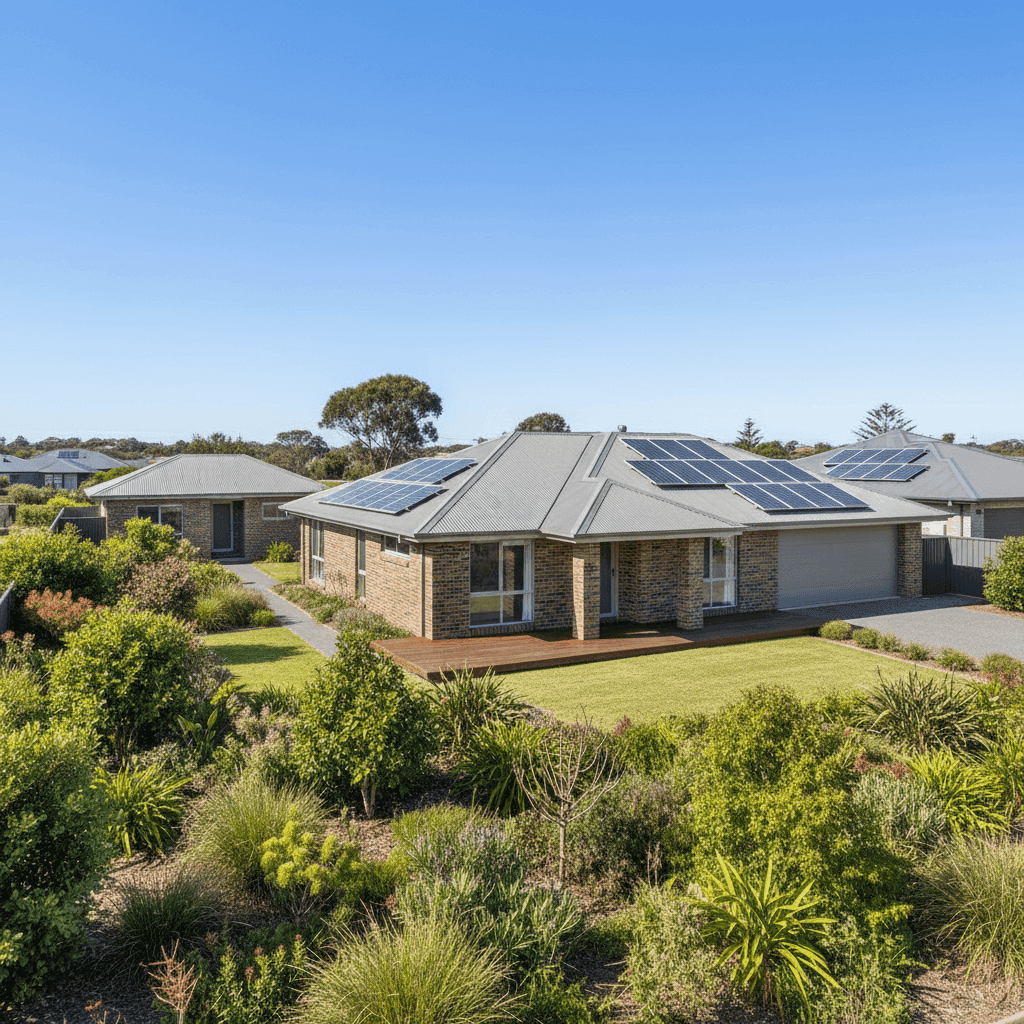
Silverleaves is a quiet coastal locality on Phillip Island in Victoria's Bass Coast region — a popular destination for holiday homes, sea-changers, and permanent residents alike. This article takes a close look at a real home and contents insurance quote for a four-bedroom, free-standing home in Silverleaves (VIC 3922), breaking down whether the premium is competitive and what factors are likely driving the cost.
---
Is This Quote Fair?
The quote in question comes in at $2,596 per year (or roughly $254 per month) for combined home and contents cover, with a building sum insured of $932,000 and contents covered to $150,000. The building excess is set at $2,000, and the contents excess at $1,000.
Based on comparison data drawn from 55 quotes across the Silverleaves suburb, this premium earns a rating of FAIR — Around Average. That's a reasonable outcome, though it's worth understanding exactly where it sits in the distribution.
The suburb median premium is $2,620 per year, meaning this quote lands just below the midpoint — a modestly encouraging sign. The suburb average is slightly higher at $2,978, which suggests a handful of more expensive quotes are pulling that figure upward. At $2,596, this homeowner is paying less than the average Silverleaves policyholder, though they're not quite in the most competitive quarter of the market (the 25th percentile sits at $2,285/yr).
In short: the quote is reasonable, but there's room to do better with the right insurer.
---
How Silverleaves Compares
Putting this quote into a broader context helps paint a clearer picture.
| Benchmark | Average Premium | Median Premium |
|---|---|---|
| Silverleaves (suburb) | $2,978/yr | $2,620/yr |
| Victoria (state) | $2,921/yr | $2,694/yr |
| Australia (national) | $2,965/yr | $2,716/yr |
| Bass Coast LGA | $2,307/yr | — |
A few things stand out here. First, Silverleaves premiums sit broadly in line with Victorian state averages and national benchmarks — there's no dramatic coastal loading pushing costs dramatically above the norm. Second, the Bass Coast LGA average of just $2,307 per year is notably lower than the Silverleaves suburb average, which may reflect the mix of property types and values across the broader LGA. Phillip Island properties, particularly those with higher rebuild values and larger floor areas, tend to attract higher premiums than smaller or older dwellings elsewhere in the region.
For this particular property — a 214 sqm home with a $932,000 building sum insured — a premium of $2,596 is broadly in step with what comparable homeowners are paying across Victoria and nationally.
---
Property Features That Affect Your Premium
Several characteristics of this property will have a direct bearing on the quoted premium.
Brick veneer construction and Colorbond roof Brick veneer walls paired with a steel Colorbond roof is one of the more insurer-friendly combinations in Australia. Brick veneer offers solid fire resistance and structural durability, while Colorbond roofing is lightweight, low-maintenance, and performs well in coastal environments where salt air can degrade other materials. This combination typically attracts more competitive premiums compared to, say, weatherboard or fibrous cement cladding.
Slab foundation A concrete slab foundation is generally viewed favourably by insurers. It eliminates the risk of subfloor flooding and pest damage that can affect raised timber stumped homes, contributing to a more stable risk profile.
Granny flat The presence of a granny flat on the property is worth noting. Depending on the policy, a separate dwelling on the same title may or may not be automatically included under the main building cover. Homeowners should confirm with their insurer whether the granny flat's structure — and any contents within it — is explicitly covered under the policy.
Solar panels Solar panels are increasingly common on Australian rooftops, but they do add complexity to a home insurance policy. Panels are generally covered as a fixed fixture of the home, but it's important to verify that the sum insured accounts for their replacement cost, particularly given the 214 sqm footprint of this property which may support a sizeable system.
Ducted climate control Ducted heating and cooling systems are considered a fixed fitting and are typically covered under building insurance. Given the coastal location of Silverleaves, where temperatures can swing between hot summers and cool winters, this is a meaningful inclusion in the overall rebuild cost.
Tile flooring Tiled flooring throughout is a practical and durable choice for a coastal home. From an insurance perspective, tiles are relatively inexpensive to replace compared to hardwood timber floors, which may modestly reduce contents or building claims risk.
---
Tips for Homeowners in Silverleaves
1. Review your building sum insured regularly At $932,000, the building sum insured needs to reflect the true cost of rebuilding — not the market value of the property. Construction costs in regional Victoria have risen significantly in recent years, so it's worth reassessing this figure annually to avoid being underinsured. A quantity surveyor can provide a precise estimate.
2. Confirm granny flat coverage explicitly Don't assume the granny flat is automatically covered. Contact your insurer directly and ask them to confirm — in writing — that the secondary dwelling is included in the policy. If it's not, you may need a separate policy or an endorsement added to your existing one.
3. Check solar panel replacement costs are captured Make sure your solar panel system is listed as a covered item and that its replacement value is factored into your building sum insured. Panel and inverter costs can run into the tens of thousands of dollars for larger systems.
4. Compare quotes at renewal — not just at inception Insurance premiums can shift significantly from year to year, and loyalty rarely pays. With the suburb's 25th percentile sitting at $2,285 per year, there's a potential saving of over $300 annually for homeowners who shop around at renewal time. Use a comparison service to benchmark your renewal quote before simply accepting it.
---
Ready to Compare?
Whether you're a first-time buyer or a long-term Silverleaves local, it pays to know where your premium stands. CoverClub makes it easy to compare home and contents insurance quotes from multiple insurers in minutes. Get a quote today and see if you can do better than the suburb average.