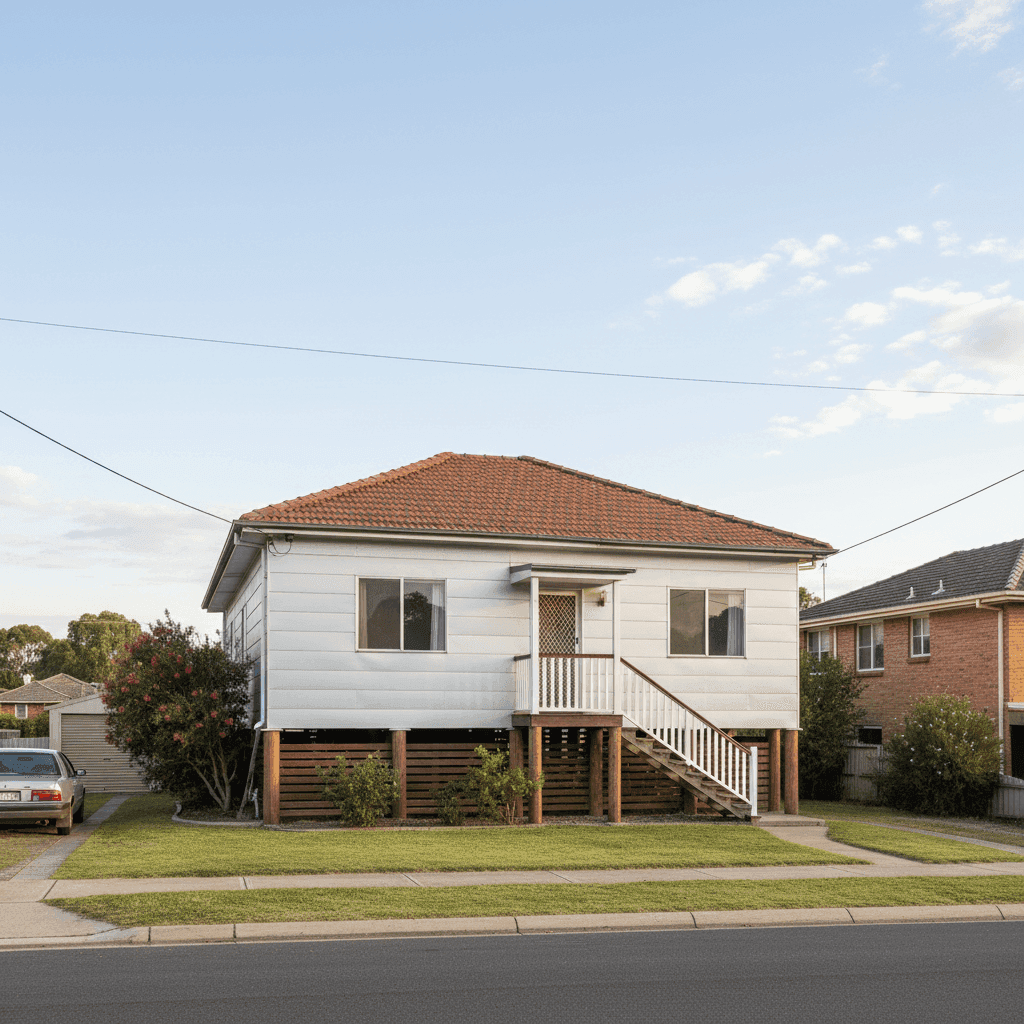
If you own a free standing home in Singleton, NSW 2330, you already know this Hunter Valley town has a lot going for it — a strong mining and agricultural economy, a tight-knit community, and relatively affordable property prices compared to the coast. But when it comes to home insurance, how much should you expect to pay, and is the quote you're looking at actually any good? This article breaks down a real building insurance quote for a two-bedroom, one-bathroom home in Singleton and puts it into context with suburb, state, and national data.
---
Is This Quote Fair?
The quote in question comes in at $1,958 per year (or $188 per month) for building-only cover on a 130 sqm free standing home, with a $1,000 building excess and a sum insured of $408,000.
Our price rating for this quote is CHEAP — Below Average — and the data backs that up emphatically.
Compared to the suburb average of $6,926 per year, this premium is roughly 72% cheaper. Even against the suburb's 25th percentile — meaning the cheapest quarter of quotes in the area — which sits at $5,670 per year, this quote is still dramatically lower. In plain terms, this is an exceptionally competitive result for a Singleton property.
It's worth noting that the suburb sample of 15 quotes shows considerable spread, with the 75th percentile reaching $8,775 per year. That means some Singleton homeowners are paying more than four times what this quote offers for comparable cover. Shopping around clearly makes a significant difference in this postcode.
---
How Singleton Compares
To put this quote into a broader perspective, here's how Singleton's insurance market sits relative to the rest of New South Wales and the country:
| Benchmark | Average Premium | Median Premium |
|---|---|---|
| Singleton (2330) | $6,926/yr | $6,482/yr |
| NSW | $9,528/yr | $3,770/yr |
| National | $5,347/yr | $2,764/yr |
| Hawkesbury LGA | $10,350/yr | — |
A few things stand out here. The NSW average premium of $9,528 is unusually high compared to the state median of $3,770 — a sign that a relatively small number of very expensive quotes (often in flood- or bushfire-prone areas) are pulling the average up significantly. The same dynamic appears in Singleton's suburb data, where the average of $6,926 sits well above the median of $6,482.
You can explore the full breakdown of Singleton insurance statistics, compare it against NSW-wide data, or take a look at national home insurance benchmarks to get a complete picture.
At $1,958 per year, this quote sits well below every benchmark listed above — including the national median of $2,764. That's a strong result by any measure.
---
Property Features That Affect Your Premium
Several characteristics of this property are likely contributing to the competitive premium. Understanding these factors can help you make sense of your own quote.
Construction Era (1960)
Homes built in the 1960s are generally well-constructed but carry some age-related risk. Older plumbing, wiring, and roofing materials can be more susceptible to failure, which some insurers price in. That said, a well-maintained 1960s home with updated systems can still attract favourable rates.
Aluminium External Walls
Aluminium cladding is considered a relatively low-risk wall material by most Australian insurers. It's non-combustible, low-maintenance, and resistant to rot and pests — all factors that can help keep premiums down compared to timber weatherboard or other materials.
Tiled Roof
A tiled roof is generally viewed positively by insurers. Tiles are durable, fire-resistant, and long-lasting when properly maintained. This is likely a contributing factor to the competitive rate on this quote.
Stump Foundation (Elevated Under 1m)
The home sits on stumps and is elevated by less than one metre. Stump foundations are common in older NSW and Queensland-style homes and can offer some protection against minor flooding or moisture. Being elevated by less than a metre keeps the property out of the highest-risk elevation categories, while still offering some practical benefit.
Carpet Flooring & Standard Fittings
Standard fittings and carpet flooring indicate a modest, practical home rather than a high-end renovation. Insurers assess replacement cost risk based on the quality of internal fittings, so standard specifications typically translate to a more straightforward and affordable sum insured calculation.
No Pool, No Solar, No Ducted Climate Control
The absence of a pool, solar panel system, and ducted air conditioning removes several common sources of additional premium loading. Each of these features can add complexity and cost to a policy, so their absence simplifies the risk profile considerably.
---
Tips for Homeowners in Singleton
Whether you're reviewing an existing policy or shopping for the first time, here are four practical steps Singleton homeowners can take to get the best value from their building insurance.
1. Review your sum insured regularly The cost of rebuilding a home — labour, materials, and site access — changes from year to year. With construction costs having risen sharply across NSW in recent years, it's worth checking that your sum insured reflects current rebuild costs, not what you paid for the property or what it was insured for five years ago. Underinsurance is one of the most common and costly mistakes homeowners make.
2. Understand your flood and bushfire risk Singleton sits in the Hunter Valley and can be affected by both flooding (particularly near the Hunter River and its tributaries) and bushfire risk in surrounding areas. Check whether your policy includes flood cover as standard or as an optional add-on, and confirm how your property is classified by your insurer.
3. Don't auto-renew without comparing The wide spread in Singleton's premium data — from under $2,000 to nearly $9,000 — shows just how much prices can vary between insurers for the same property. Auto-renewing your policy each year without comparing alternatives could mean paying thousands more than necessary. Use a comparison tool like CoverClub to check what else is available.
4. Maintain your older home proactively For a 1960s home, staying on top of maintenance — roof tiles, gutters, plumbing, and electrical — isn't just good practice, it can also protect your ability to make a successful claim. Many policies contain clauses that allow insurers to reduce or reject claims where damage results from gradual deterioration or lack of maintenance.
---
Compare Your Own Quote
If you're a homeowner in Singleton or anywhere else in Australia, the best way to know whether your premium is fair is to compare it. CoverClub makes it easy to see what multiple insurers would charge for your specific property — so you're never left guessing.
Get a building insurance quote now and see how your premium stacks up against the suburb, state, and national benchmarks.